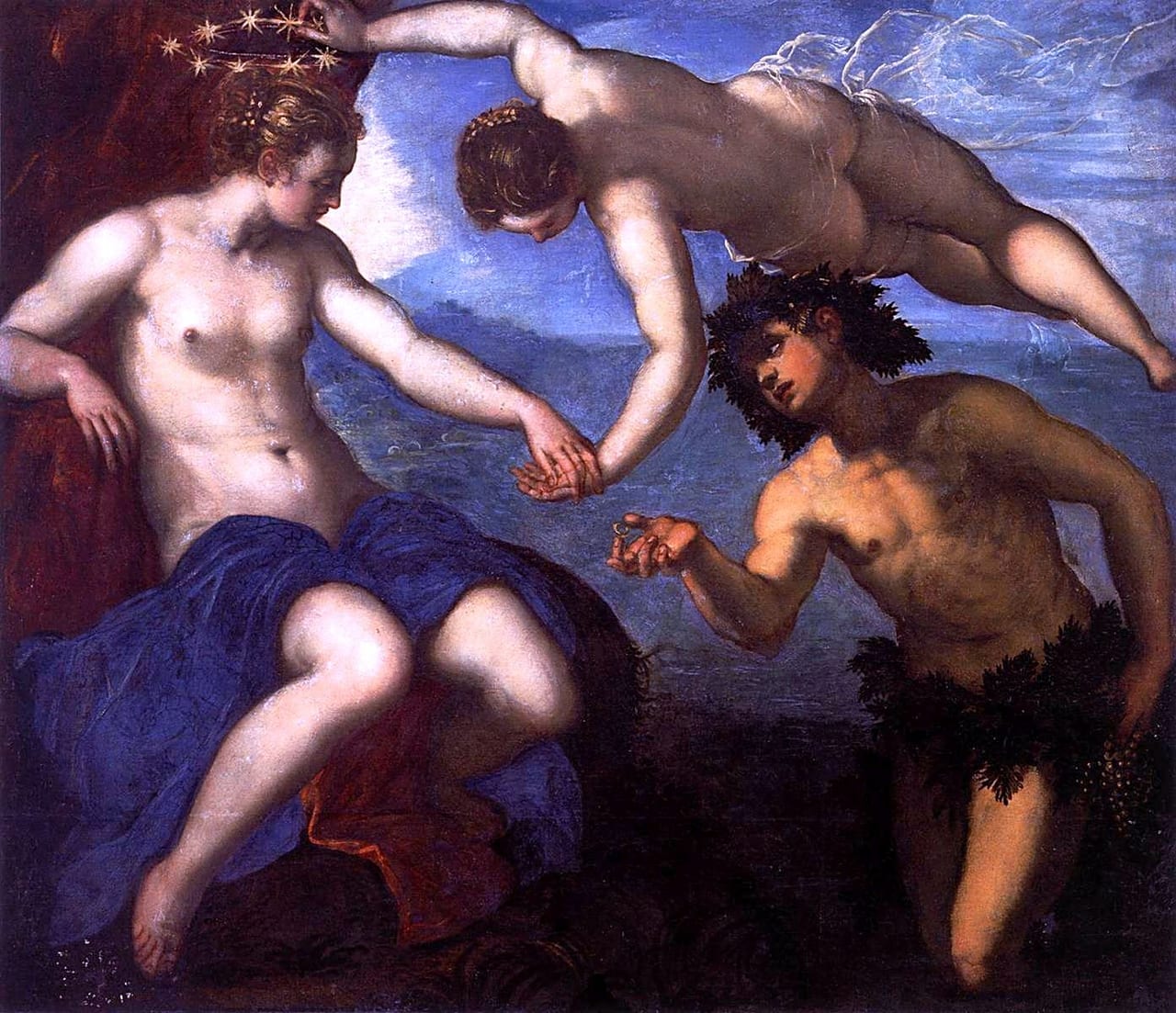
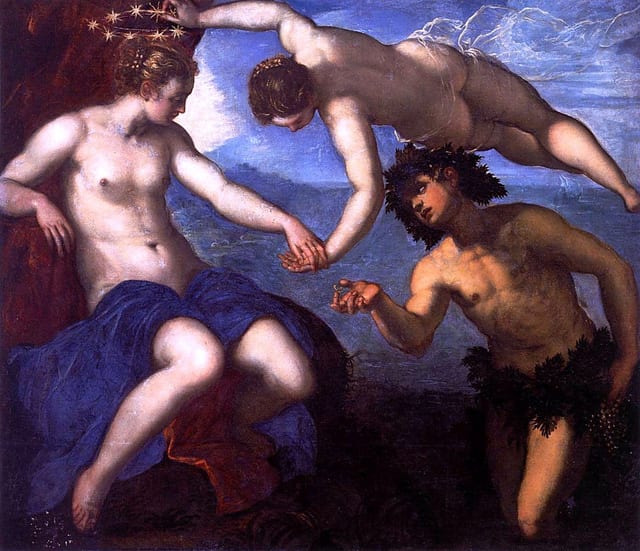
Bacchus, Venus and Ariadne
Jacopo Tintoretto · 1577

Jacopo Tintoretto
Italian · 1518–1594
Jacopo Robusti, best known as Tintoretto, was an Italian Renaissance painter of the Venetian school. His contemporaries both admired and criticised the speed with which he painted and the unprecedented boldness of his brushwork. For his phenomenal energy in painting he was termed il Furioso. His work is characterised by muscular figures, dramatic gestures and bold use of perspective, in the Mannerist style.
Independent artist guide by Momentable. Biography from Wikipedia; artworks credited to the museums that hold them.
 LIVENow streaming · Bacchus, Venus and Ariadne
- works in the archive
- 17works in the archive
- life
- 1518–1594life
- movement
- Mannerismmovement
The work
A selection of 16 works, free to stream.
Bacchus, Venus and Ariadne
Jacopo Tintoretto · 1577
Doge's Palace
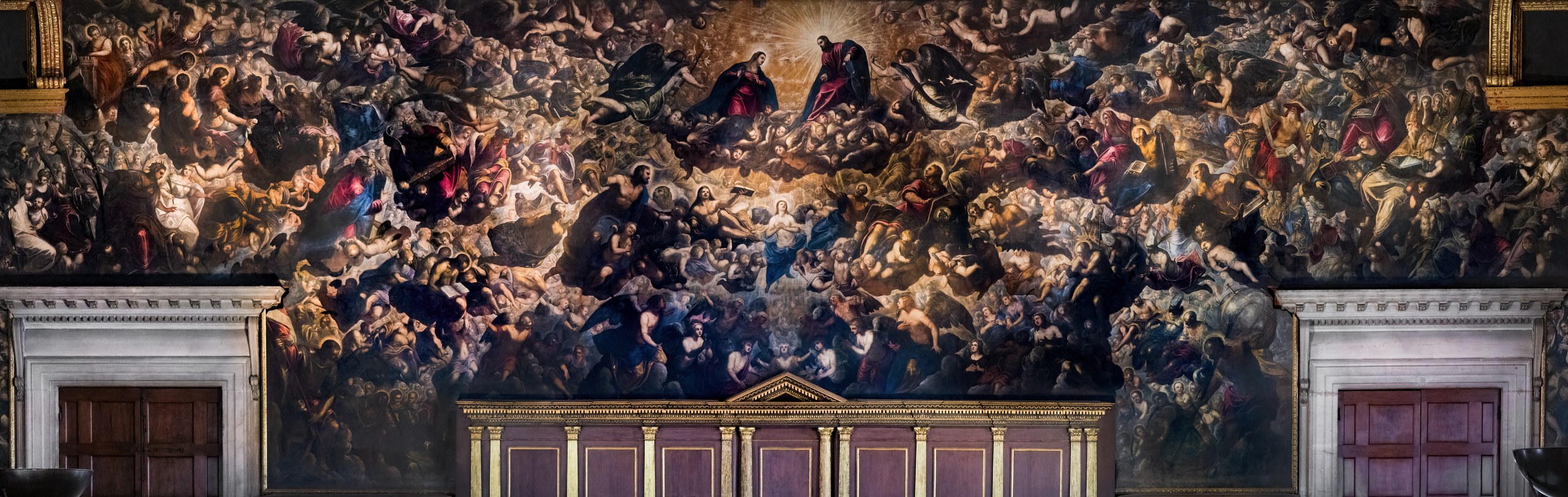
Paradise
Jacopo Tintoretto · 1588
Doge's Palace
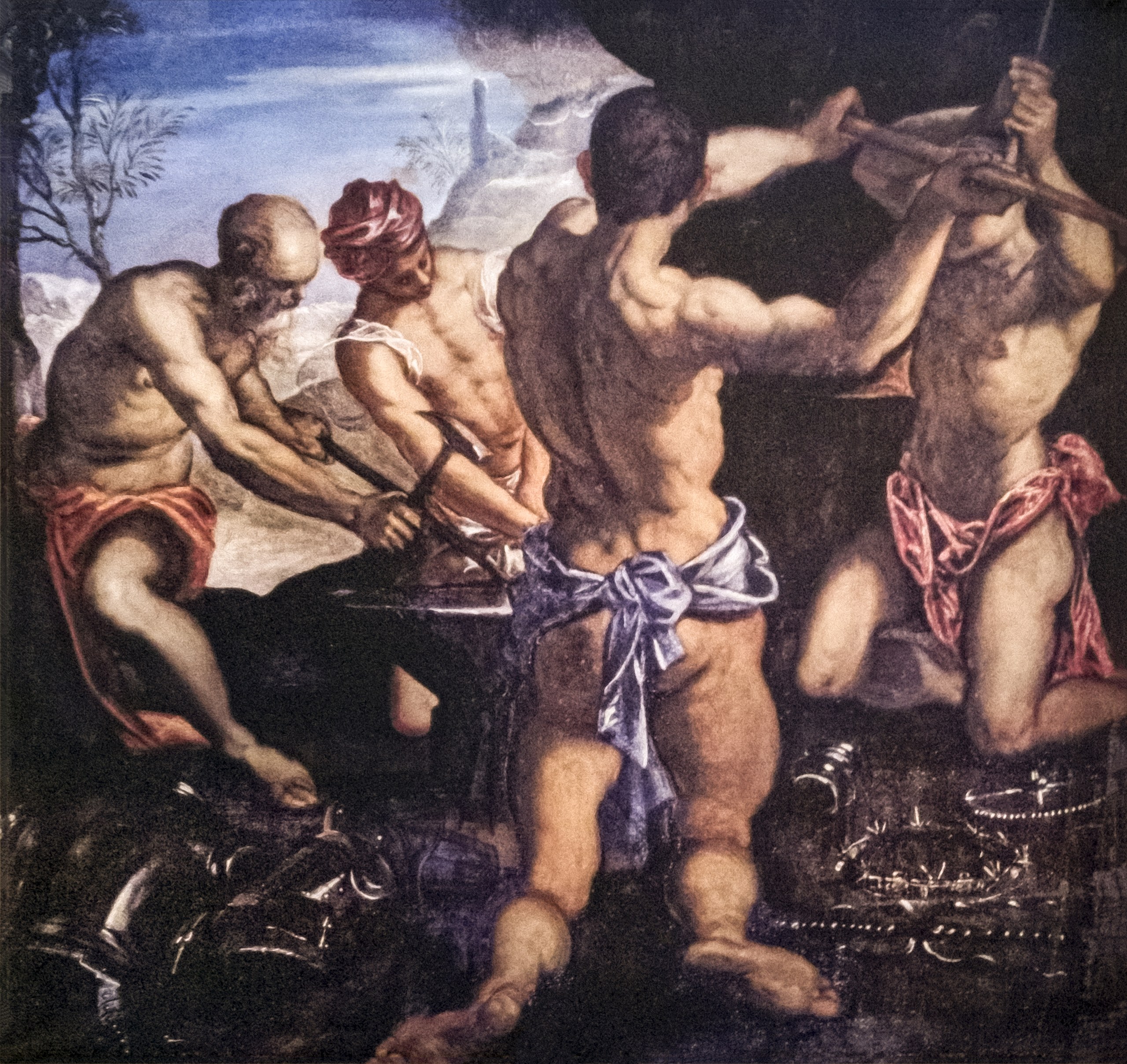
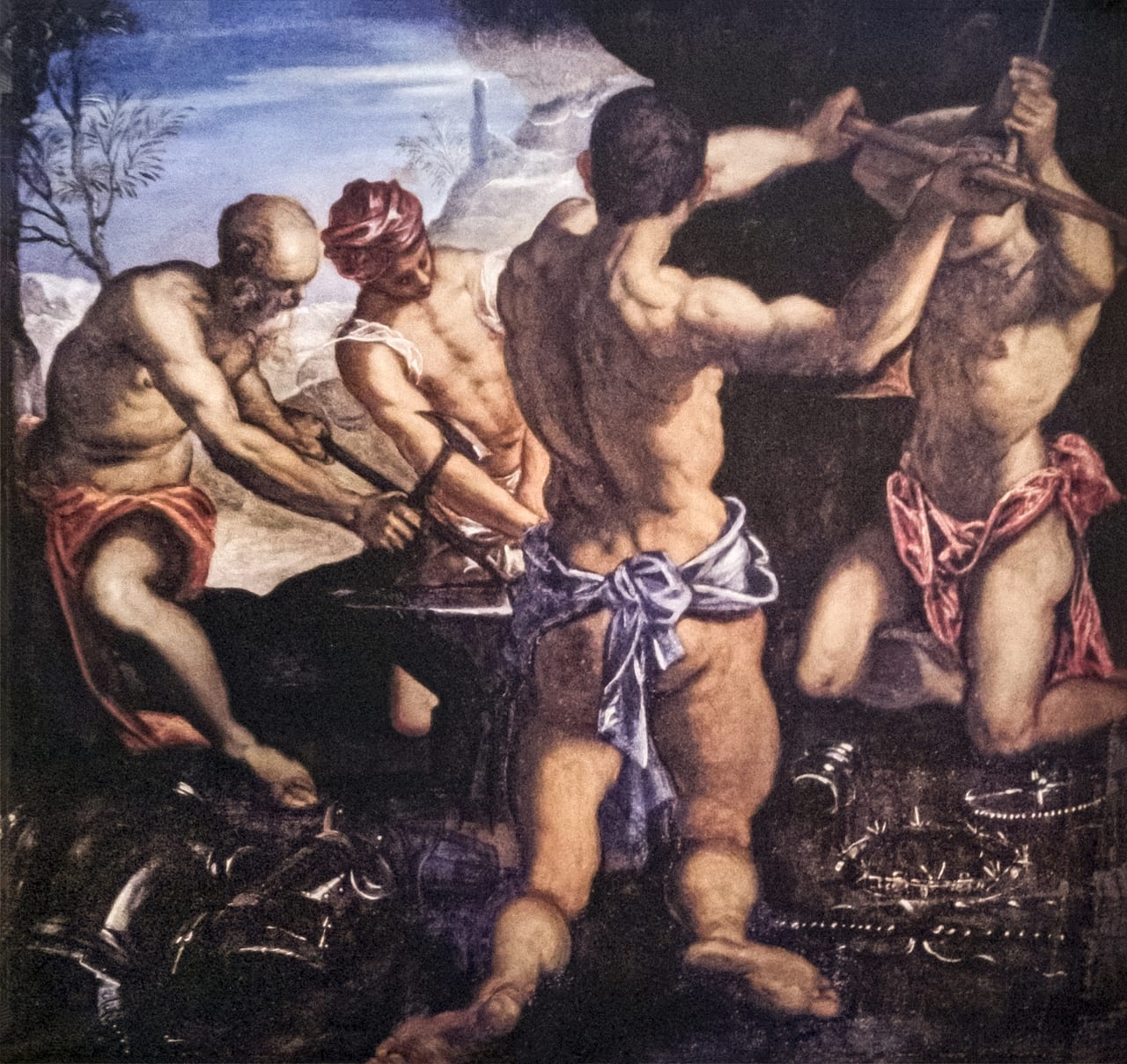
The forge of Vulcan
Jacopo Tintoretto · 1576
Doge's Palace
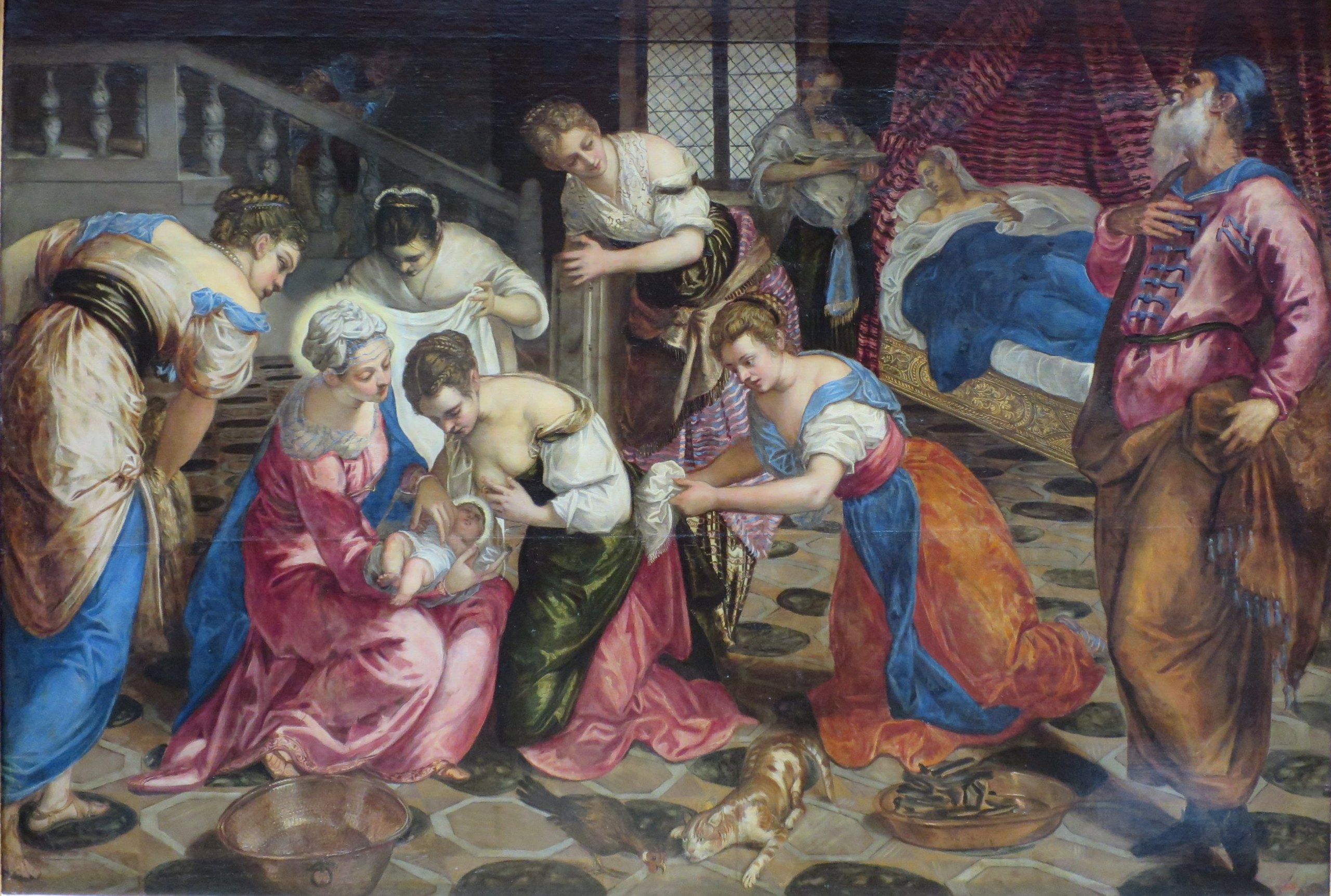
The Birth of John the Baptist
Jacopo Tintoretto · 1550
State Hermitage Museum
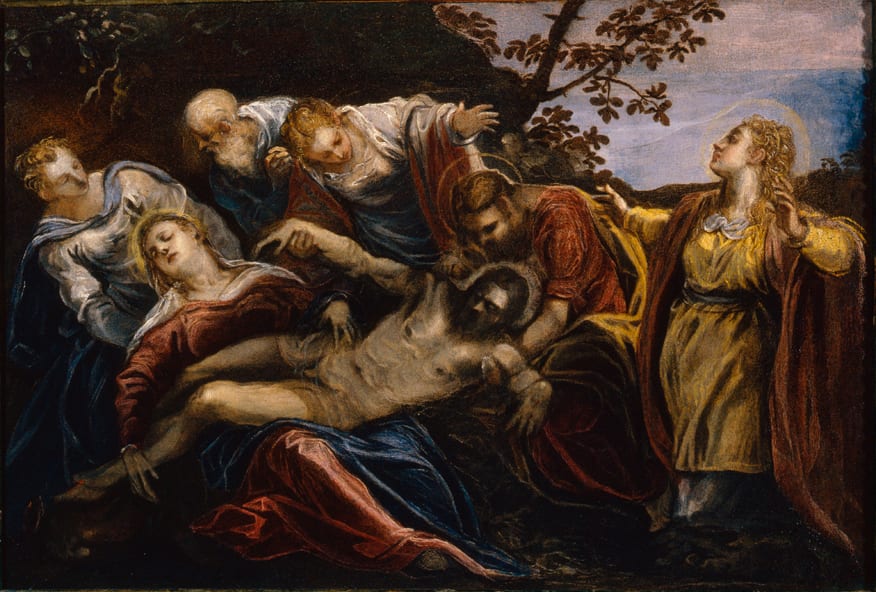
Lamentation of Christ
Jacopo Tintoretto · 1555
Museo Soumaya
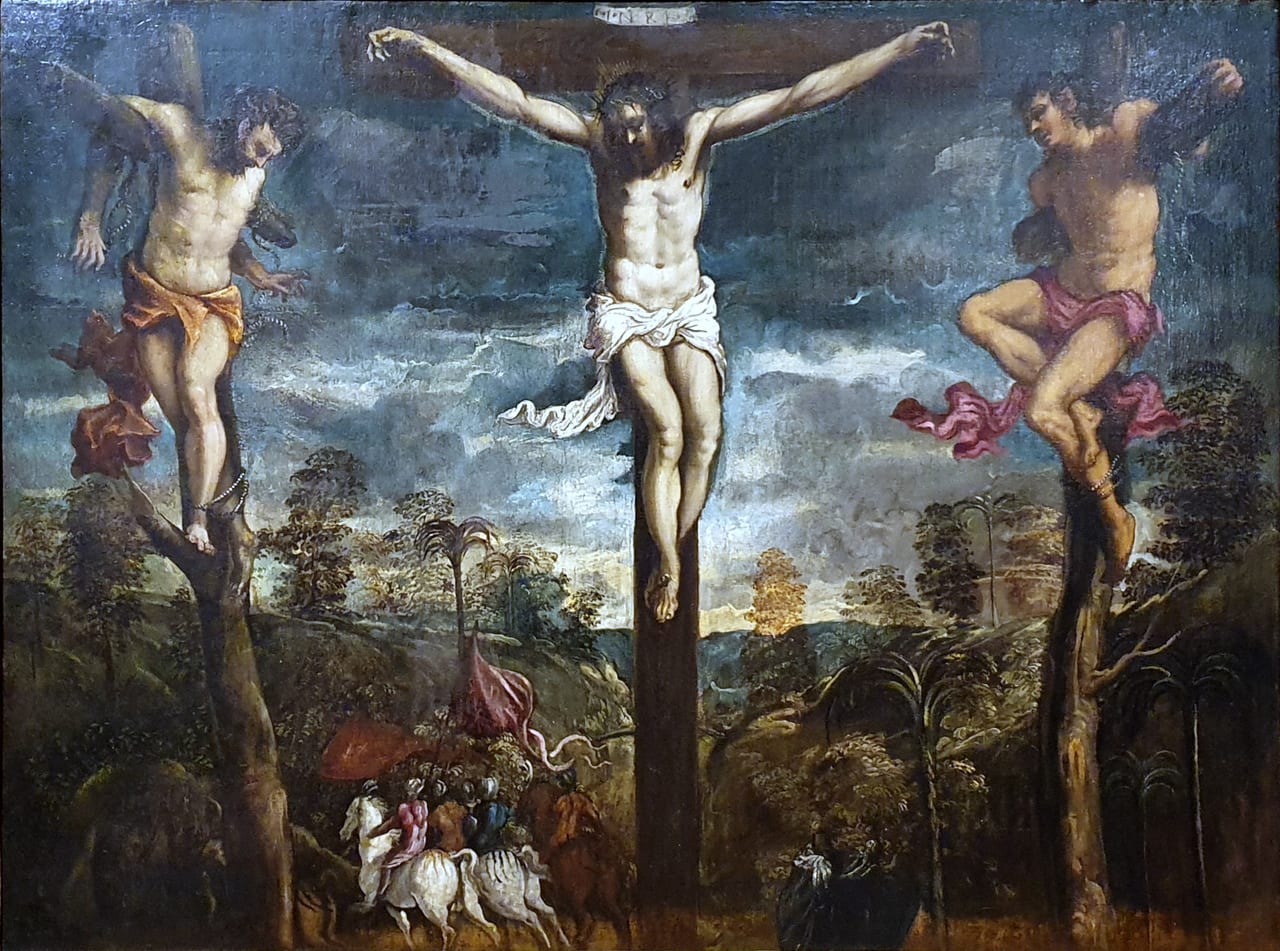
The Crucifixion
Jacopo Tintoretto · 1550
Museo Soumaya
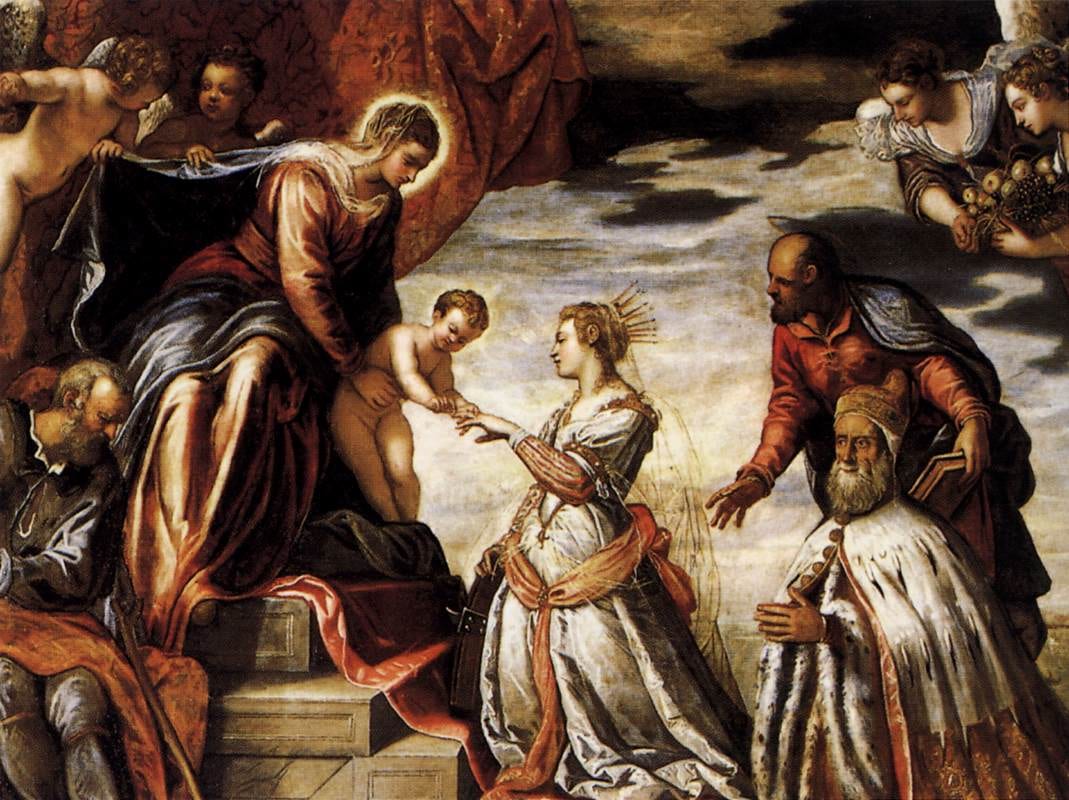
Mystic Marriage of St Catherine
Jacopo Tintoretto · 1576
Doge's Palace
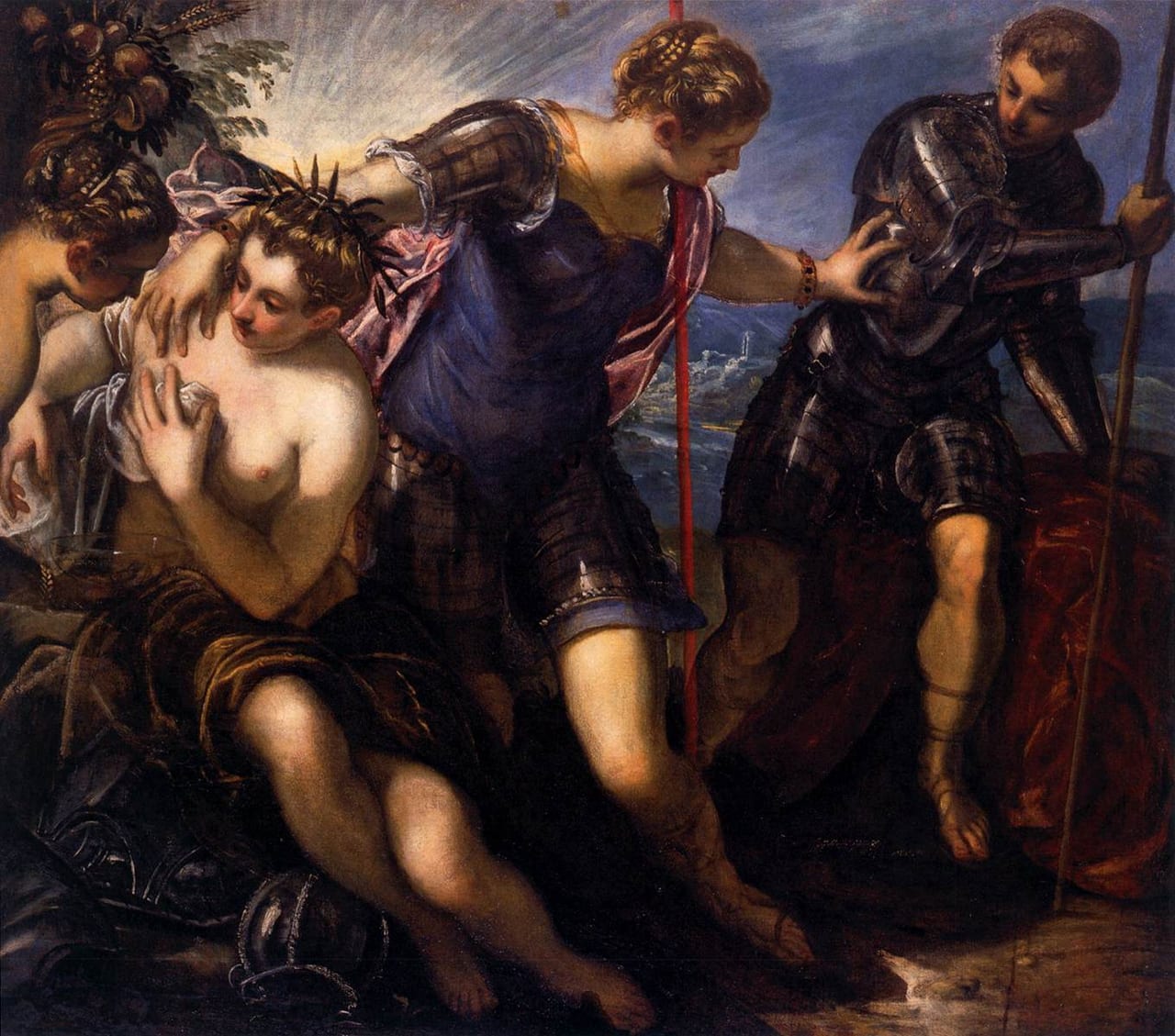
Minerva Sending Away Mars from Peace and Prosperity
Jacopo Tintoretto · 1576
Doge's Palace
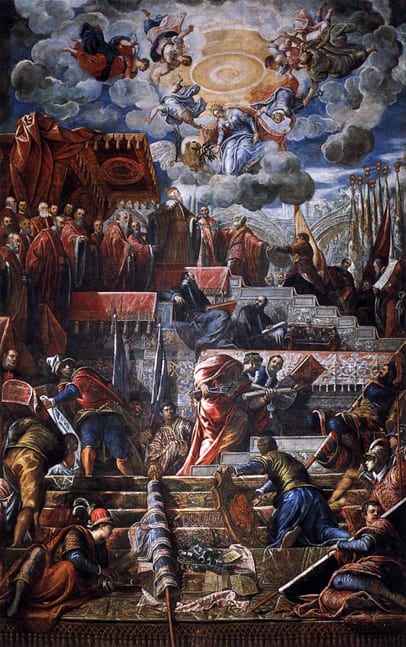
Doge Nicolò da Ponte Receiving a Laurel Crown from Venice
Jacopo Tintoretto · 1578
Doge's Palace
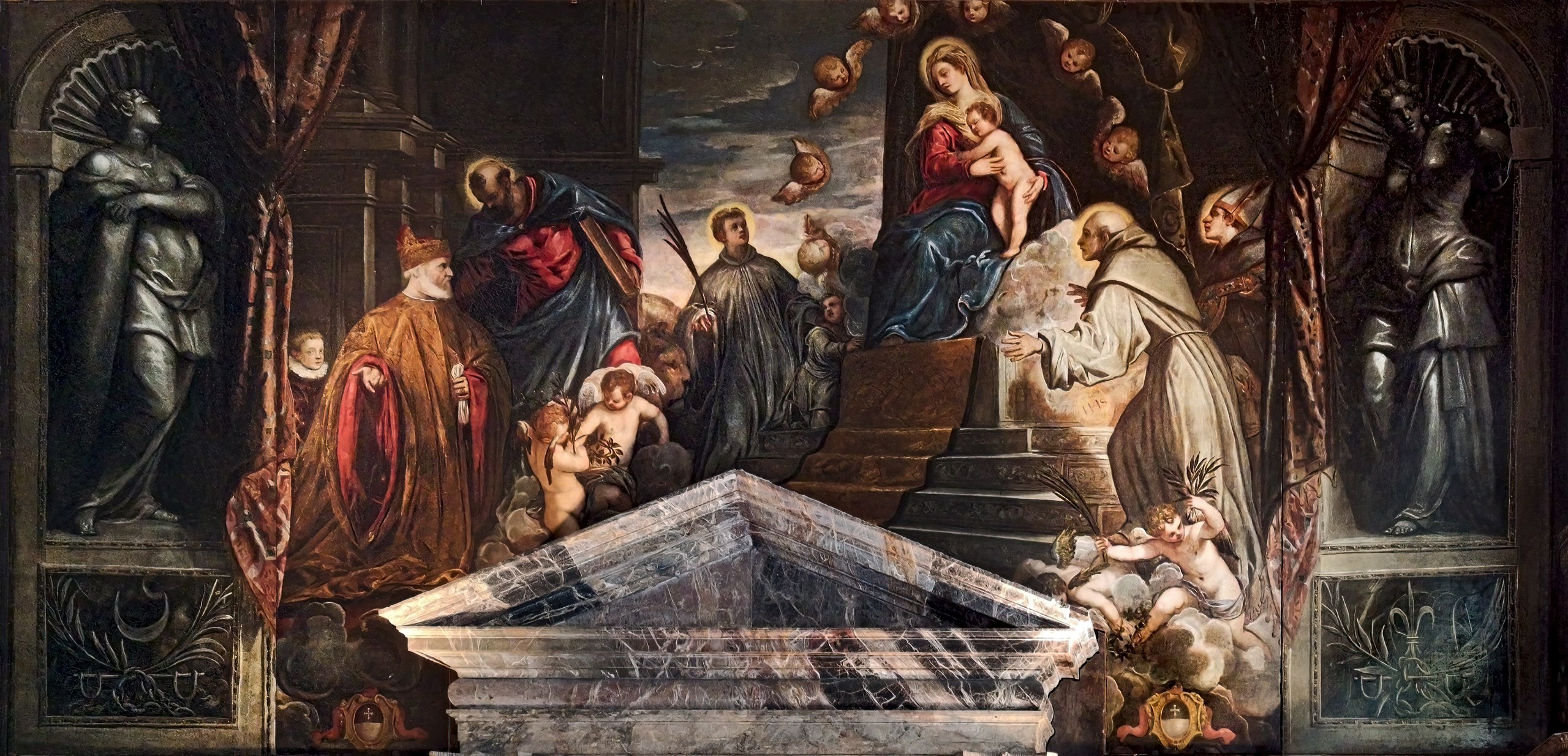
Andrea Gritti, assisted by St. Mark, before Mary and Sts. Bernardino, Luigi and Marina
Jacopo Tintoretto · 1594
Doge's Palace
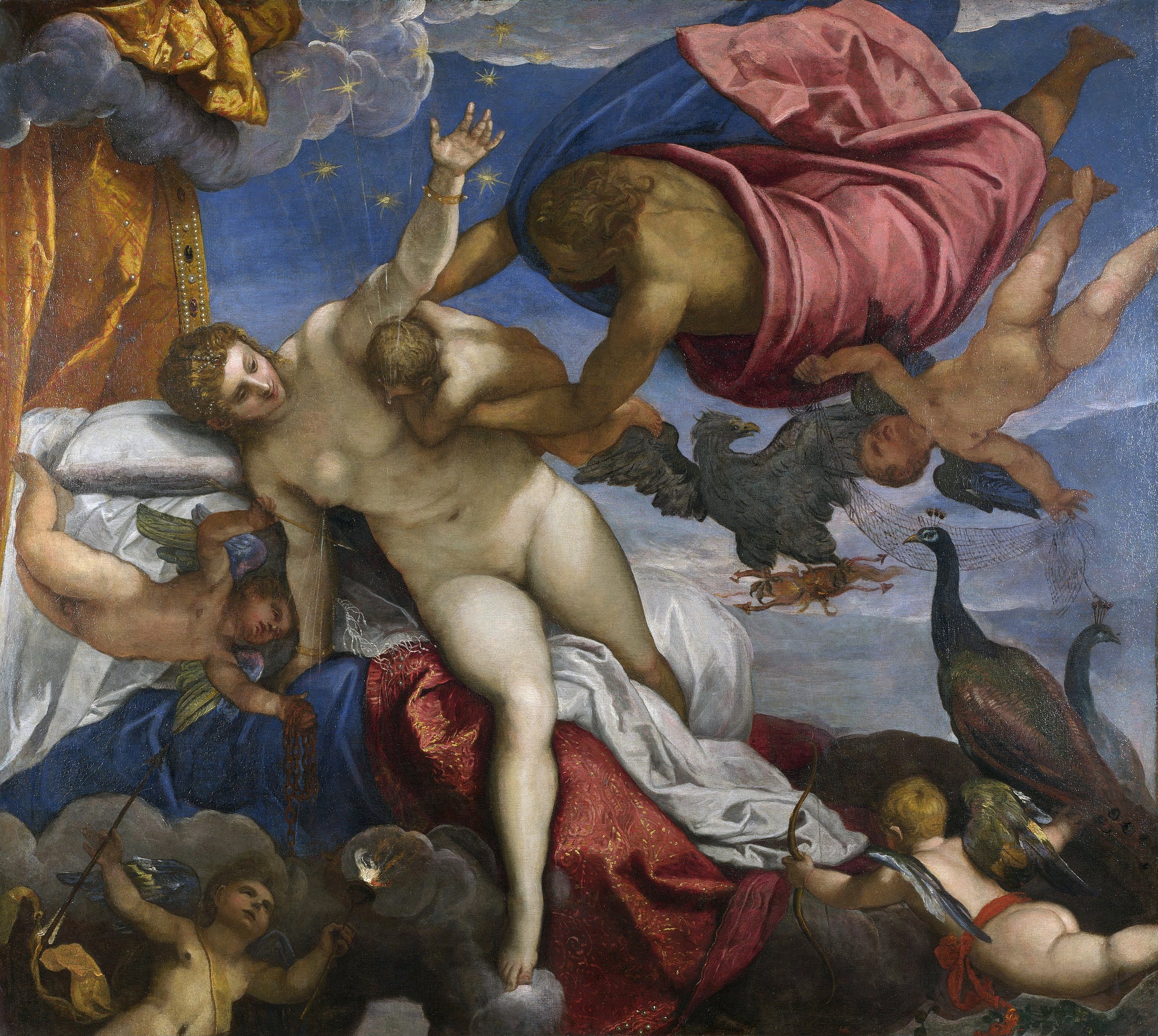
The Origin of the Milky Way
Jacopo Tintoretto · 1575
National Gallery
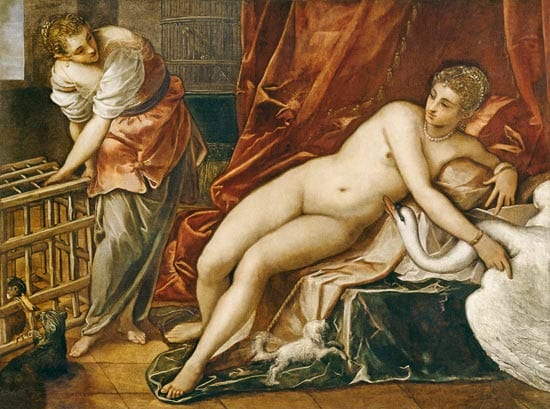
Leda and the Swan
Jacopo Tintoretto · 1550
Uffizi Gallery
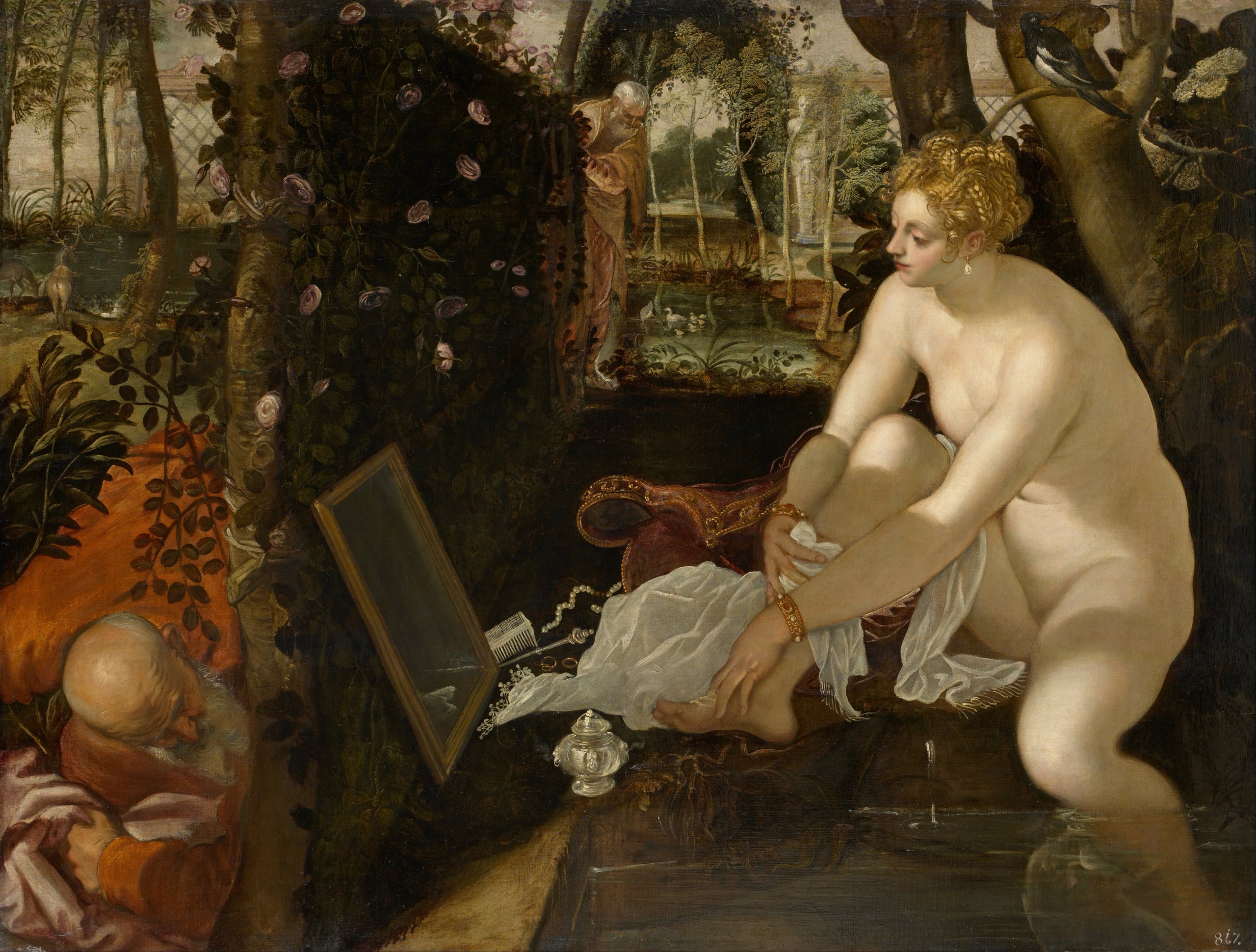
Susanna and the Elders
Jacopo Tintoretto · 1555
Kunsthistorisches Museum
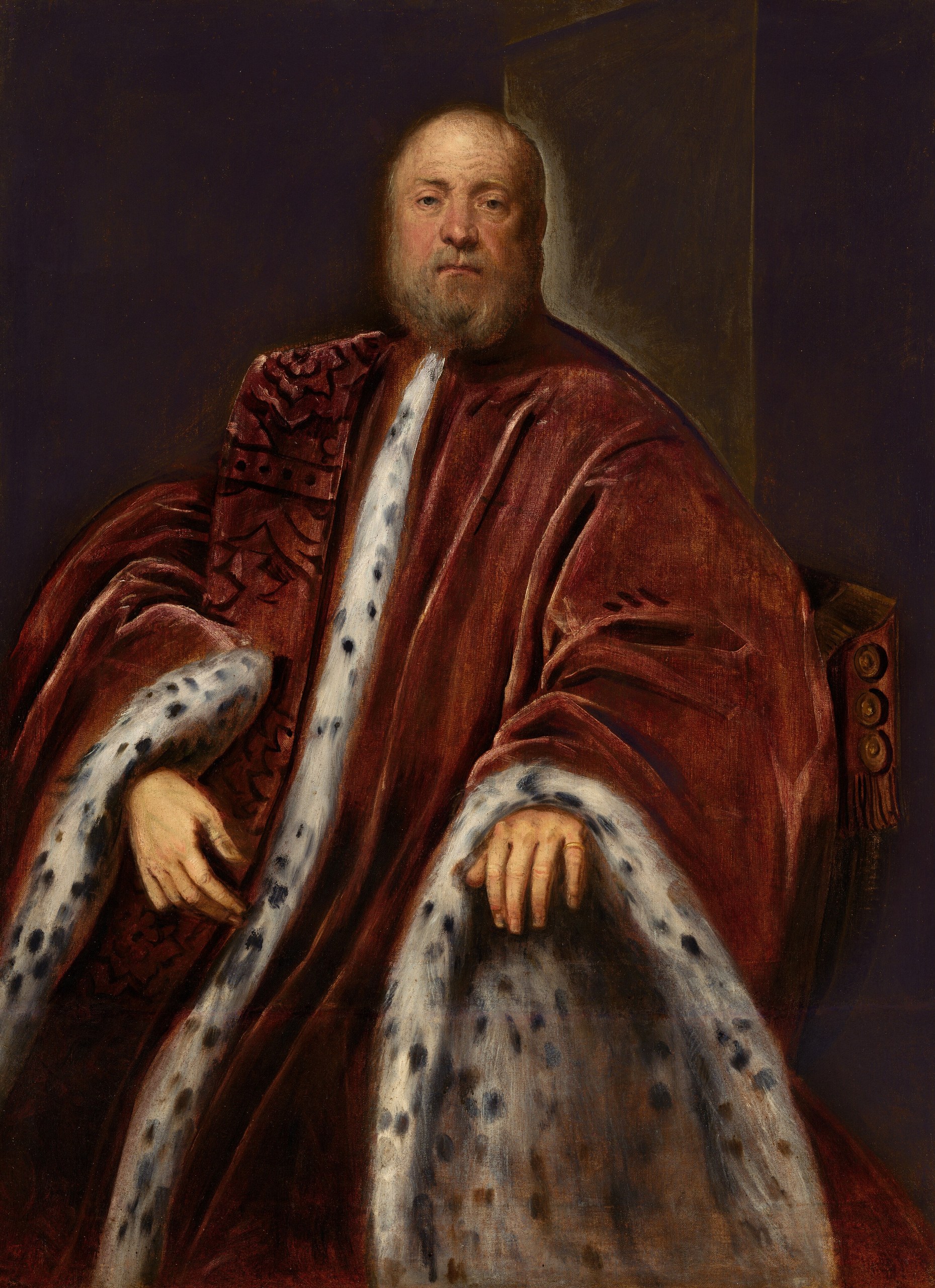
A Procurator of Saint Mark's
Jacopo Tintoretto
National Gallery of Art
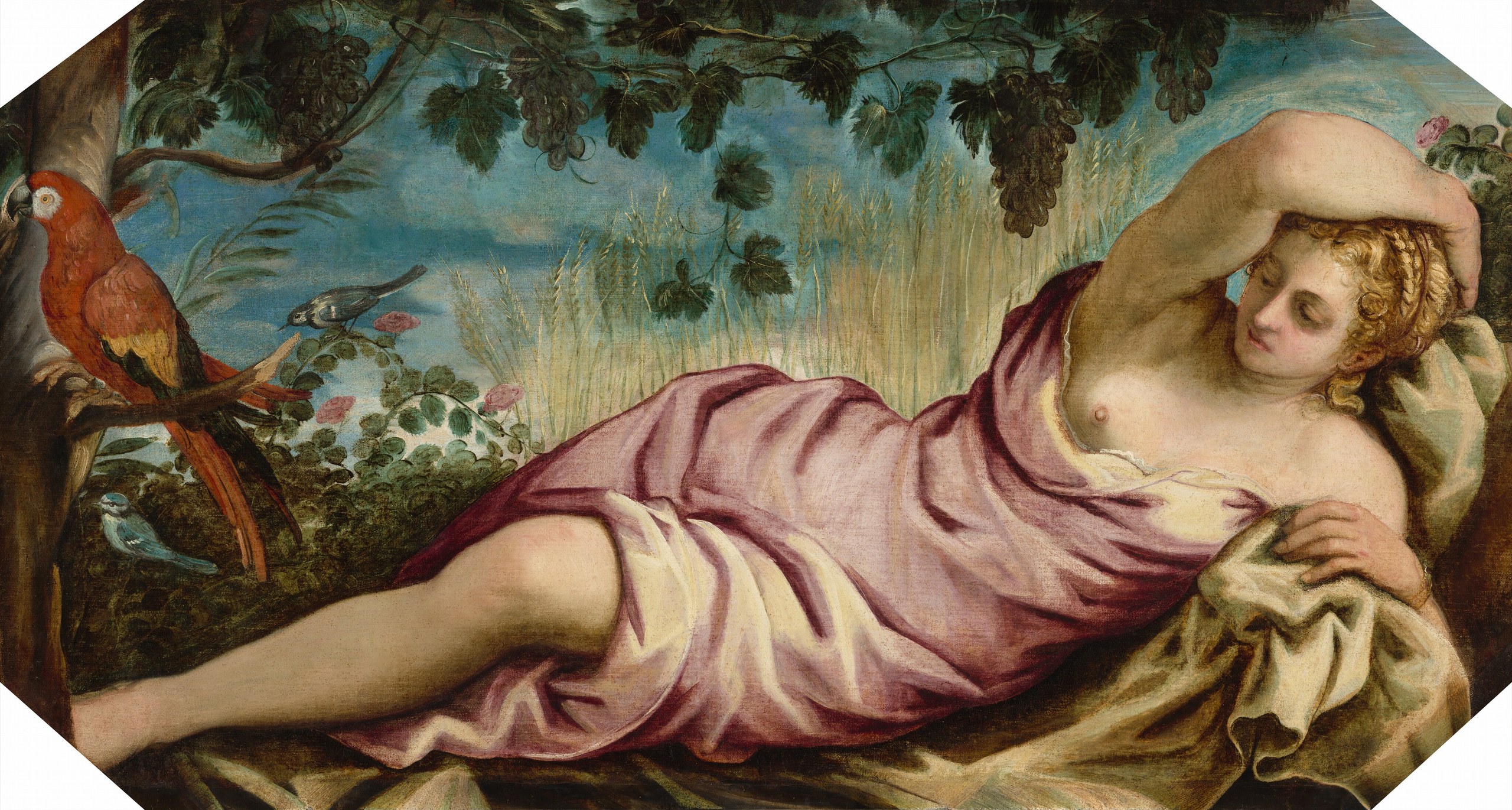
Summer
Jacopo Tintoretto
National Gallery of Art
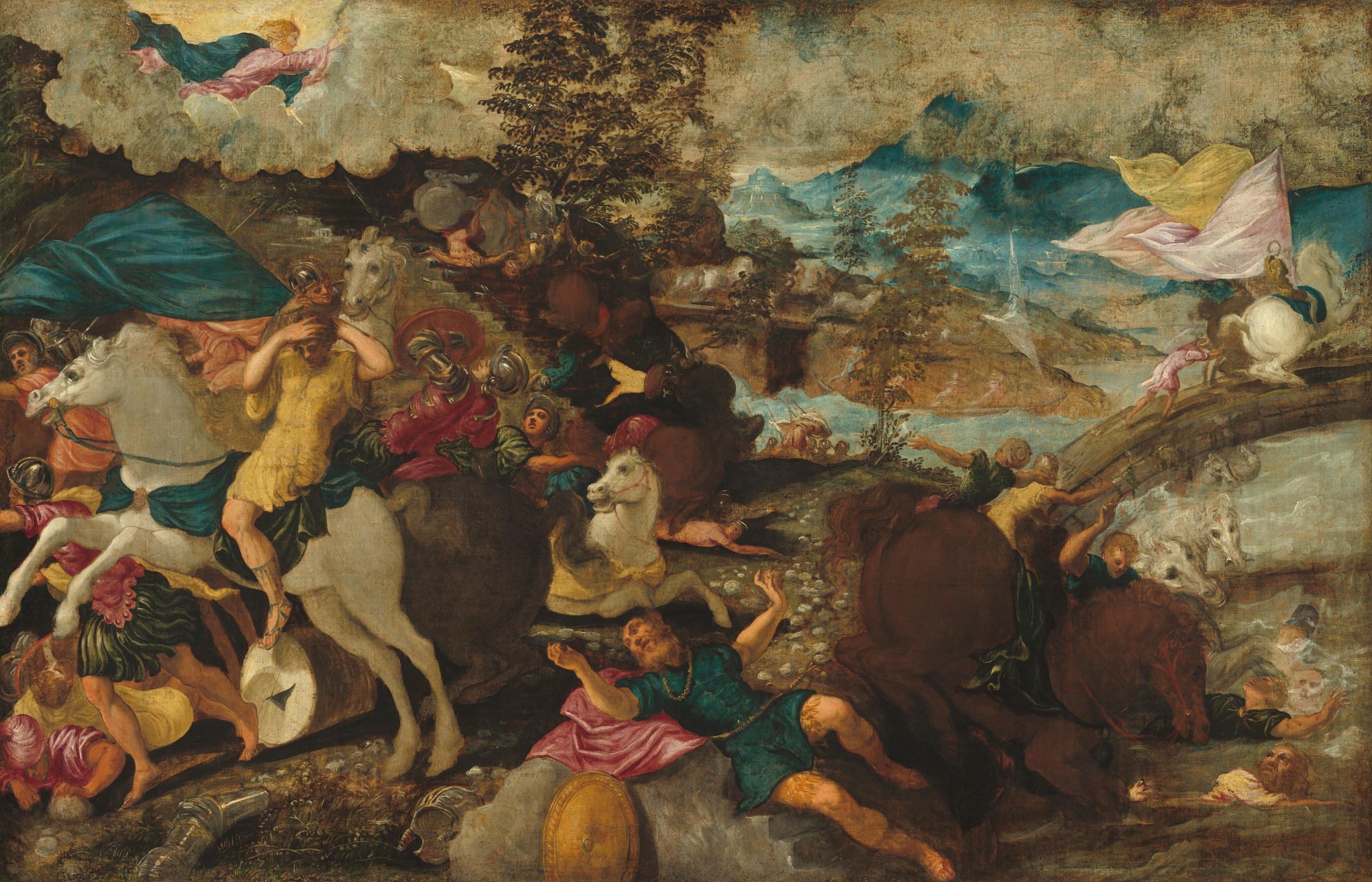
The Conversion of Saint Paul
Jacopo Tintoretto
National Gallery of Art
Works worth knowing
8 of Jacopo Tintoretto's works, and what makes each one worth a look.
Bacchus, Venus and Ariadne
Jacopo Tintoretto · 1577
Doge's Palace
Bacchus, Venus and Ariadne is an oil painting executed in Venice in 1576–1577 by the Italian painter Jacopo Tintoretto which hangs in the Sala dell'Anticollegio at the Doge's Palace (the Pallazzo Ducale) in Venice. It is one of four almost square paintings on mythological subjects in the same room which were commissioned to celebrate the government of Doge Girolamo Priuli (1486 to 1567). It depicts the god Bacchus (Greek: Dionysis) arriving from the sea with a wreath and a skirt of vine leaves, bearing a bunch of grapes and a marriage ring.
Paradise
Jacopo Tintoretto · 1588
Doge's Palace
Il Paradiso is a massive (22 x 9 metres) oil painting on canvas that dominates the main hall of the Doge's Palace, which hosted the Great Council of Venice. It is one of the largest paintings on canvas in the world and was painted by Jacopo Robusti, known more commonly as Tintoretto. The painting features a heavenly scene with depictions of various religious figures such as the portrayal of Justina, patron saint of Padua (whose celebration day is October 7, the date of the Battle of Lepanto).
The Origin of the Milky Way
Jacopo Tintoretto · 1575
National Gallery
The Origin of the Milky Way is a painting by the Italian Renaissance master Jacopo Tintoretto, in the National Gallery, London, formerly in the Orleans Collection. The painting is considered one of Tintoretto’s most successful paintings in the Venetian style. It is an oil painting on canvas, and dates from ca. 1575 to 1580.
Leda and the Swan
Jacopo Tintoretto · 1550
Uffizi Gallery
Leda and the Swan is an oil painting on canvas of c. 1550 to 1560 by Jacopo Tintoretto. It depicts the Greek mythological story of Leda and the Swan, the seduction of the princess Leda by the god Zeus, in the form of a swan.
Susanna and the Elders
Jacopo Tintoretto · 1555
Kunsthistorisches Museum
Susanna and the Elders is an oil painting by the Venetian painter Tintoretto (Jacopo Robusti, 1518 to 1594). Robusti, also known as Tintoretto or Il Furioso, for the energy and "fury" with which he painted, depicted both sacred and profane subjects in a period sometimes known as the Venetian “golden century”. Susanna and the Elders (c.
A Procurator of Saint Mark's
Jacopo Tintoretto
National Gallery of Art
The Patriarchal Cathedral Basilica of Saint Mark, commonly known as St Mark's Basilica, is the cathedral church of the Patriarchate of Venice; it became the episcopal seat of the Patriarch of Venice in 1807, replacing the earlier cathedral of San Pietro di Castello. It is dedicated to and holds the relics of Saint Mark the Evangelist, the patron saint of the city. The church is located on the eastern end of Saint Mark's Square, the former political and religious centre of the Republic of Venice, and is attached to the Doge's Palace.
Summer
Jacopo Tintoretto
National Gallery of Art
David Robert Jones (8 January 1947, 10 January 2016), known as David Bowie, was an English singer, songwriter and actor. Regarded as among the most influential musicians of the 20th century, he was known for his frequent reinvention and visual presentation, and is often referred to as the "chameleon of rock". His music, stagecraft and fashion have had a significant impact on popular culture.
The Conversion of Saint Paul
Jacopo Tintoretto
National Gallery of Art
The following is a list of paintings by the Italian artist Tintoretto, arranged chronologically. They are all oil on canvas unless otherwise noted. Martyrdom of the Ten-Thousand, fragment, circa 1538, 138 × 218 cm, Gallerie dell'Accademia, Venice Madonna and Child with Saint Joseph, Saint Jerome and the Procurator Girolamo Marcello, 1539, 148 × 193 cm, private collection Adoration of the Shepherds, circa 1540, 172 × 274 cm, Fitzwilliam Museum, Cambridge Modena ceilings, 1541 to 1542, Galleria Estense, Modena Apollo and Daphen Pyramus and Thisbe Latona Turns the Peasaants of Lycia into Frogs Apollo and Marsyas Semele Burned to Death Fall of Phaeton, 153 × 133 cm Deucalion and Pyrrha Mercury and Argus Orpheus Begging Pluto Niobe and her Daughters Antiope and Jupiter, 127 × 123 cm Venus, Vulcan and Cupid Fall of Icarus Rape of Europa, 126 × 124 cm Christ Disputing with the Doctors, circa 1542 to 1543, 197 × 319 cm, Museo del Duomo, Milan Supper at Emmaus, circa 1542 to 1544, 156 × 212 cm, Museum of Fine Arts, Budapest, Venus and Adonis, 1543 to 1544, 145 × 272 cm, Uffizi, Florence The Siege of Asola, 1544 to 1545, 197 × 467,5 cm, private collection Mystic Marriage of St Catherine with Saint Augustine, Saint Mark and Saint John the Baptist, circa 1545, 193 x 314 cm, Musée des Beaux-Arts, Lyon Bible Stories of Vienna, circa 1544 to 1545–1629 × 157 cm, Kunsthistorisches Museum, Vienna, Solomon and the Queen of Sheba Conversion of Belshazzar Bearing the Ark of the Covenant David Preaching David and Bathsheba Samson's Revenge Conversion of Saul, circa 1545, 152 × 236 cm, National Gallery of Art, Washington The Queen of Sheba Visits Solomon, 1545 to 1546, 150 × 237,5 cm, Bob Jones University, Greenville Ecce homo, 1546 to 1547, 109 × 136 cm, Museu de Arte, São Paulo, Brazil Christ and the Woman Caught in Adultery, circa 1546, 119 × 168 cm, Roma, Palazzo Barberini, Galleria nazionale d'arte antica Self-Portrait, 1546–1548, 45 × 38 cm, Philadelphia Museum of Art Christ Washes the Disciples' Feet, circa 1547, 210 × 533 cm, Museo del Prado, Madrid Portrait of Procurator Nicolò Priuli, circa 1547, 125 × 105 cm, Ca' d'Oro, Galleria Franchetti, Venice Miracle of the Slave, 1548, 415 × 541 cm, Gallerie dell'Accademia, Venice Saint Roch Healing Plague Victims, 1549, 307 × 673 cm, San Rocco, Venice Saint Martialis in Glory with Saint Peter and Saint Paul, 1548 to 1549, 376×181 cm, San Marziale, Venice The Miracle of Saint Augustine, 1549 to 1550, 255 x 174.5 cm, Museo Civico di Palazzo Chiericati, Vicenza.
How Jacopo Tintoretto worked
From the record of their own practice.
Tintoretto's style of painting is characterised by bold brushwork and the use of long strokes to define contours and highlights. His paintings emphasise the energy of human bodies in motion and often exploit extreme foreshortening and perspective effects to heighten the drama. Narrative content is conveyed by the gestures and dynamism of the figures rather than by facial expressions. An agreement is extant showing a plan to finish two historical paintings, each containing twenty figures, seven being portraits, in a two-month period of time. Sebastiano del Piombo remarked that Tintoretto could paint in two days as much as himself in two years; Annibale Carracci that Tintoretto was in many of his pictures equal to Titian, in others inferior to Tintoretto.
Where the work hangs
The museums that hold it, and their visitor guides.
Doge's Palace
7 in the archive · Venice
National Gallery of Art
4 in the archive · Washington, D.C.
Museo Soumaya
2 in the archive · Mexico City
Kunsthistorisches Museum
1 in the archive · Vienna
State Hermitage Museum
1 in the archive · Saint Petersburg
Uffizi Gallery
1 in the archive · Florence
National Gallery
1 in the archive · London
If you like Jacopo Tintoretto
Artists held by the same museums.
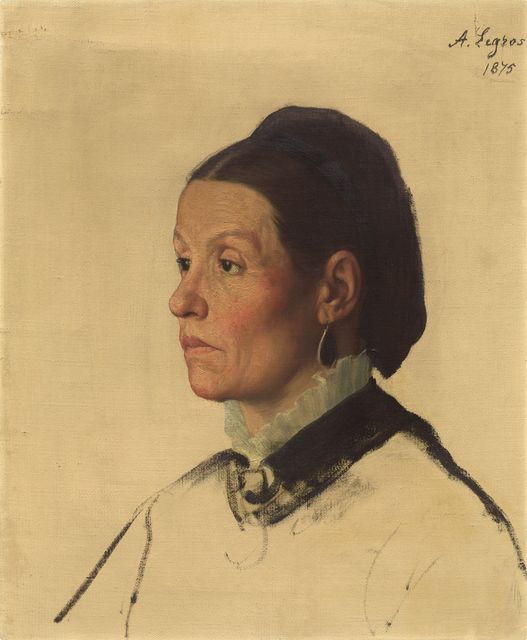
Alphonse Legros
French · 561 in the archive
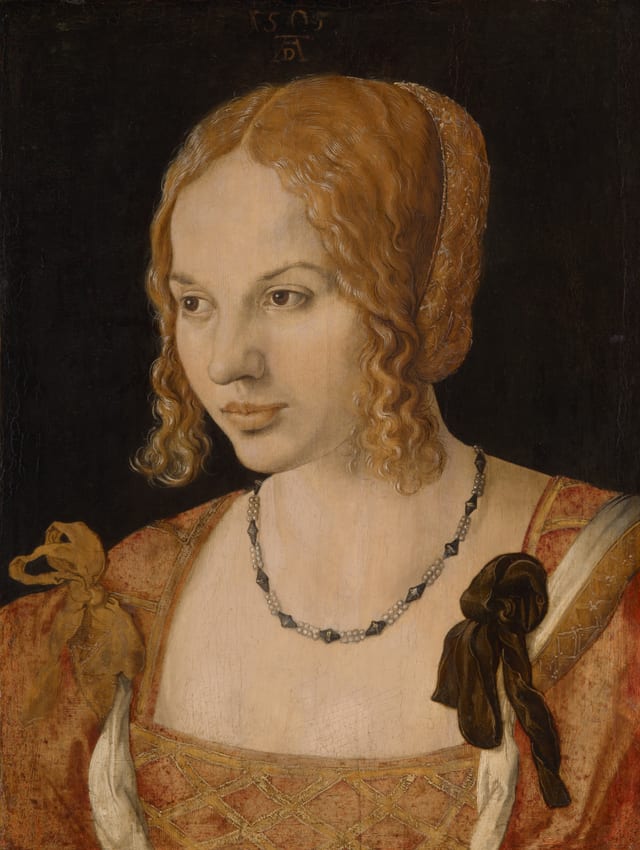
Albrecht Dürer
German · 297 in the archive
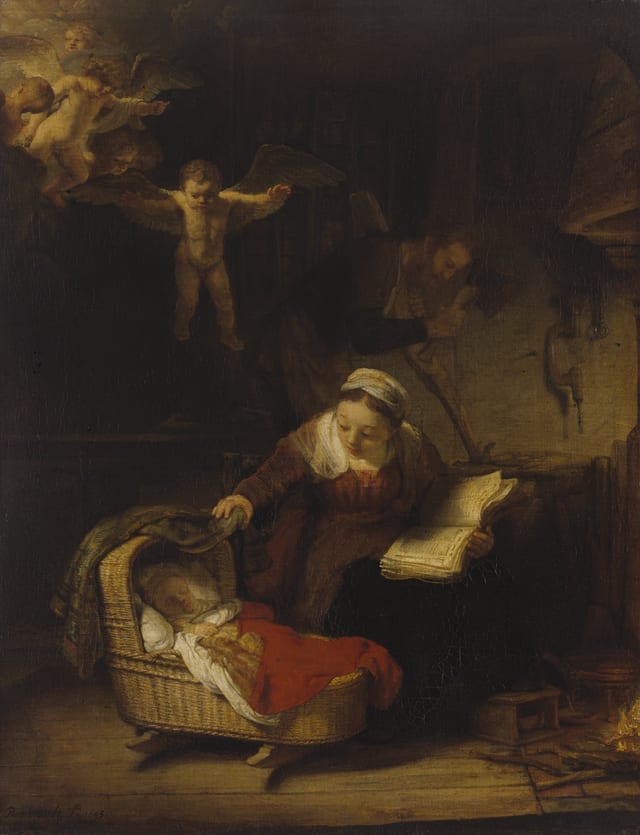
Rembrandt van Rijn
Dutch · 267 in the archive
Eadweard Muybridge
English · 259 in the archive
Jean-Louis Forain
French · 259 in the archive
Henri de Toulouse-Lautrec
French · 242 in the archive
George Catlin
United States · 223 in the archive
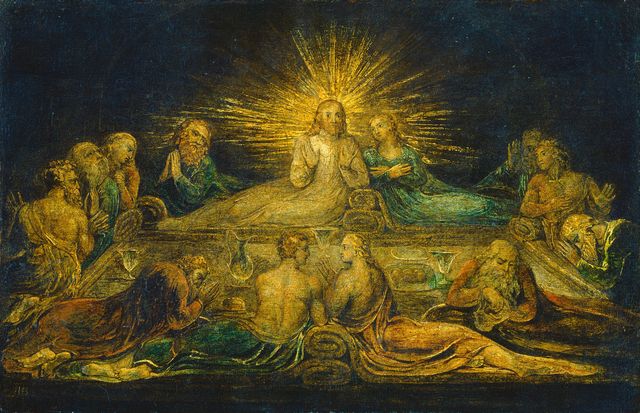
William Blake
United Kingdom of Great Britain and Ireland · 173 in the archive
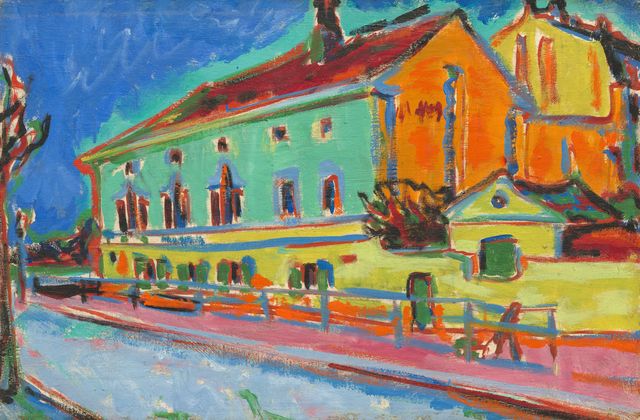
Ernst Ludwig Kirchner
German · 147 in the archive
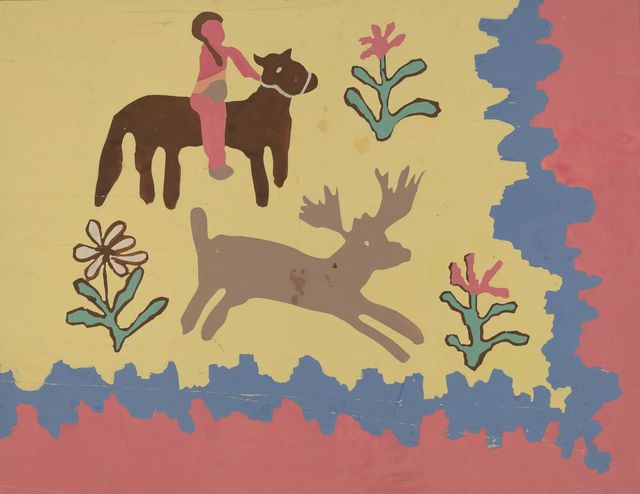
Majel G. Claflin
United States · 135 in the archive
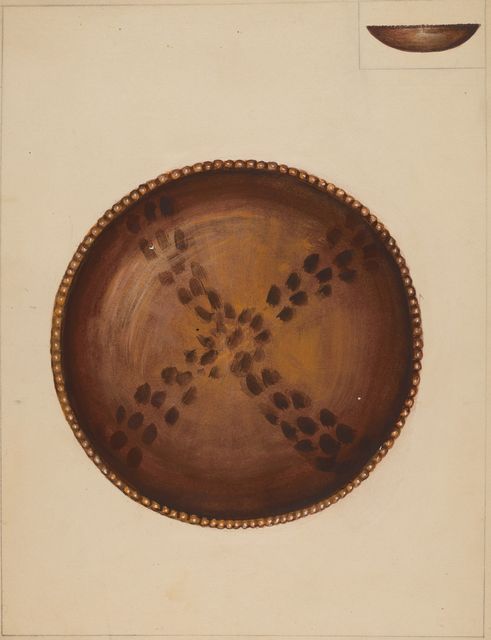
Mina Lowry
United States · 124 in the archive
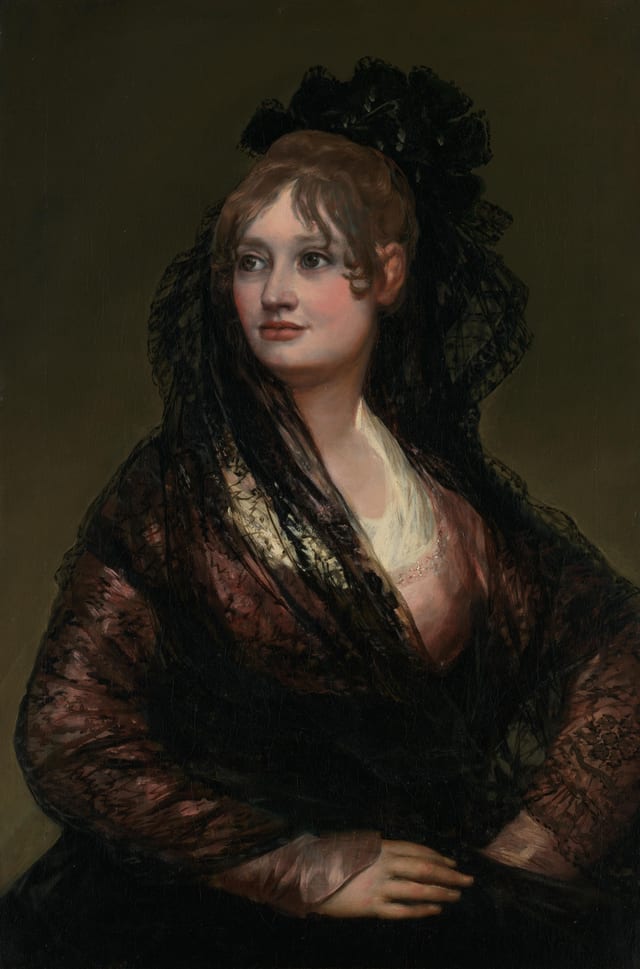
Francisco Goya
Spanish · 115 in the archive
Invite the masters into your living room.
Jacopo Tintoretto on your TV, phone, or tablet. Free to start.
View on MomentableIndependent guide by Momentable · biography from Wikipedia · artworks are in the public domain and credited to the museum that holds them