Jupiter and Antiope
Anthony van Dyck · 1620

Baroque
The art of the seventeenth century at its most theatrical: bodies caught mid-action, light falling hard, and marble that behaves like flesh.
Play 40 works from this collection on your TV, phone or tablet with Momentable Art TV.
Play CollectionRome, and the Church that wanted to be felt
Baroque was the style that governed art and architecture through the seventeenth century, sure of itself, fond of movement, and loyal to how things really look. It flowered in Rome, most vigorously in the decades either side of 1660, and its deepest patron was the Catholic Counter-Reformation. Two men stand for it: Bernini, who gave the new manner its shape in Rome, and Rubens, who carried it into northern Europe.
Though Rome invented it, the manner travelled, and courts and churches across Europe took it up. Nor was it reserved for altars: the same confidence fills portraits, still lifes and scenes from myth.
How to recognise it
Watch for the moment of greatest strain: an arm flung wide, a body twisting off balance, a face lit from one side in a dark room. Baroque artists set out to make the scene feel present, unfolding in front of you rather than posed for you.
Artists
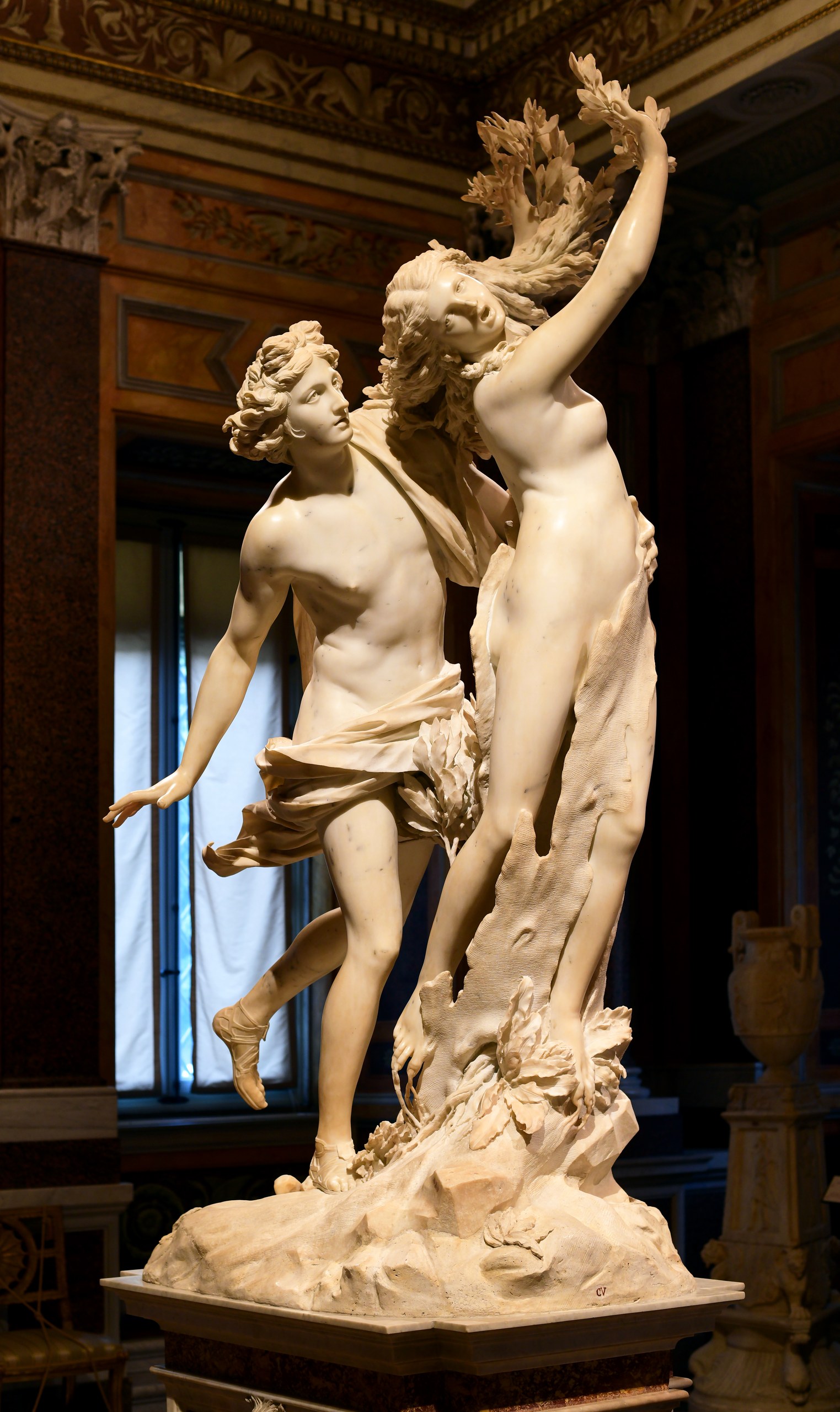
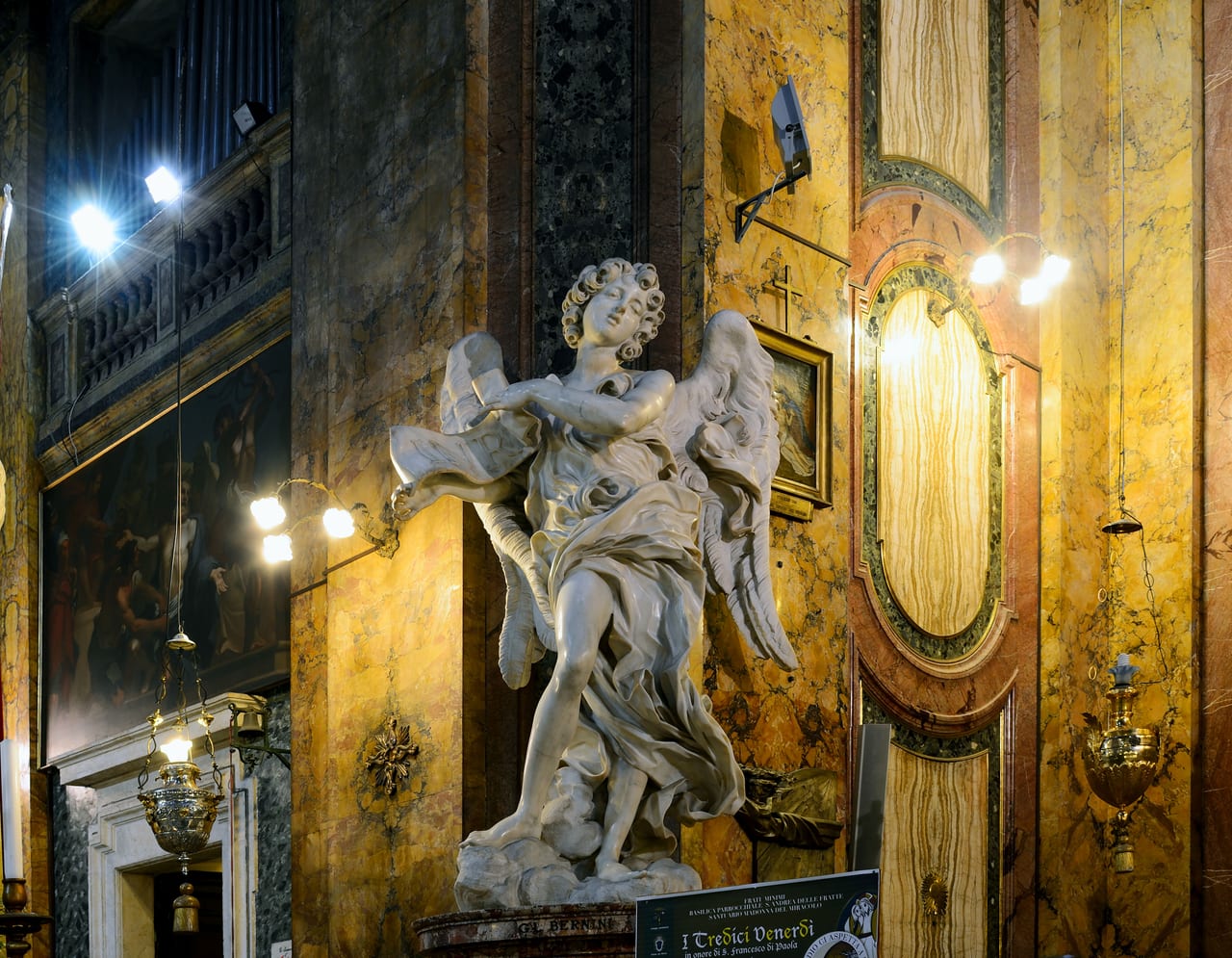
Sculptor, architect and city planner in one, and the master marble-hand of his century; the Baroque style in sculpture is substantially his invention.
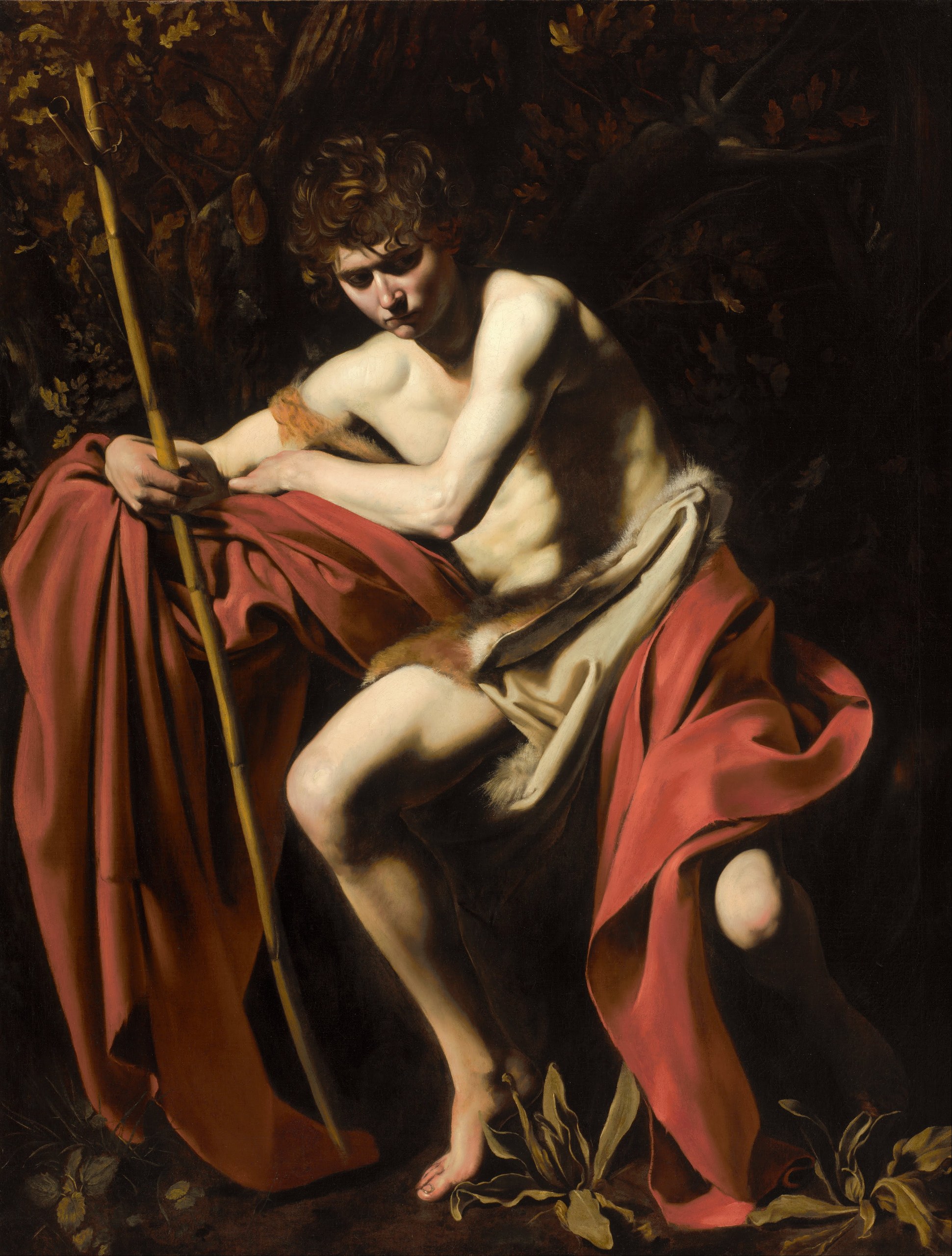
Born Michelangelo Merisi and known by the name of his home town in Lombardy. He moved to Rome in 1592, at the age of 21.
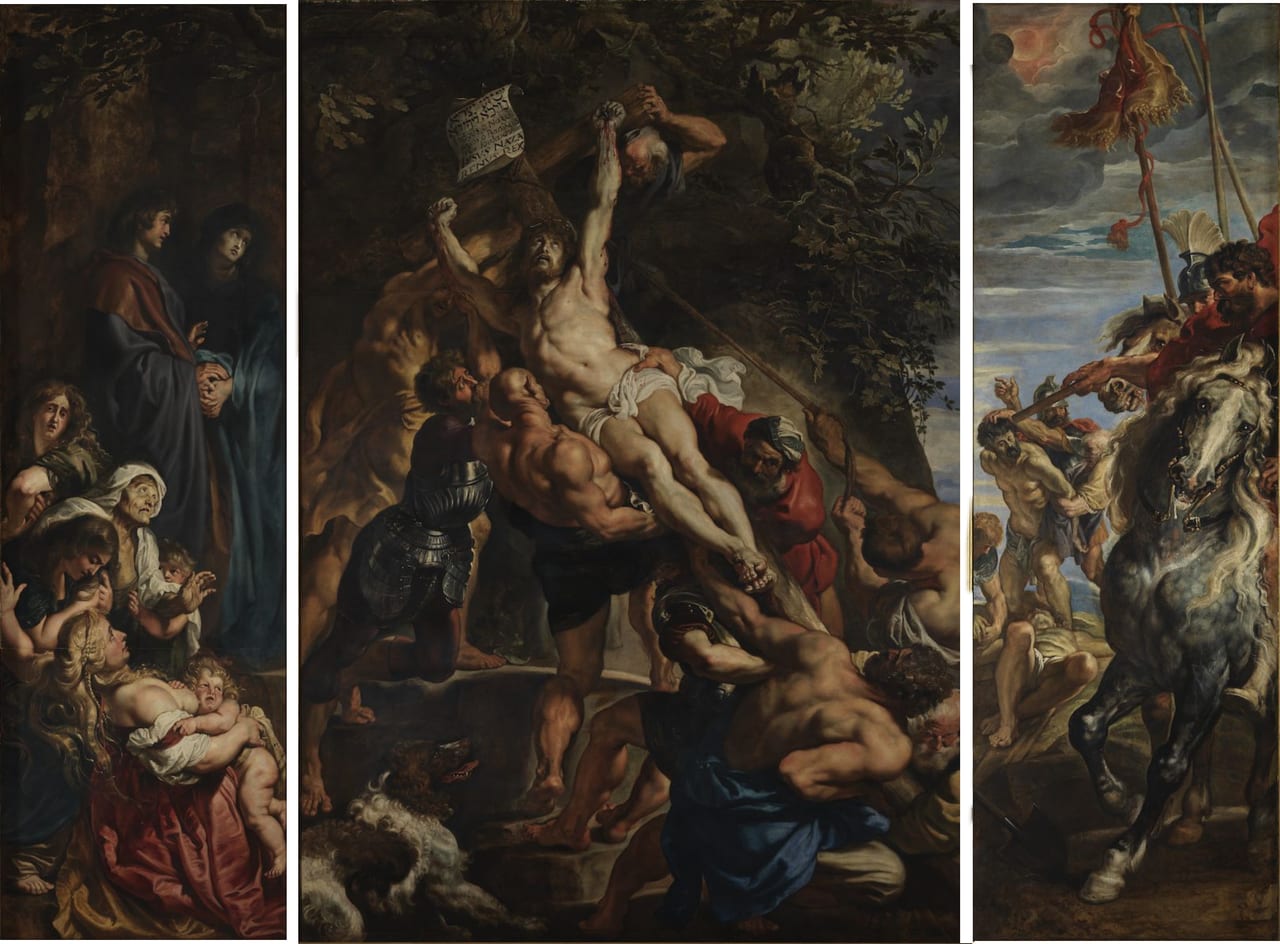
A painter of huge success whose workshop turned out pictures at a staggering rate, and a diplomat in the politics of his century.
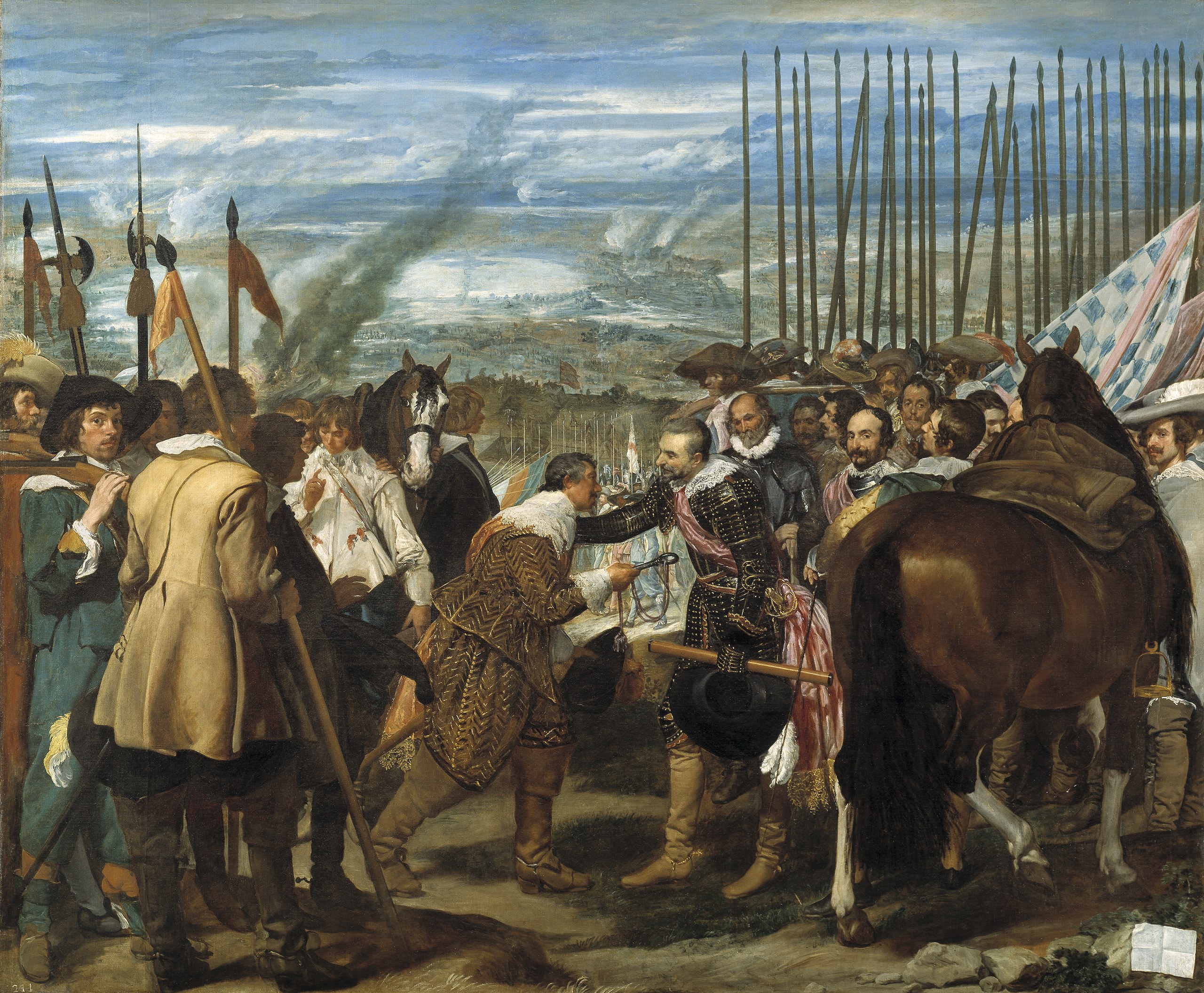
Born in Seville in 1599, he rose to be the Spanish king's painter, and the king would let no one else portray him.
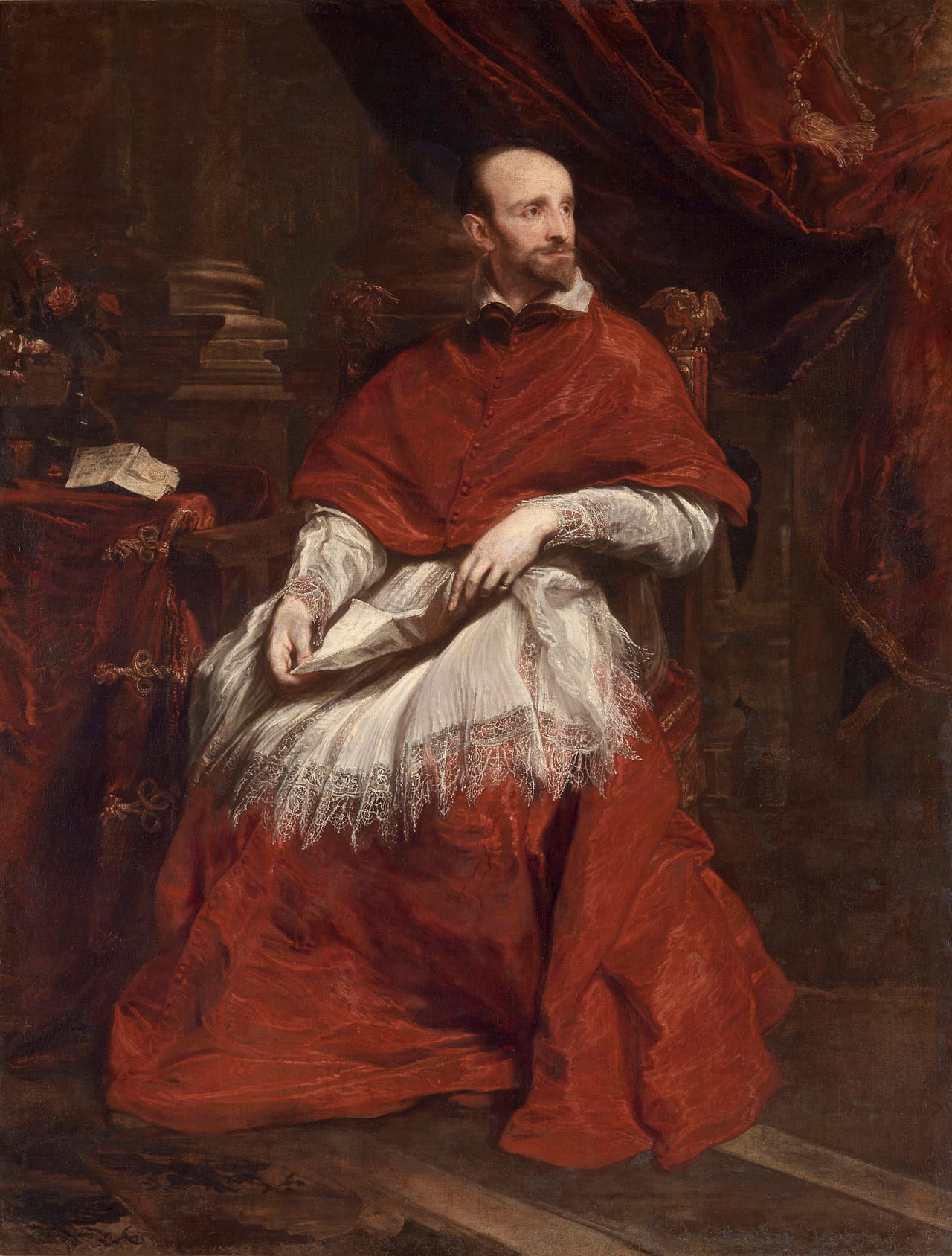
Anthony van Dyck
Rubens's only rival in Flanders; the court of Charles I is remembered largely through his elegant portraits of it.
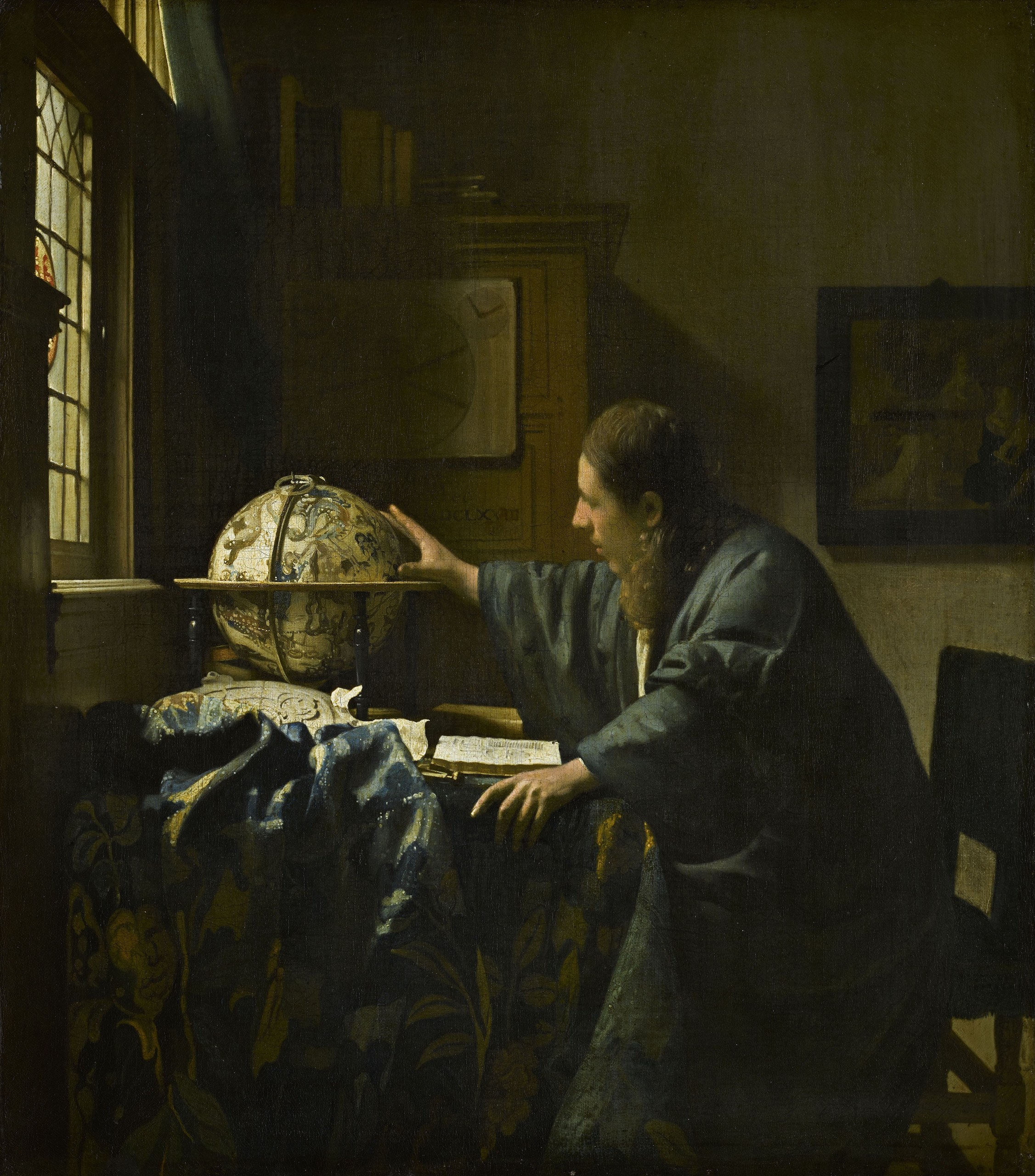
A handful of pictures, around three dozen, and a place among the great Dutch masters on the strength of them.
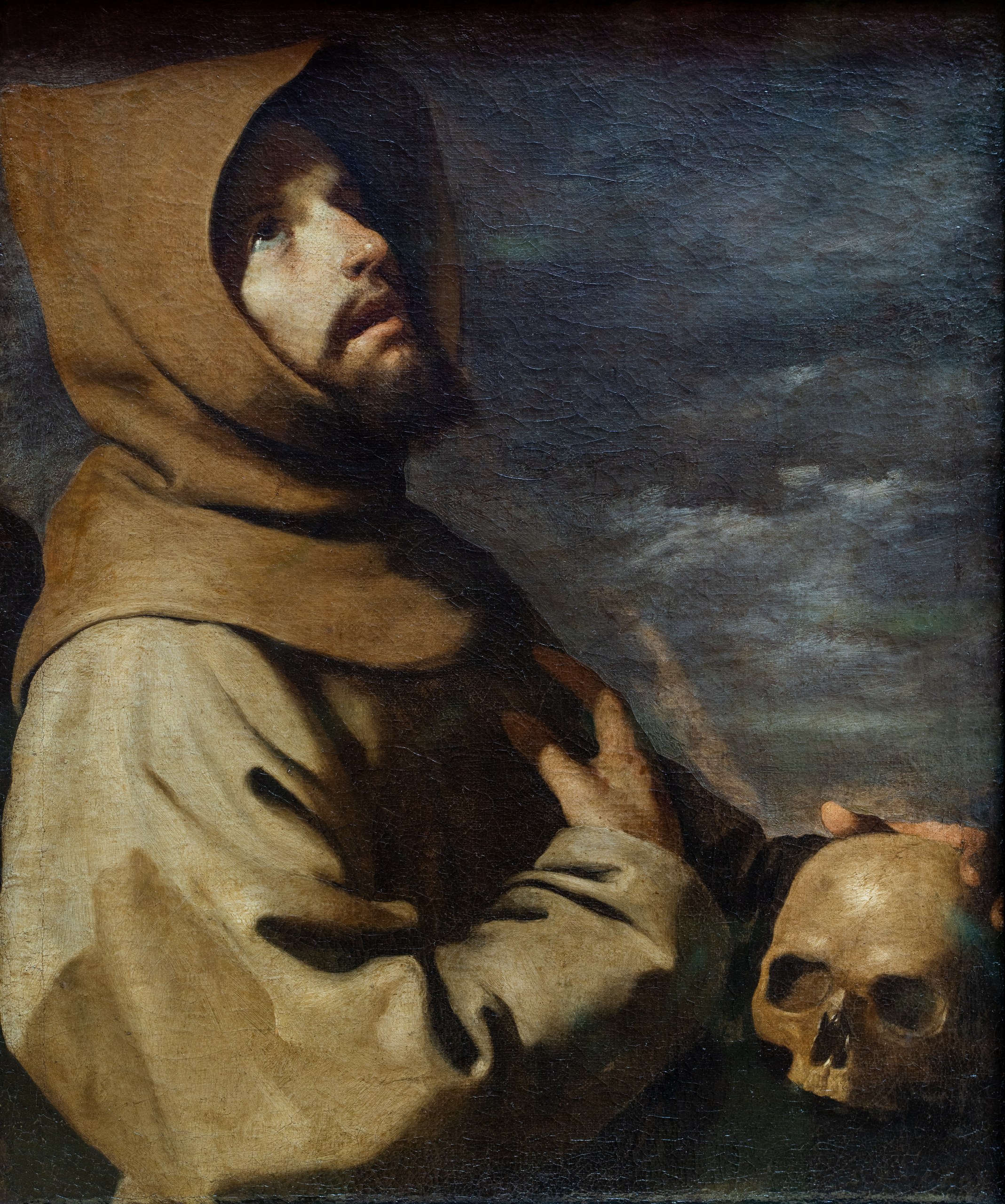
Seville's leading painter for a generation; his pictures, mostly made for Spanish religious orders, win their force from plainness and inward intensity.
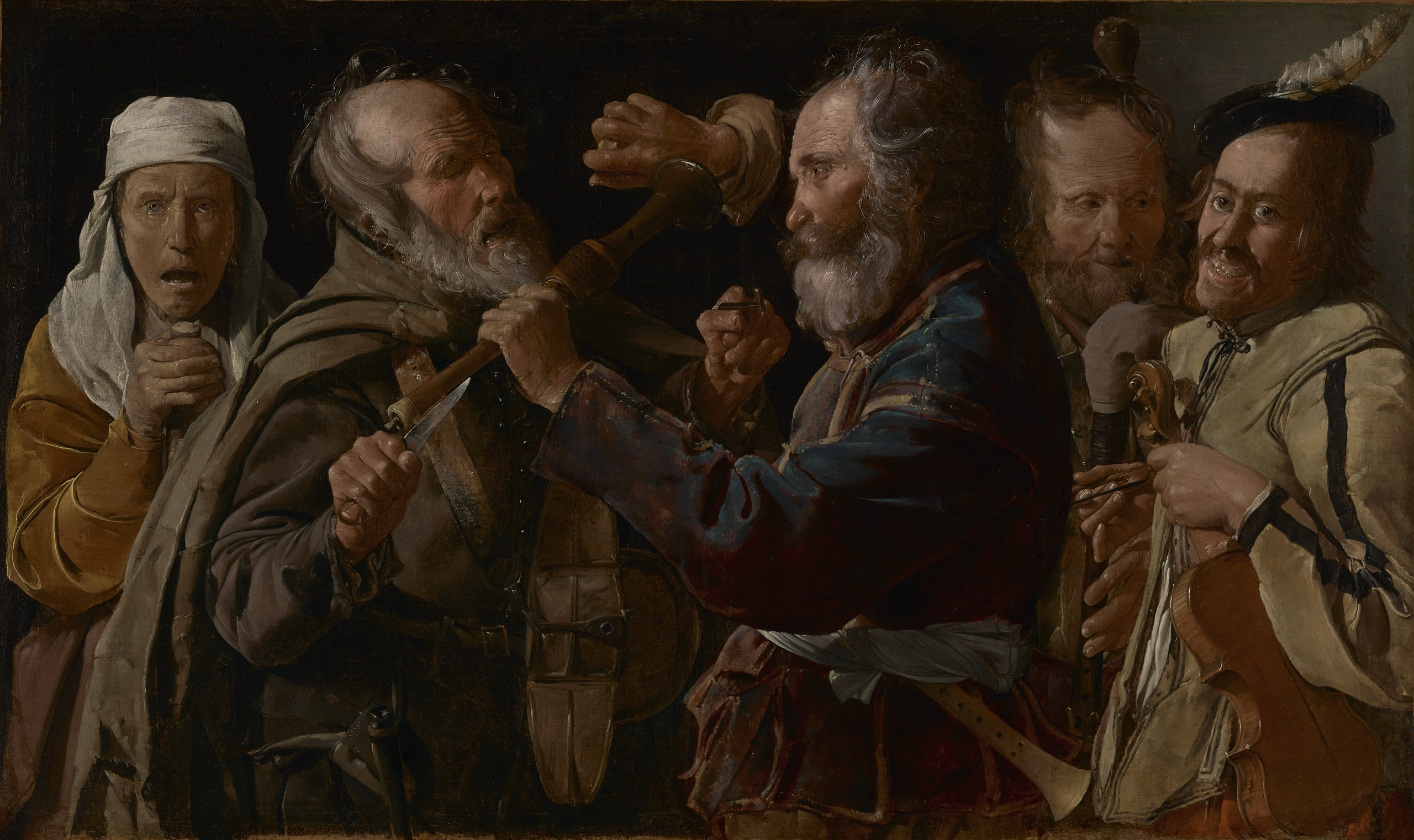
A French painter who passed his working life in Lorraine, chiefly painting religion by candlelight.
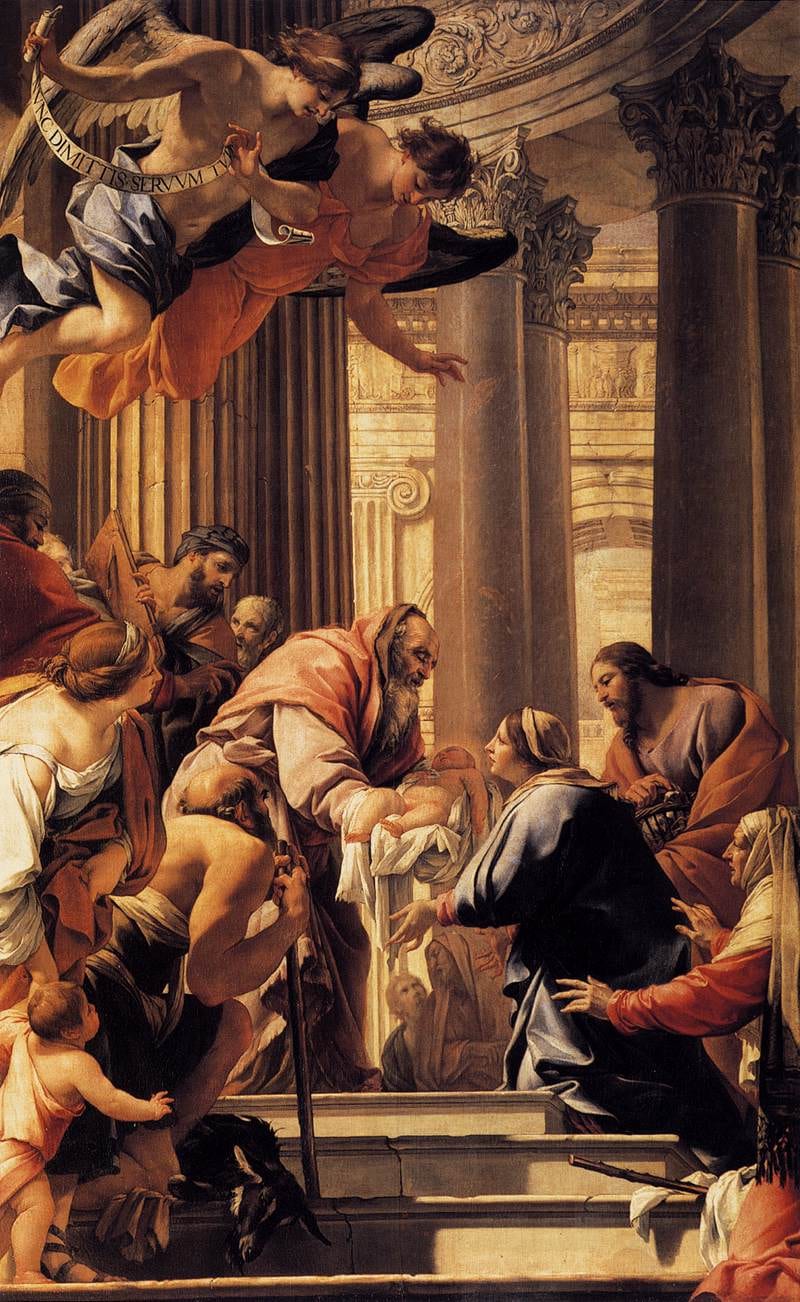
Made his name in Italy before Louis XIII called him home to serve as first painter to the king.
Artworks
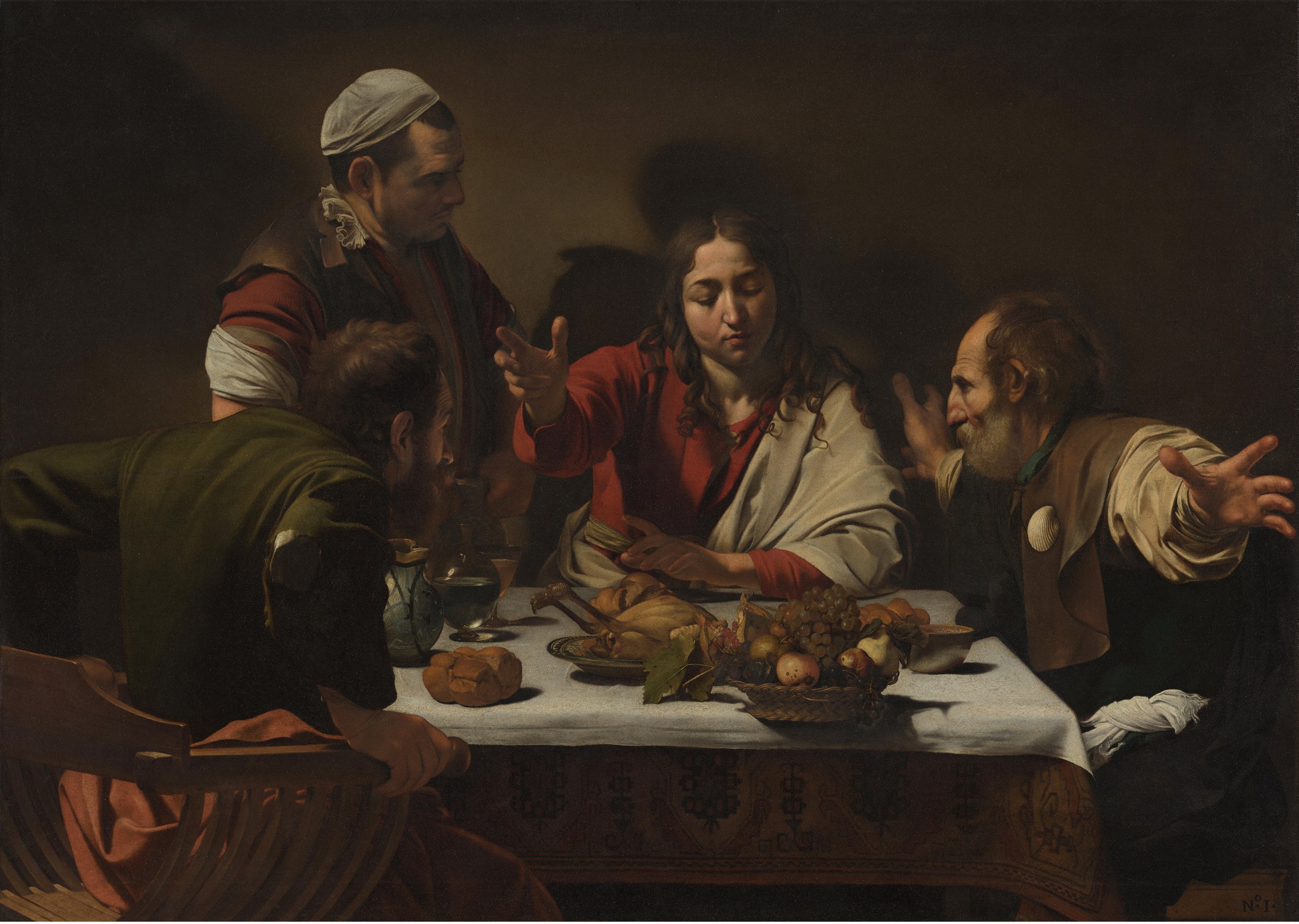
Supper at Emmaus
Caravaggio · 1601
Supper at Emmaus. The risen Christ sits at table with two disciples, and Caravaggio catches the instant of recognition: one man grips his chair, the other throws his arms wide. Ciriaco Mattei, brother of a cardinal, commissioned and paid for the picture.
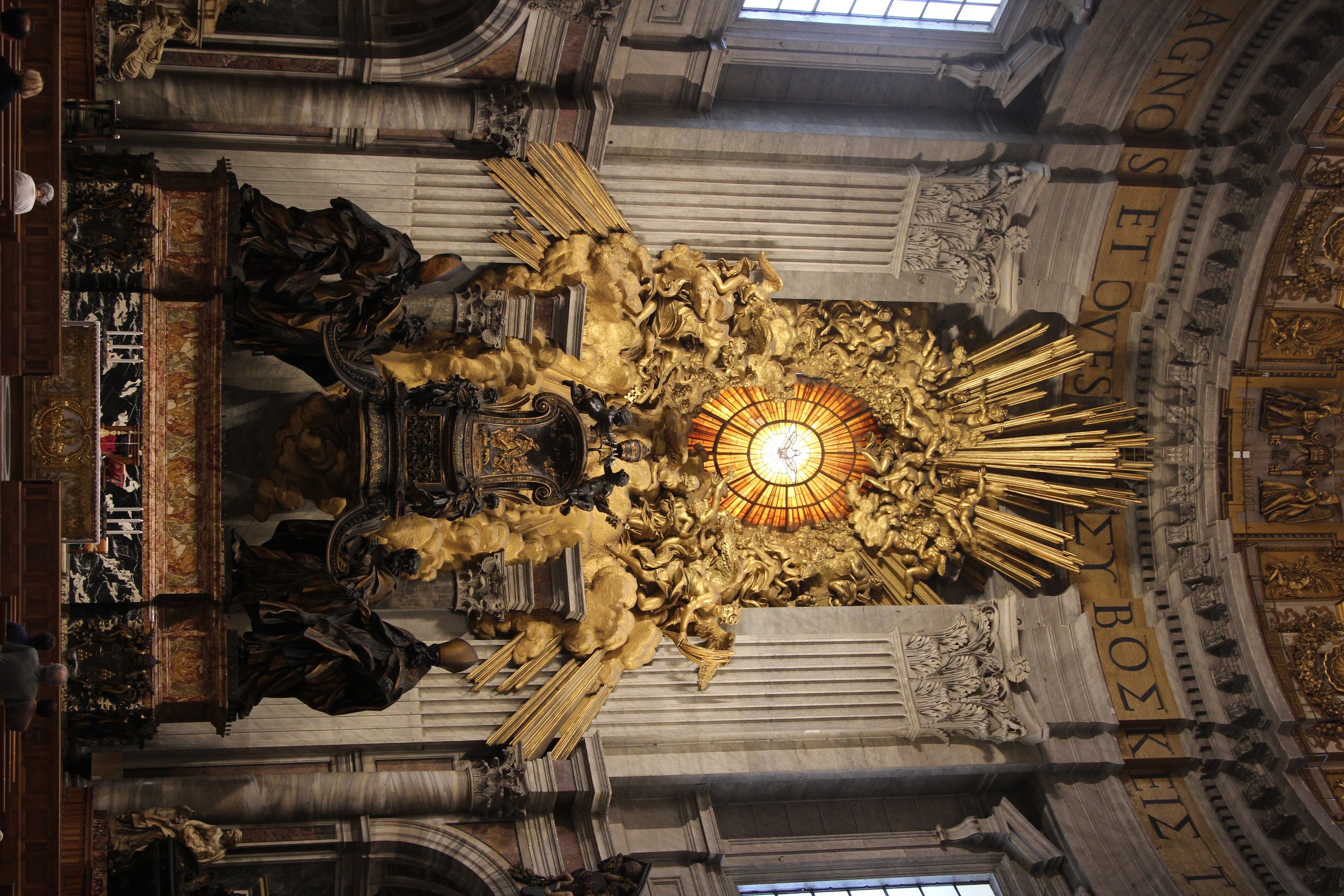
Chair of Saint Peter
Gian Lorenzo Bernini · 1647
Chair of Saint Peter. A throne of gilt bronze and stucco holding, at its heart, the ancient wooden chair tradition gives to the apostle himself. Bernini designed the casing to float the relic in light above the apse of St Peter's.
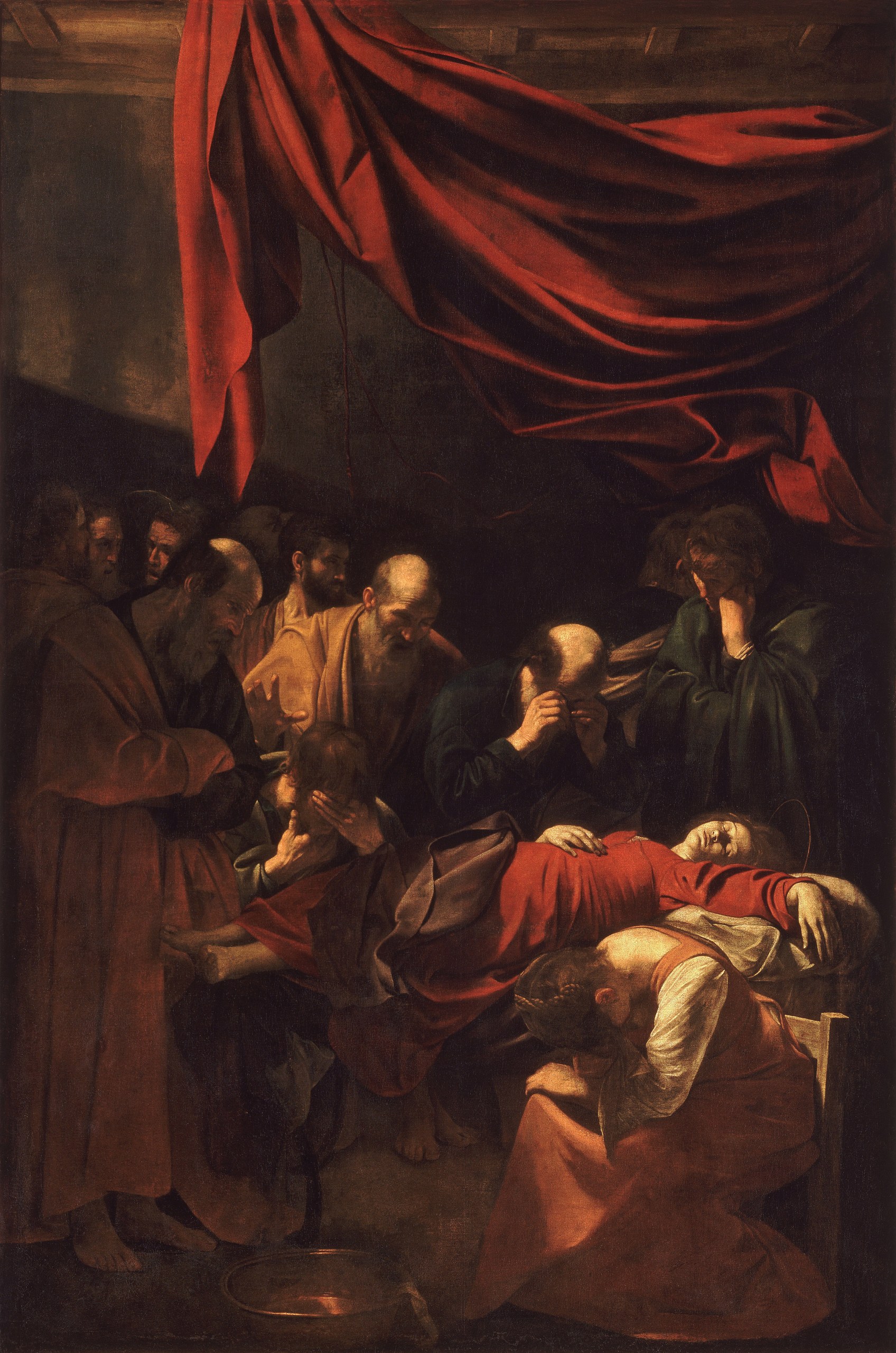
Death of the Virgin
Caravaggio · 1603
Death of the Virgin. The mother of Christ lies plain and bare on a simple bed, the apostles crowding her in grief. Painted for a papal lawyer's chapel in Rome's Carmelite church of Santa Maria della Scala, it was rejected as unfit by the parish and today hangs in the Louvre.
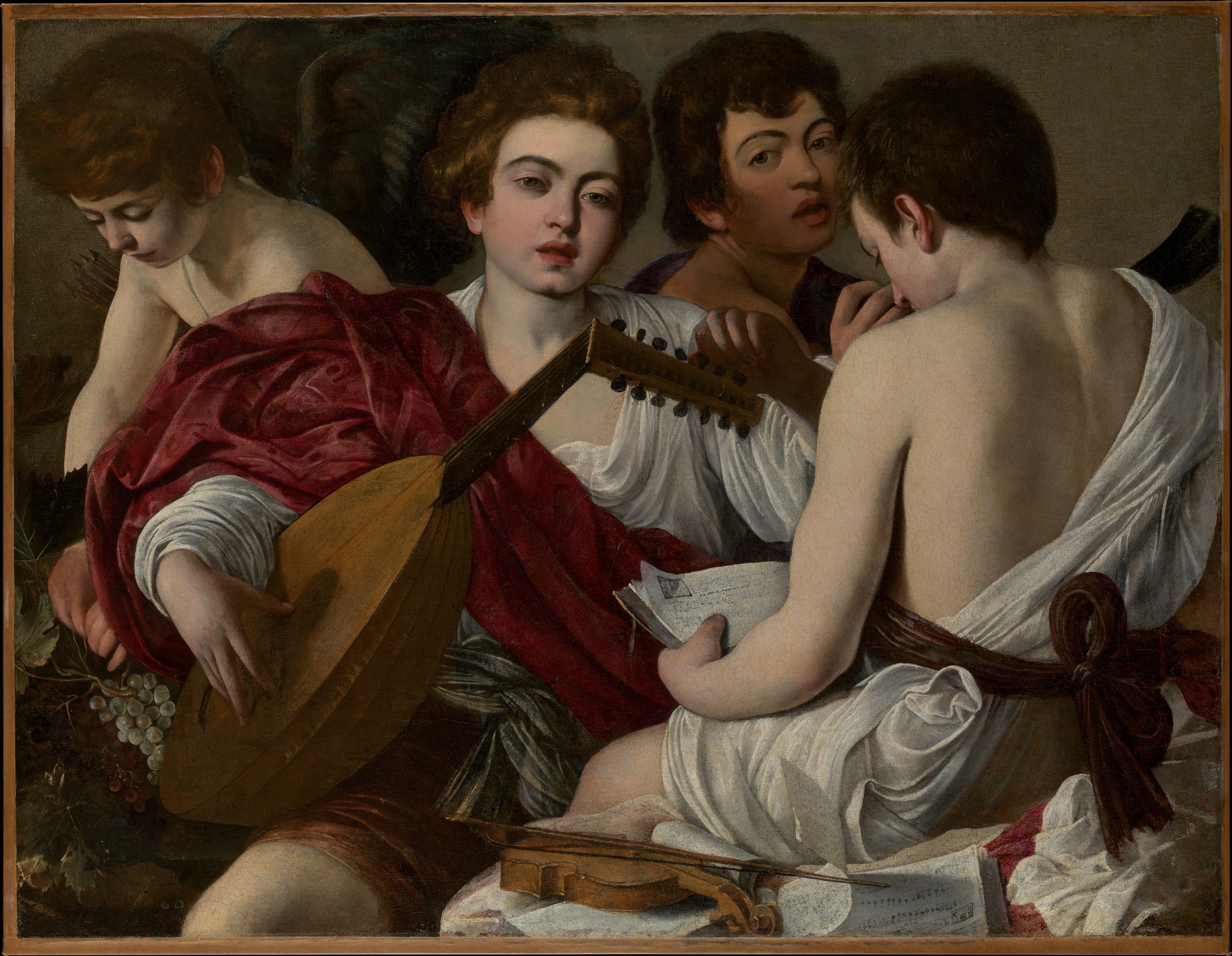
The Musicians
Caravaggio · 1595
The Musicians. Four youths pressed shoulder to shoulder with their instruments, one in the middle caught mid-note. Cardinal del Monte, whose household loved music, commissioned it.
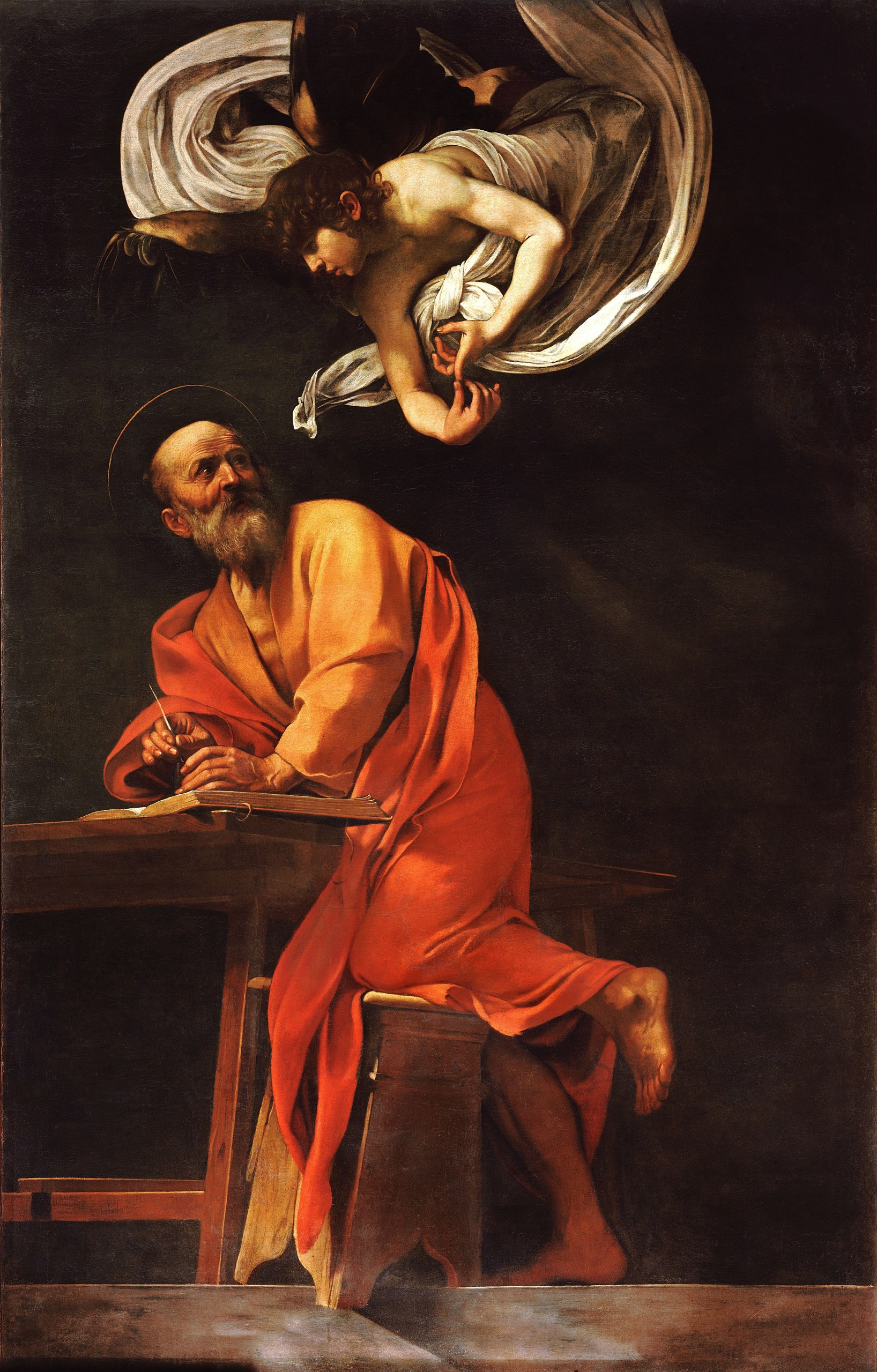
The Inspiration of Saint Matthew
Caravaggio · 1602
The Inspiration of Saint Matthew. The evangelist turns from his writing toward the angel who crosses the room above him. Two other Caravaggios share the Contarelli Chapel with it, in San Luigi dei Francesi in Rome.
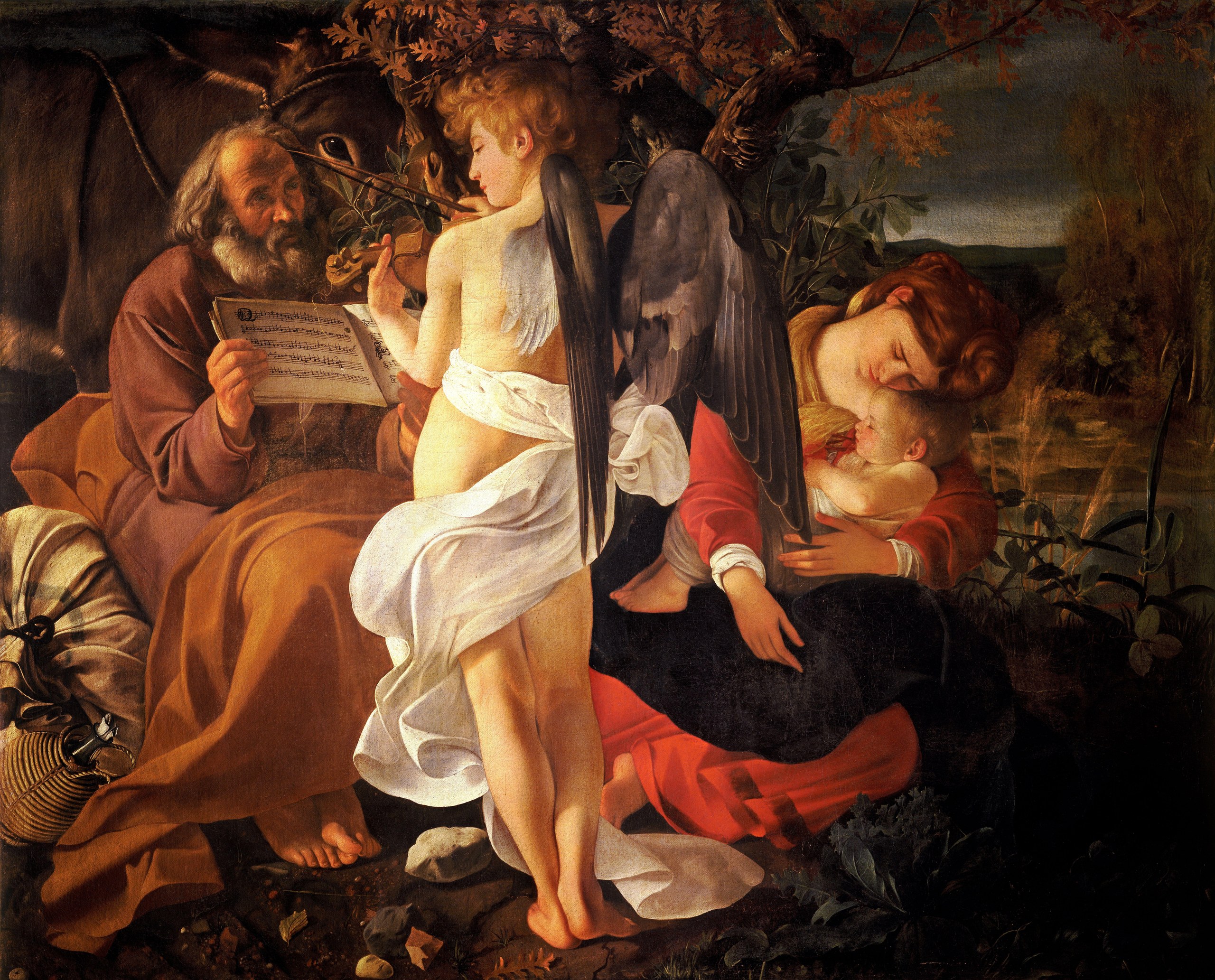
Rest on the Flight into Egypt
Caravaggio · 1597
Rest on the Flight into Egypt. The Holy Family pauses in a grove while an angel fiddles for them, the music of the legend rather than of scripture. Few painters told the story this way.
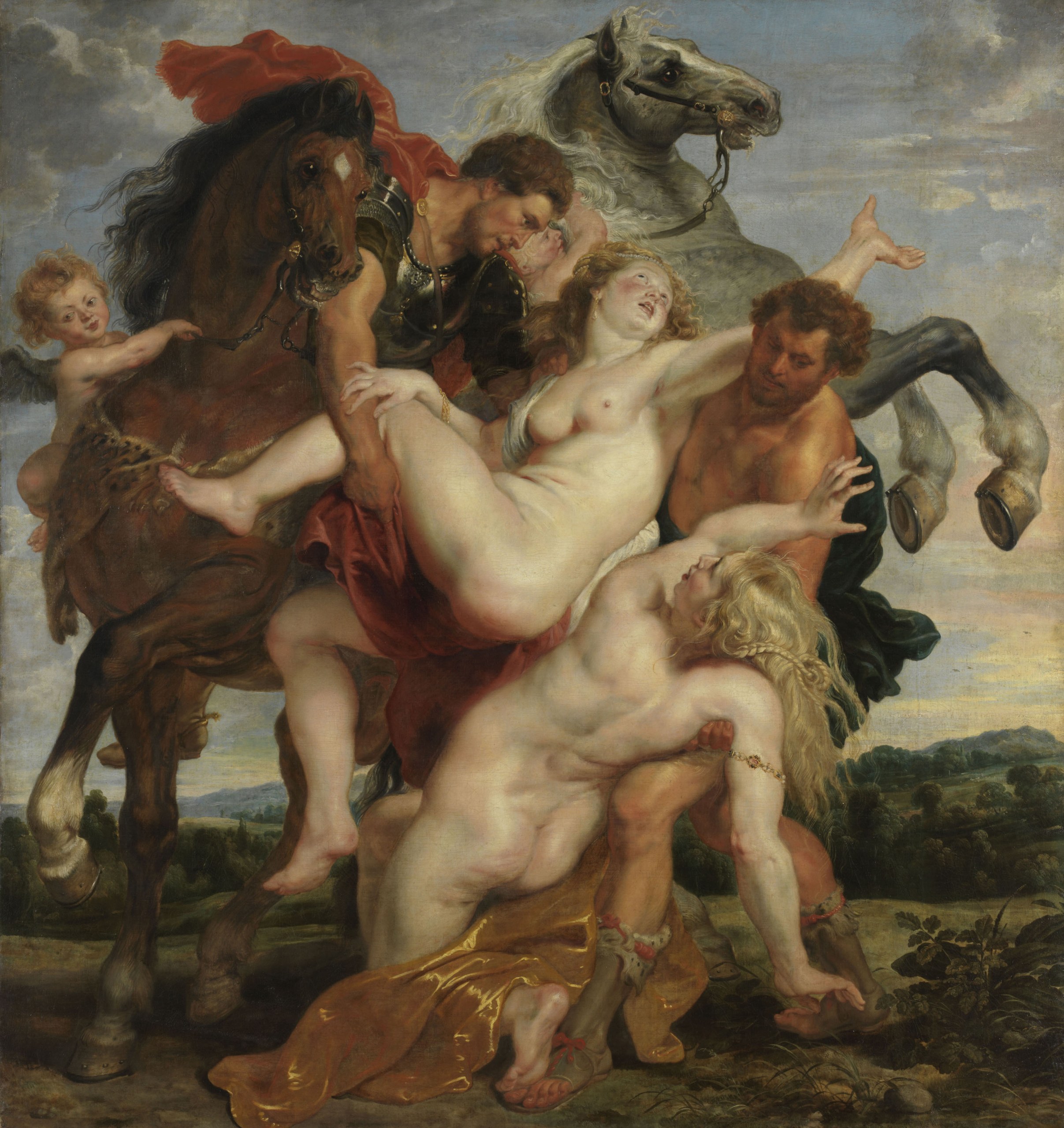
The Rape of the Daughters of Leucippus
Peter Paul Rubens · 1618
The Rape of the Daughters of Leucippus. Two sisters lifted bodily onto two horses, the whole composition one upward spiral of bodies, silk and hooves. Rubens painted it with Jan Wildens; Munich's Alte Pinakothek keeps it.
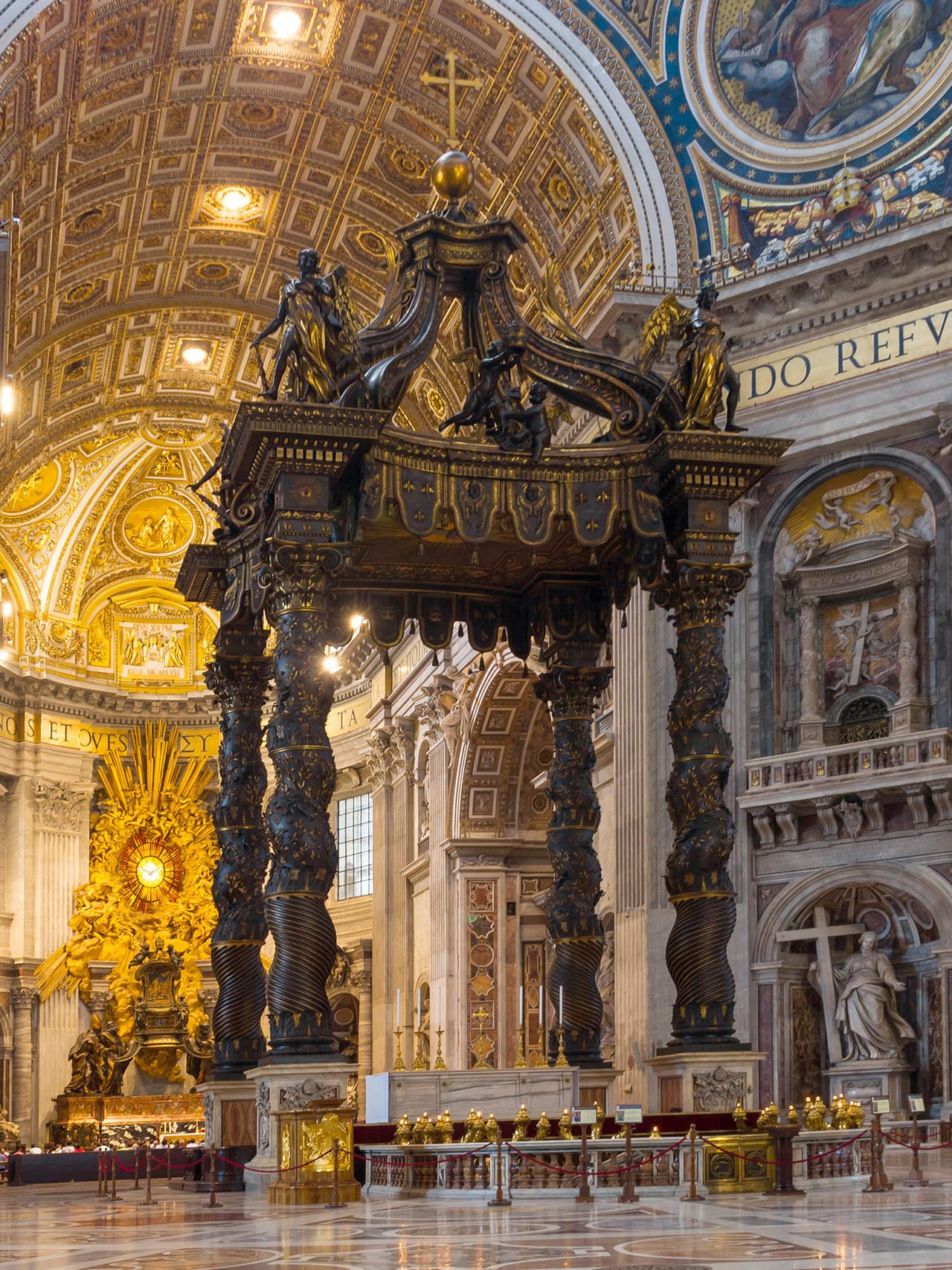
St. Peter's Baldachin
Gian Lorenzo Bernini · 1620
St Peter's Baldachin. A canopy of bronze, twisted columns and all, raised over the high altar of St Peter's Basilica directly beneath the dome: Bernini's answer to a building too large for any single gesture.
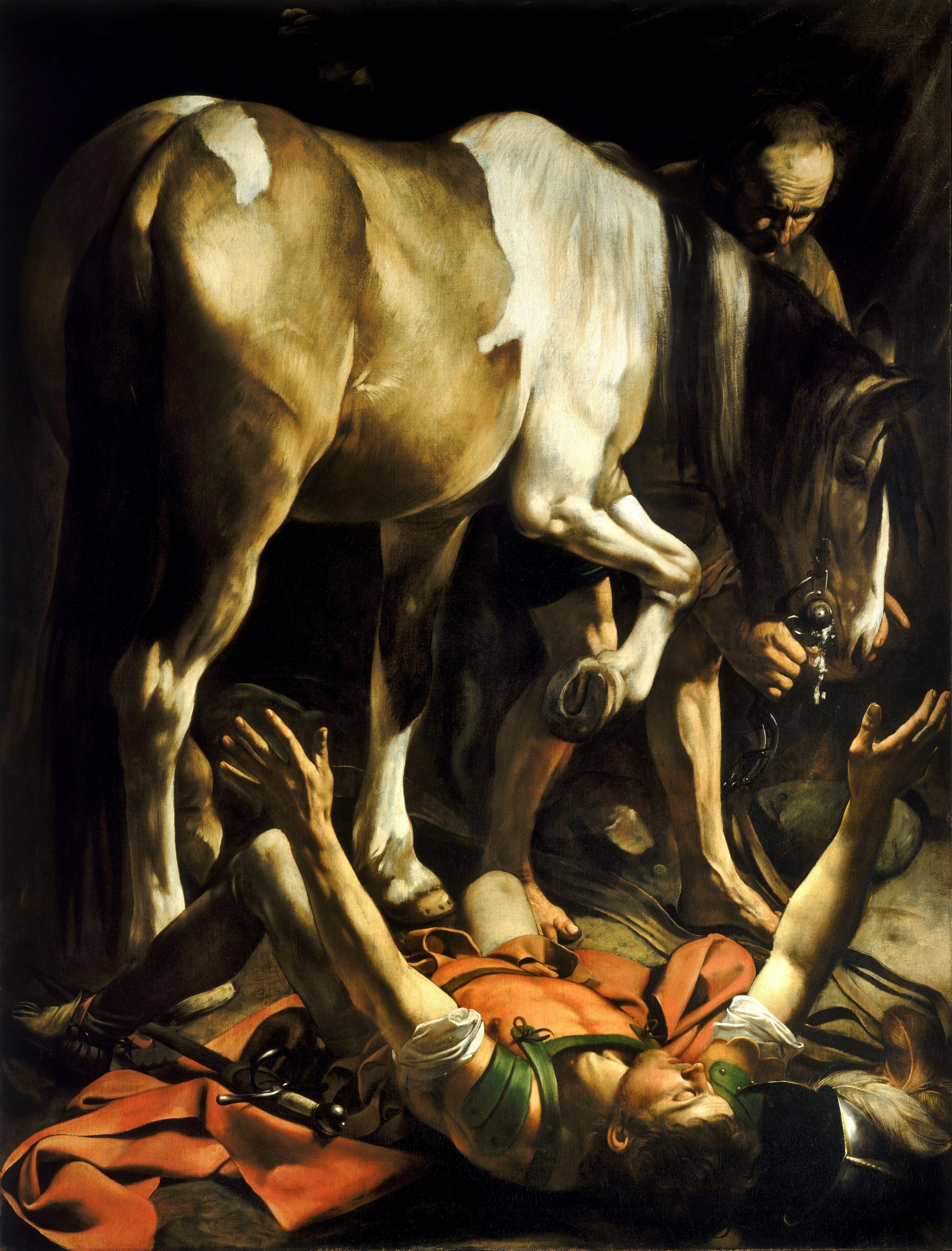
Conversion on the Way to Damascus
Caravaggio · 1600
Conversion on the Way to Damascus. Saul lies flat under his own horse, arms open to a light we cannot see. Painted in 1601 for the Cerasi Chapel in Santa Maria del Popolo, Rome.
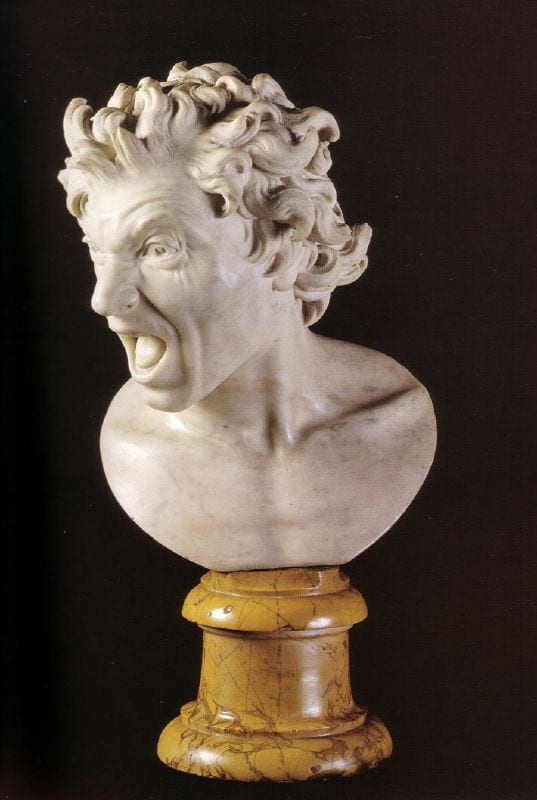
Damned Soul
Gian Lorenzo Bernini · 1619
Damned Soul. A marble face convulsed, mouth and eyes wide, carved young and fast; Bernini made it as the companion of his calm Blessed Soul.
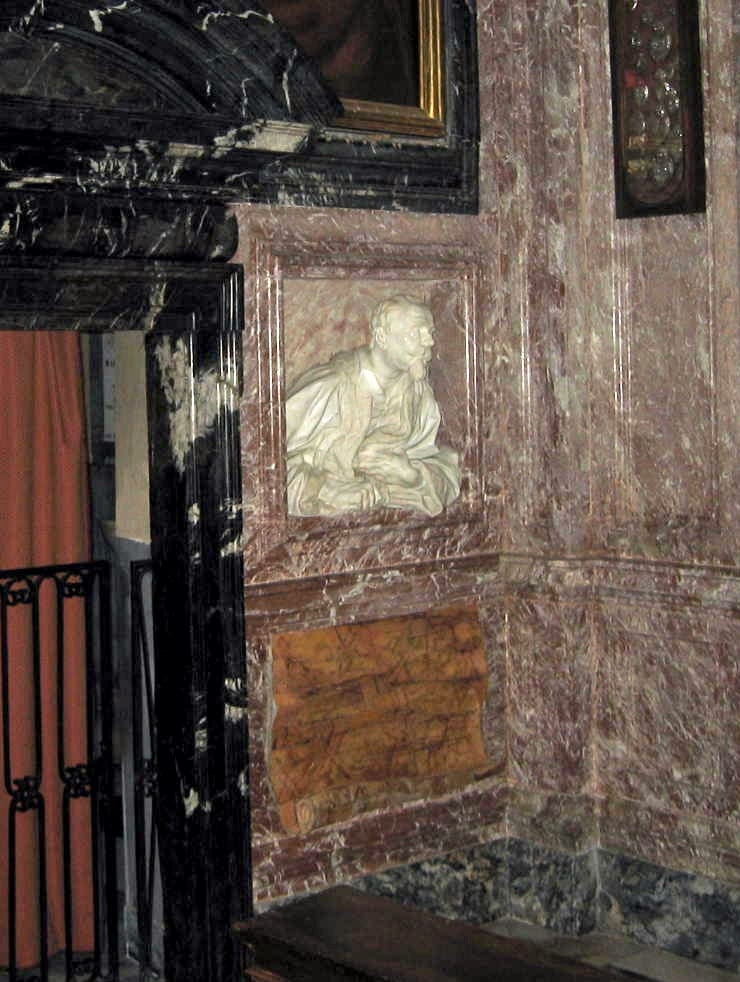
Bust of Gabriele Fonseca
Gian Lorenzo Bernini · 1668
Bust of Gabriele Fonseca. The pope's own doctor, seen from below as if leaning out of a niche, lips parted in speech. It sits in the church of San Lorenzo in Lucina in Rome.
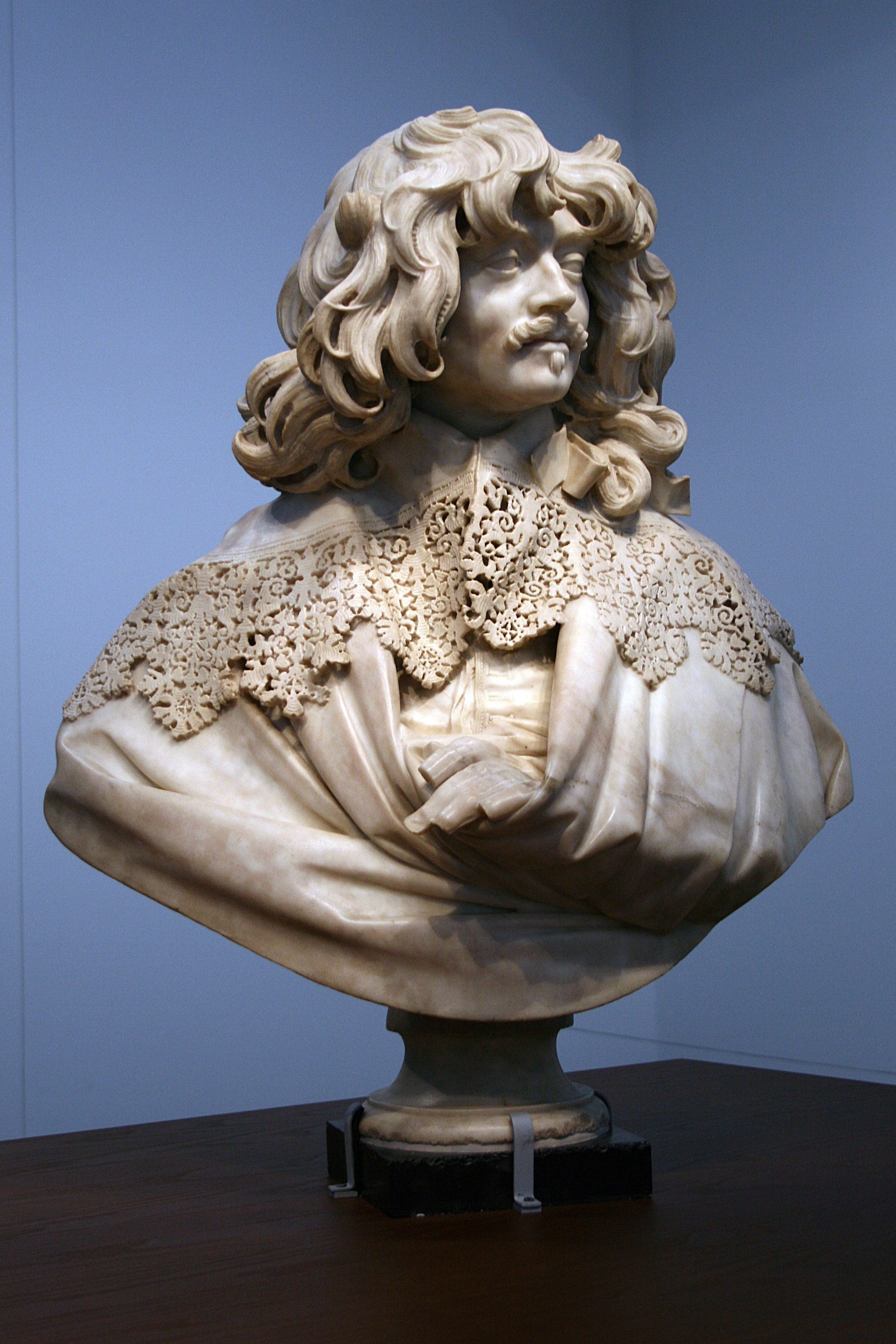
Bust of Thomas Baker
Gian Lorenzo Bernini · 1638
Bust of Thomas Baker. An English gentleman under a cascade of carved curls, a marble of 1638 in the Victoria and Albert Museum. Much of the carving fell to a pupil of Bernini's, probably Andrea Bolgi.
Sources
- Tate, “Baroque”
- Wikipedia, “Gian Lorenzo Bernini”
- National Gallery, London, “Caravaggio”
- National Gallery, London, “Peter Paul Rubens”
- National Gallery, London, “Diego Velázquez”
- National Gallery, London, “Anthony van Dyck”
- National Gallery, London, “Johannes Vermeer”
- National Gallery, London, “Francisco de Zurbarán”
- Wikipedia, “Georges de La Tour”
- Wikipedia, “Simon Vouet”
- National Gallery, London, “The Supper at Emmaus”
- Wikipedia, “Chair of Saint Peter”
- Wikipedia, “Death of the Virgin (Caravaggio)”
- Wikipedia, “The Musicians (Caravaggio)”
- Wikipedia, “The Inspiration of Saint Matthew”
- Wikipedia, “Rest on the Flight into Egypt (Caravaggio)”
- Wikipedia, “The Rape of the Daughters of Leucippus”
- Wikipedia, “St. Peter's Baldachin”
- Wikipedia, “Conversion on the Way to Damascus”
- Wikipedia, “Damned Soul”
- Wikipedia, “Bust of Gabriele Fonseca”
- Wikipedia, “Bust of Thomas Baker”
- Wikipedia, “Supper at Emmaus (Caravaggio, London)”
Invite Baroque into your living room
Play 40 works from this collection on your TV, phone or tablet with Momentable Art TV.