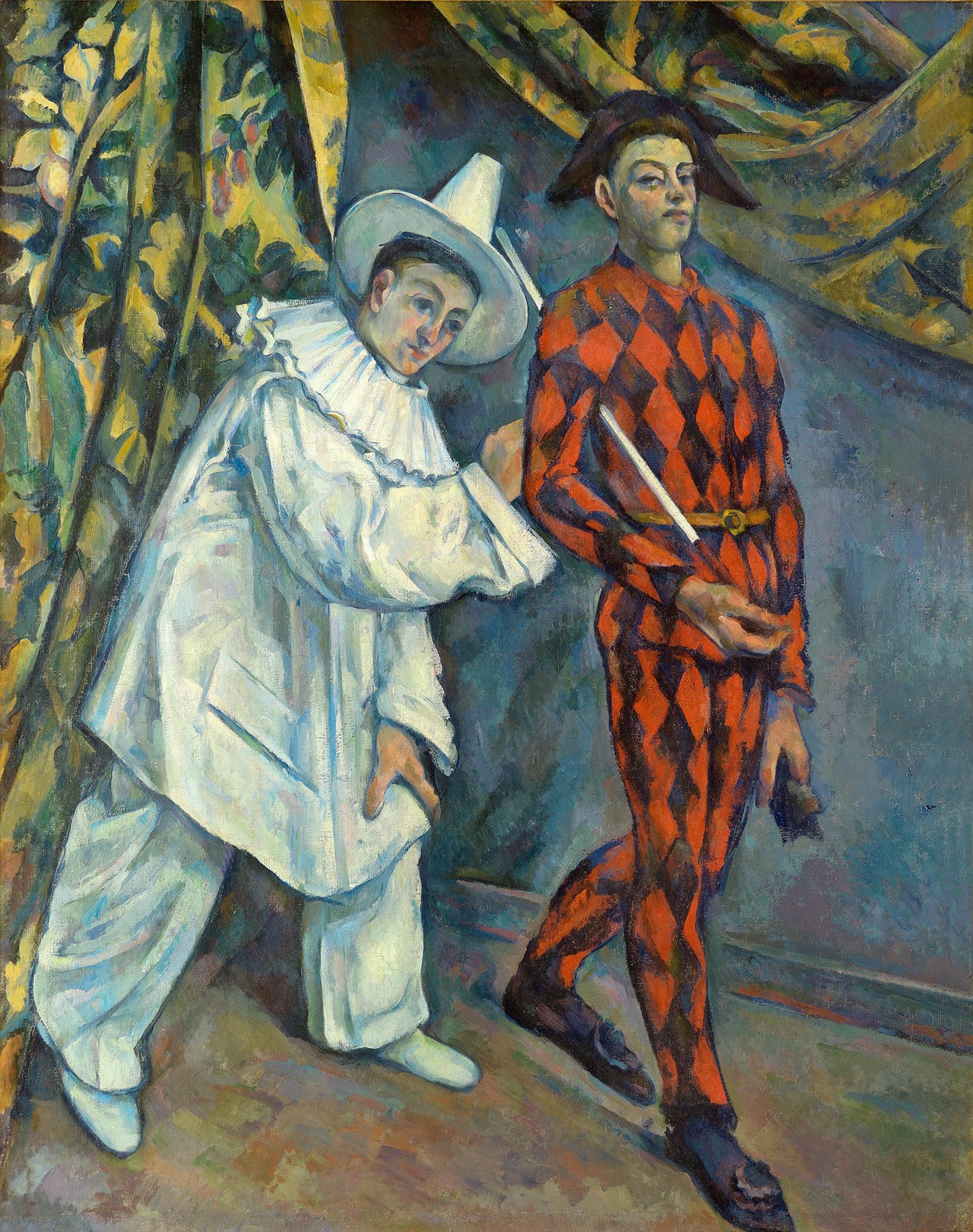
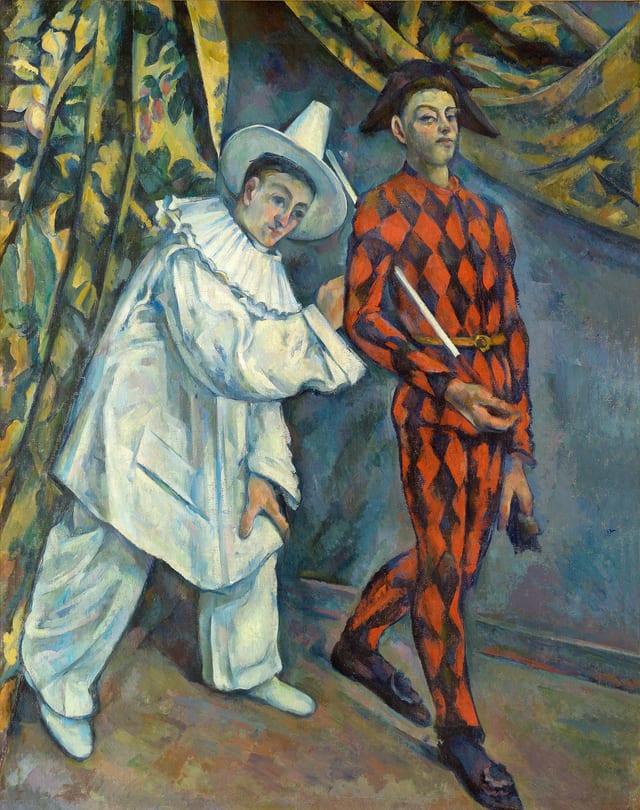
Mardi Gras
Paul Cézanne · 1888

Paul Cézanne
French · 1839–1906
Paul Cézanne was a French Post-Impressionist painter whose work introduced new modes of representation, influenced avant-garde artistic movements of the early 20th century and formed the bridge between late 19th-century Impressionism and early 20th-century Cubism.
Independent artist guide by Momentable. Biography from Wikipedia; artworks credited to the museums that hold them.
 LIVENow streaming · Mardi Gras
- works in the archive
- 85works in the archive
- museums hold them
- 11museums hold them
- life
- 1839–1906life
- movement
- Post-impressionismmovement
The work
A selection of 20 works, free to stream.
Mardi Gras
Paul Cézanne · 1888
Pushkin Museum
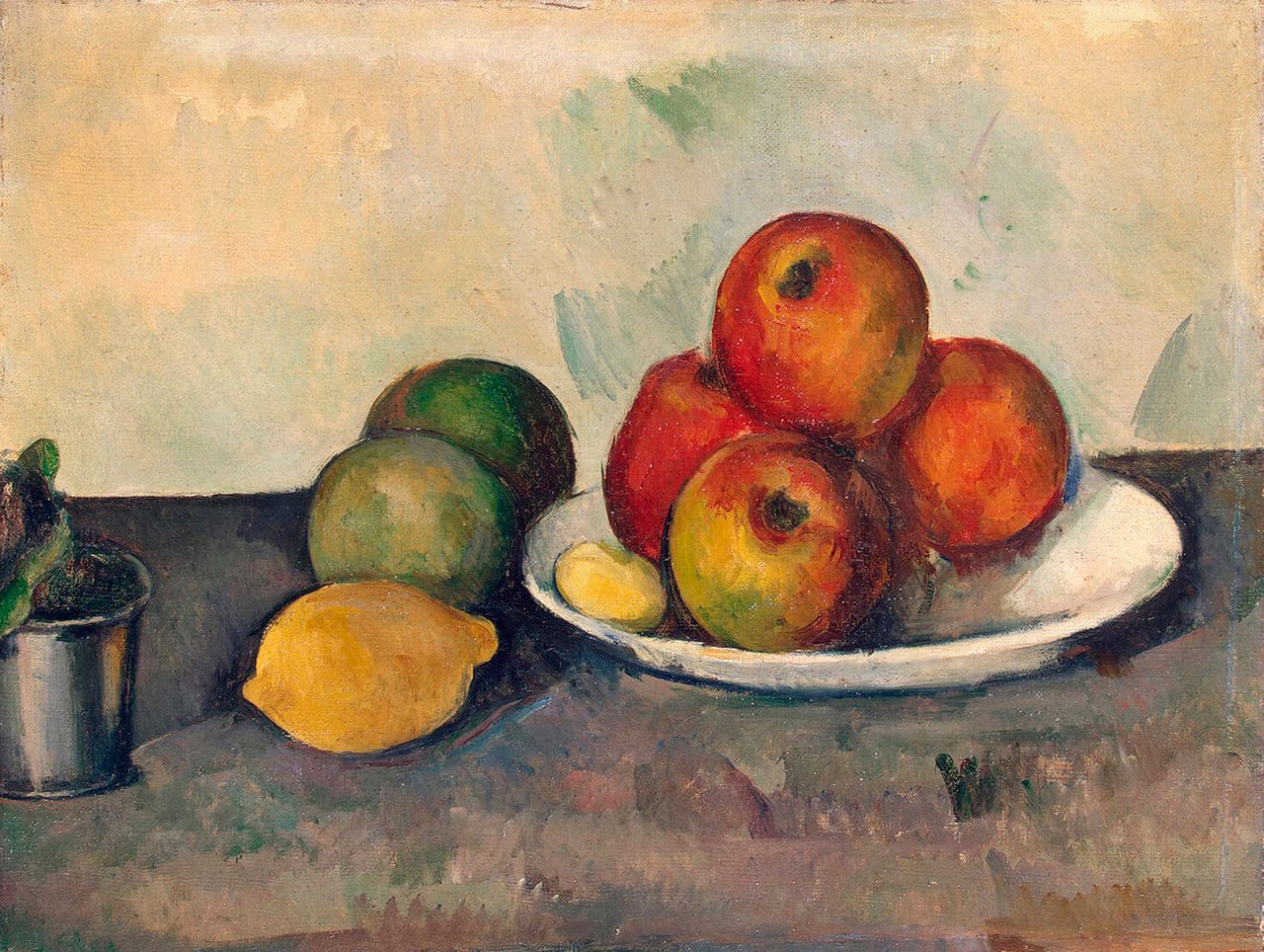
Still Life with Apples
Paul Cézanne · 1890
State Hermitage Museum
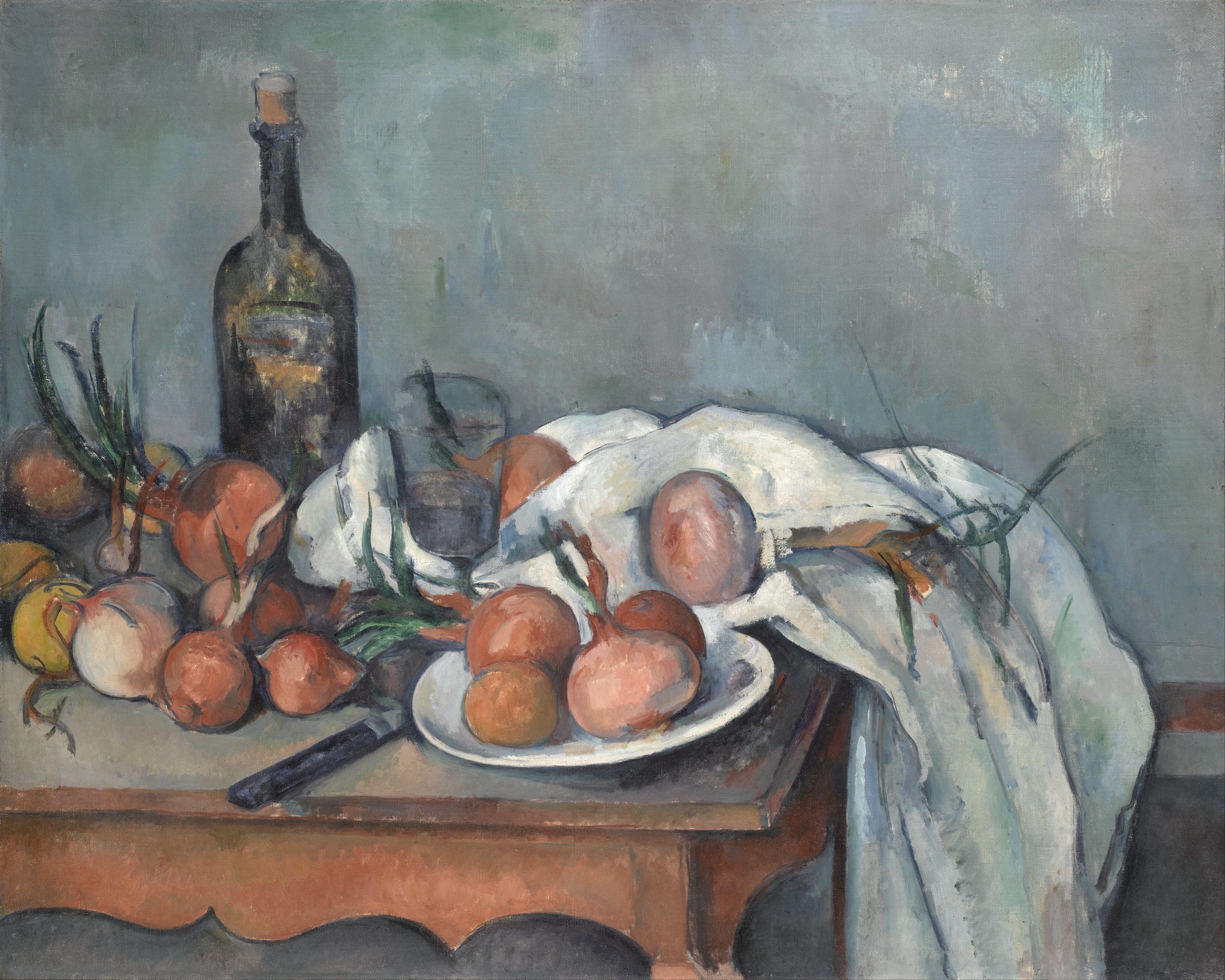
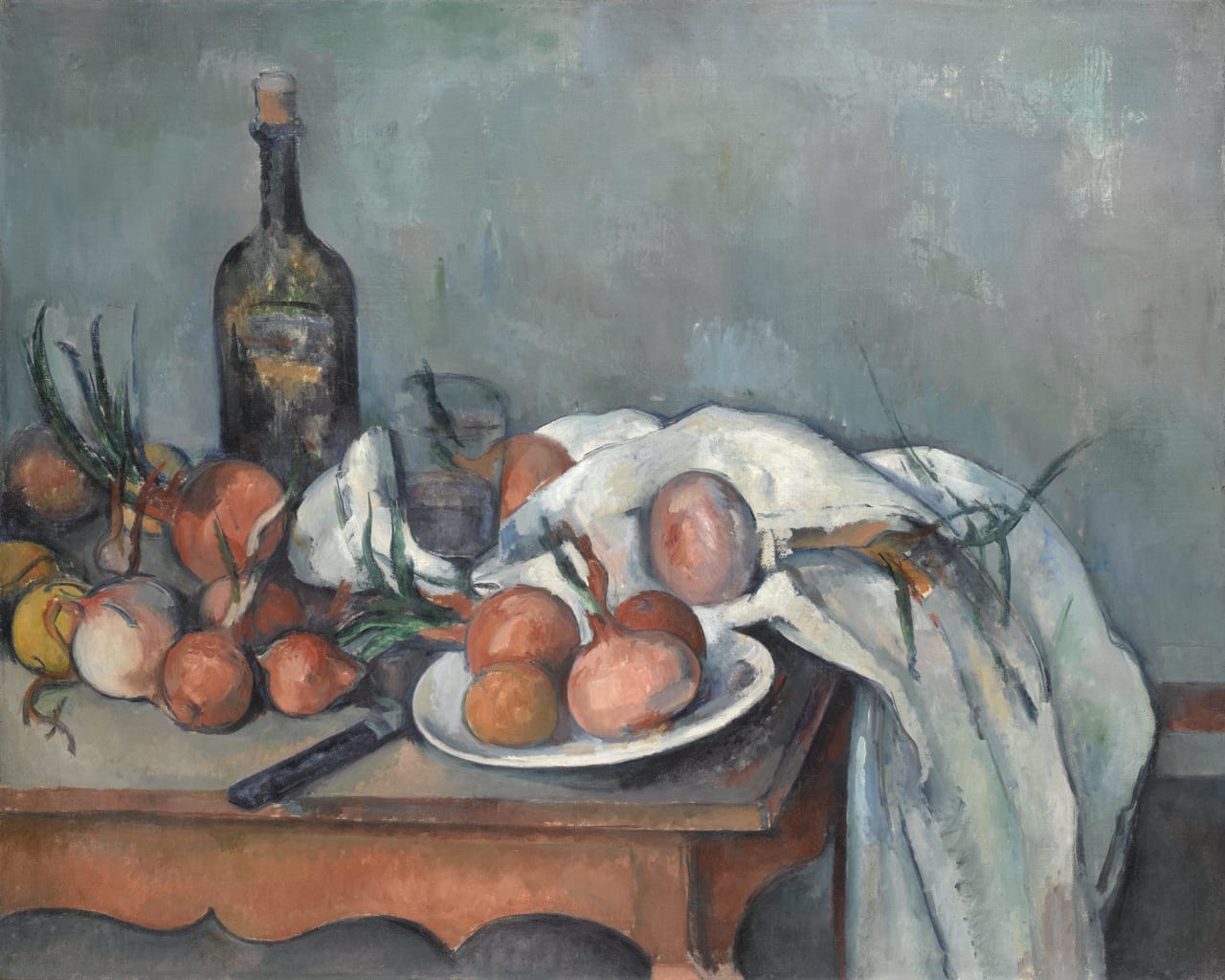
Still Life with Onions
Paul Cézanne · 1898
Musée d'Orsay
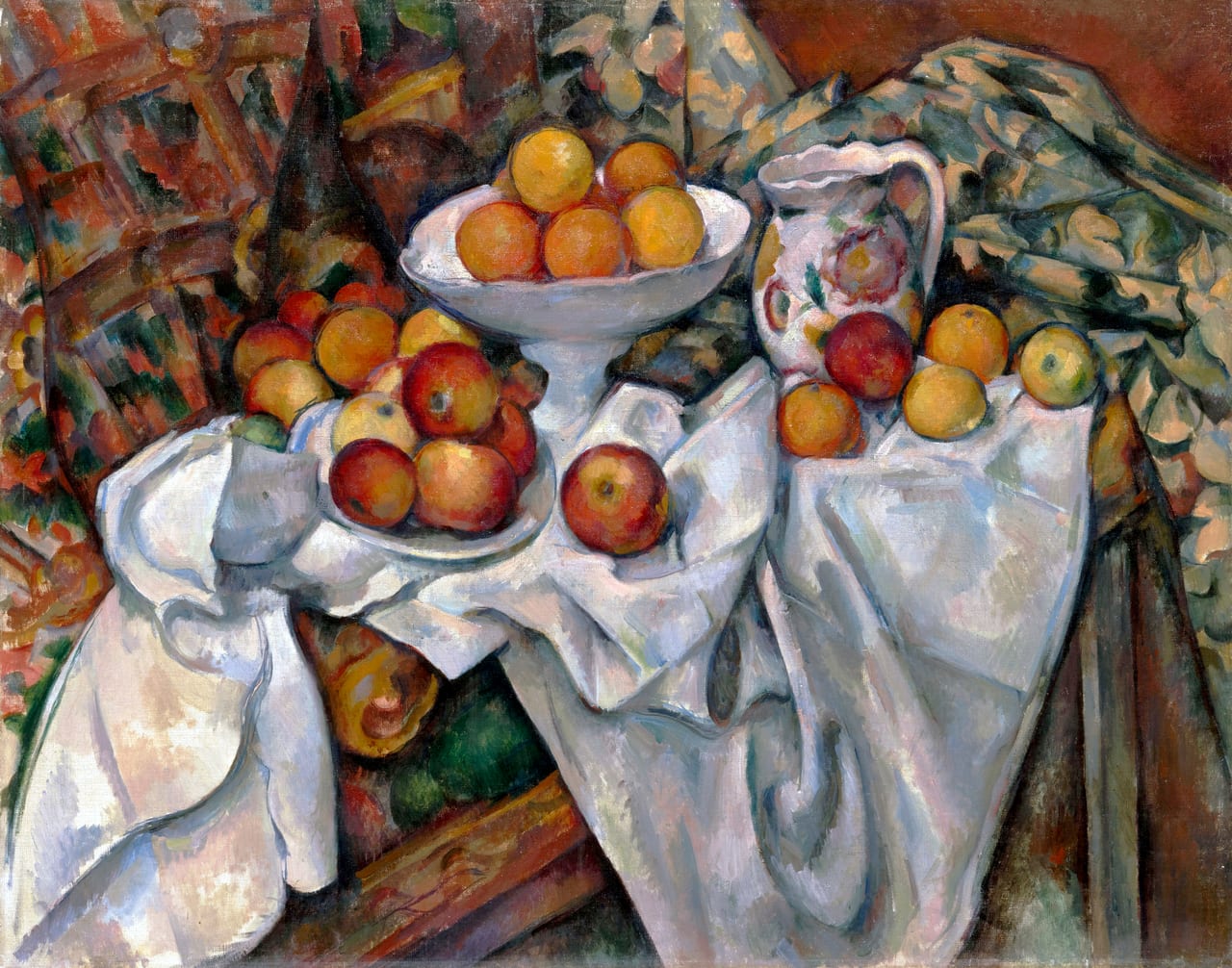
Apples and Oranges
Paul Cézanne · 1899
Musée d'Orsay
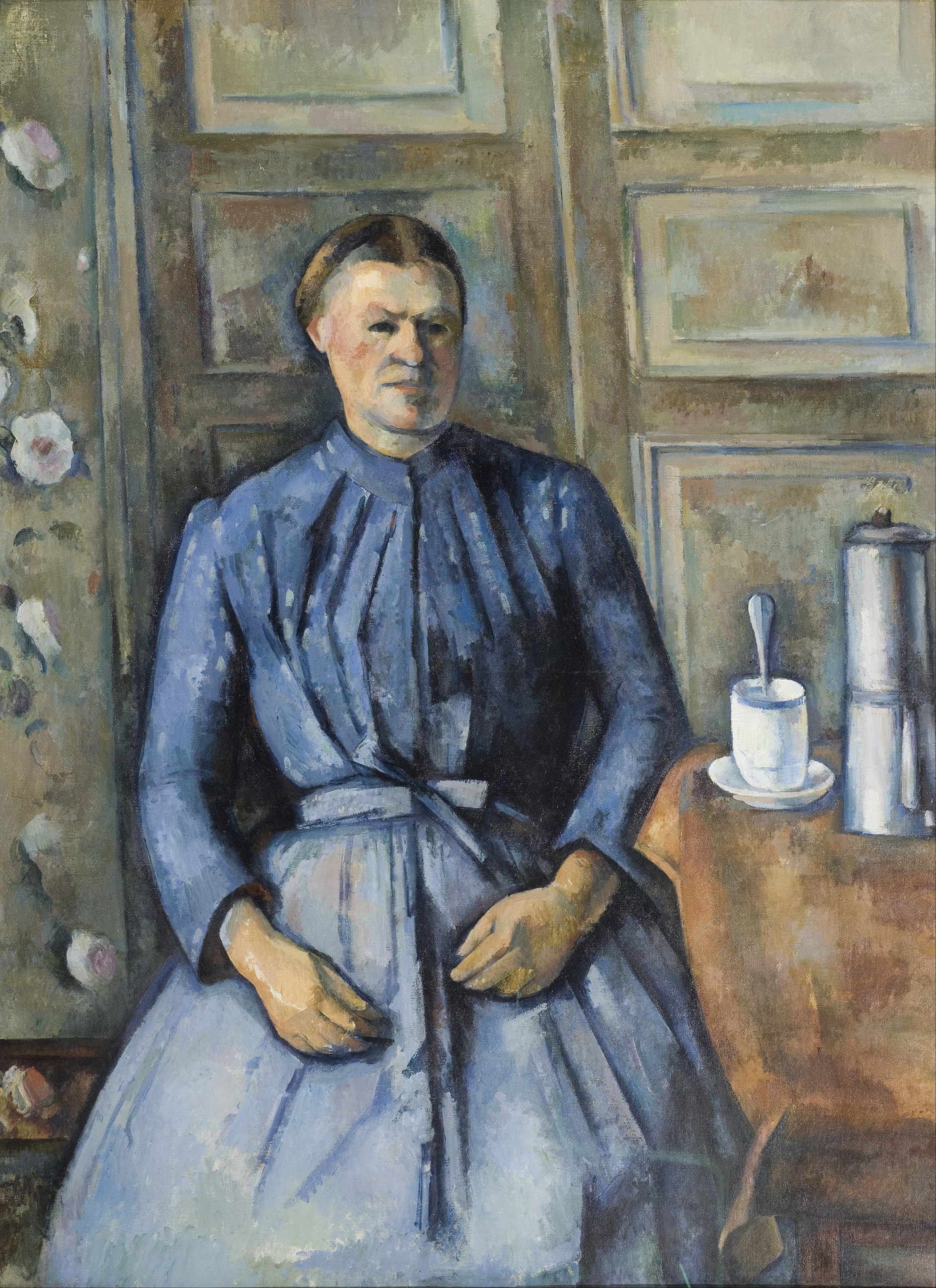
La Femme à la cafetière (Woman with a Coffeepot)
Paul Cézanne · 1895
Musée d'Orsay
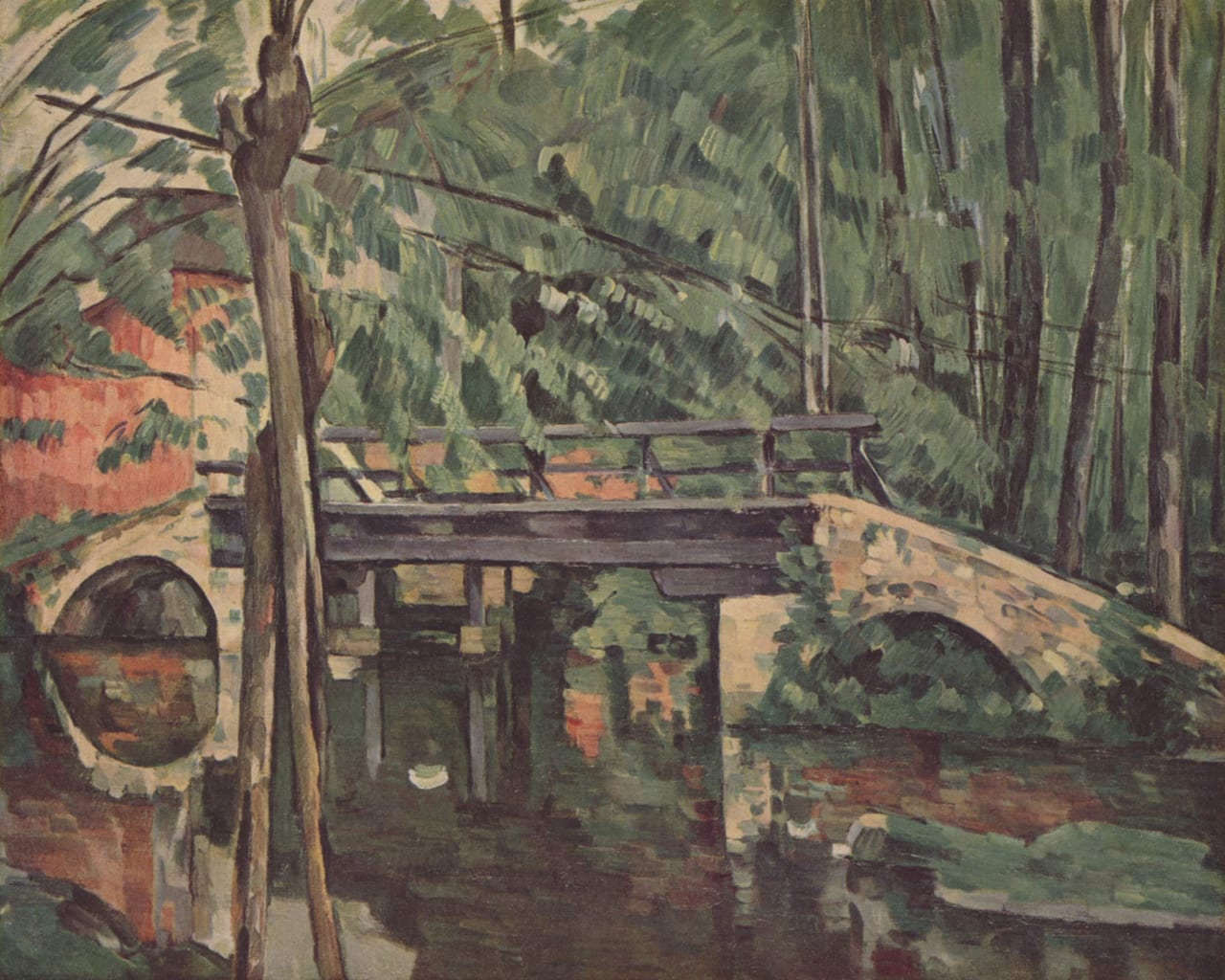
Pont de Maincy
Paul Cézanne · 1879
Musée d'Orsay
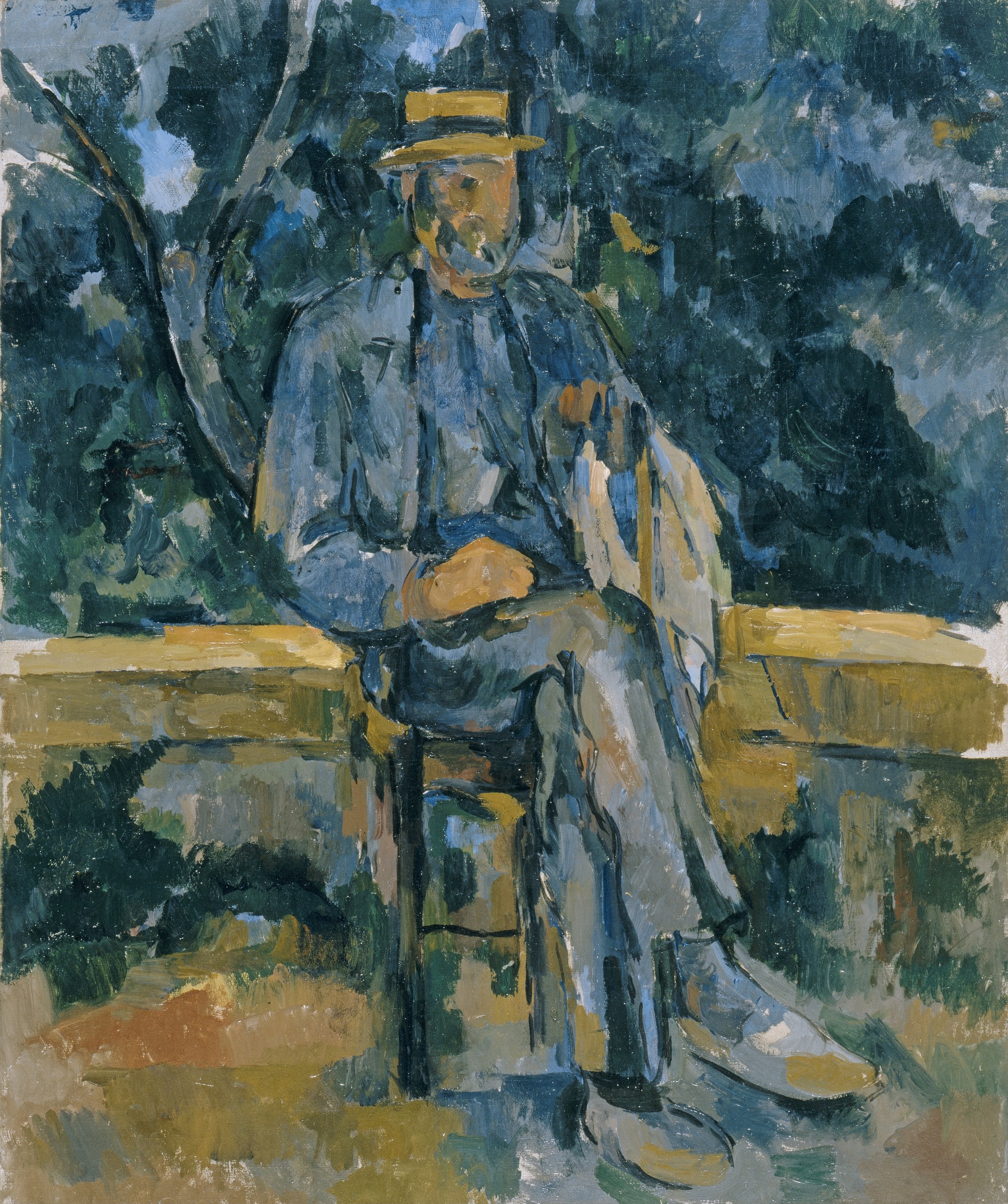
Portrait of Peasant
Paul Cézanne · 1905
Thyssen-Bornemisza Museum
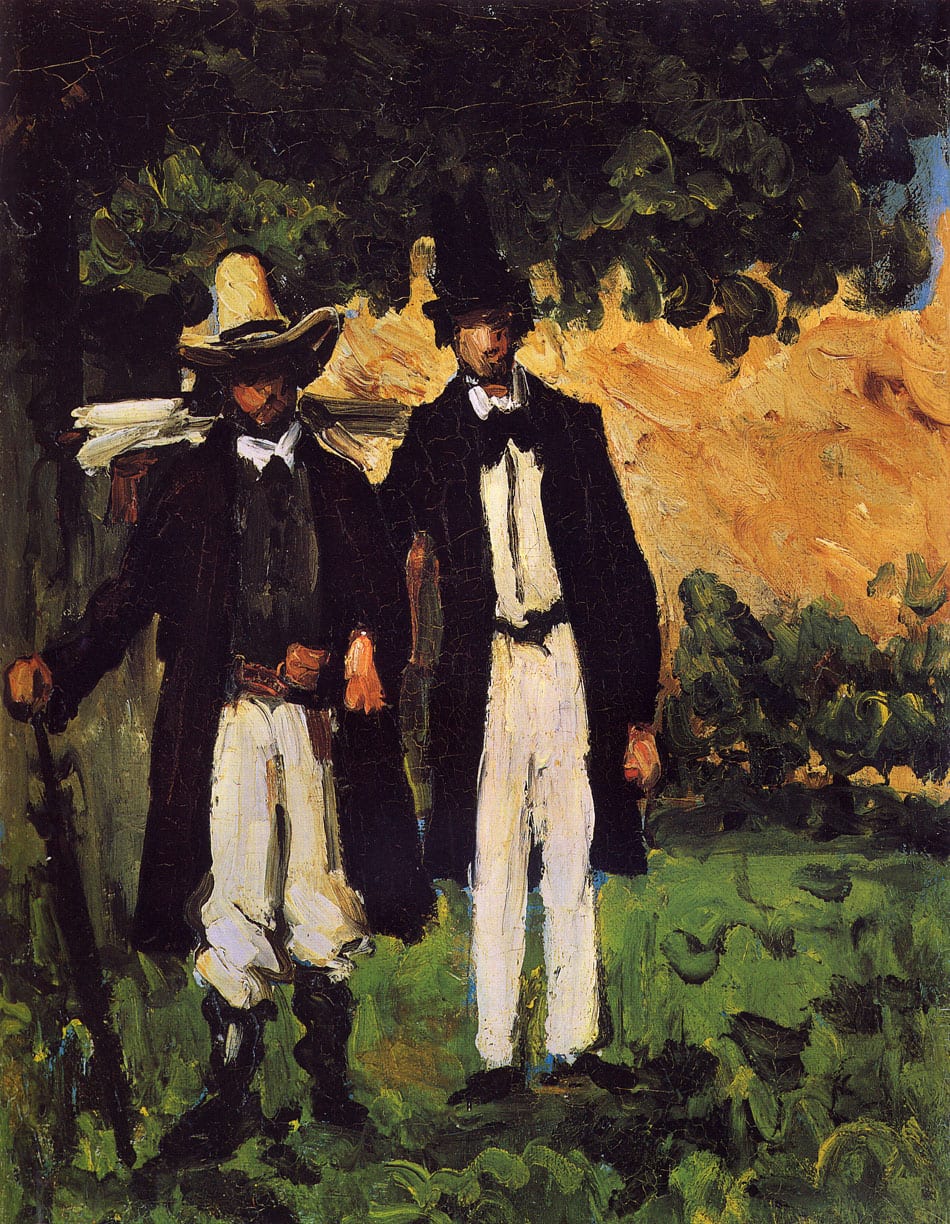
Marion et Valabrègue partant pour le motif
Paul Cézanne · 1866
Museo Soumaya
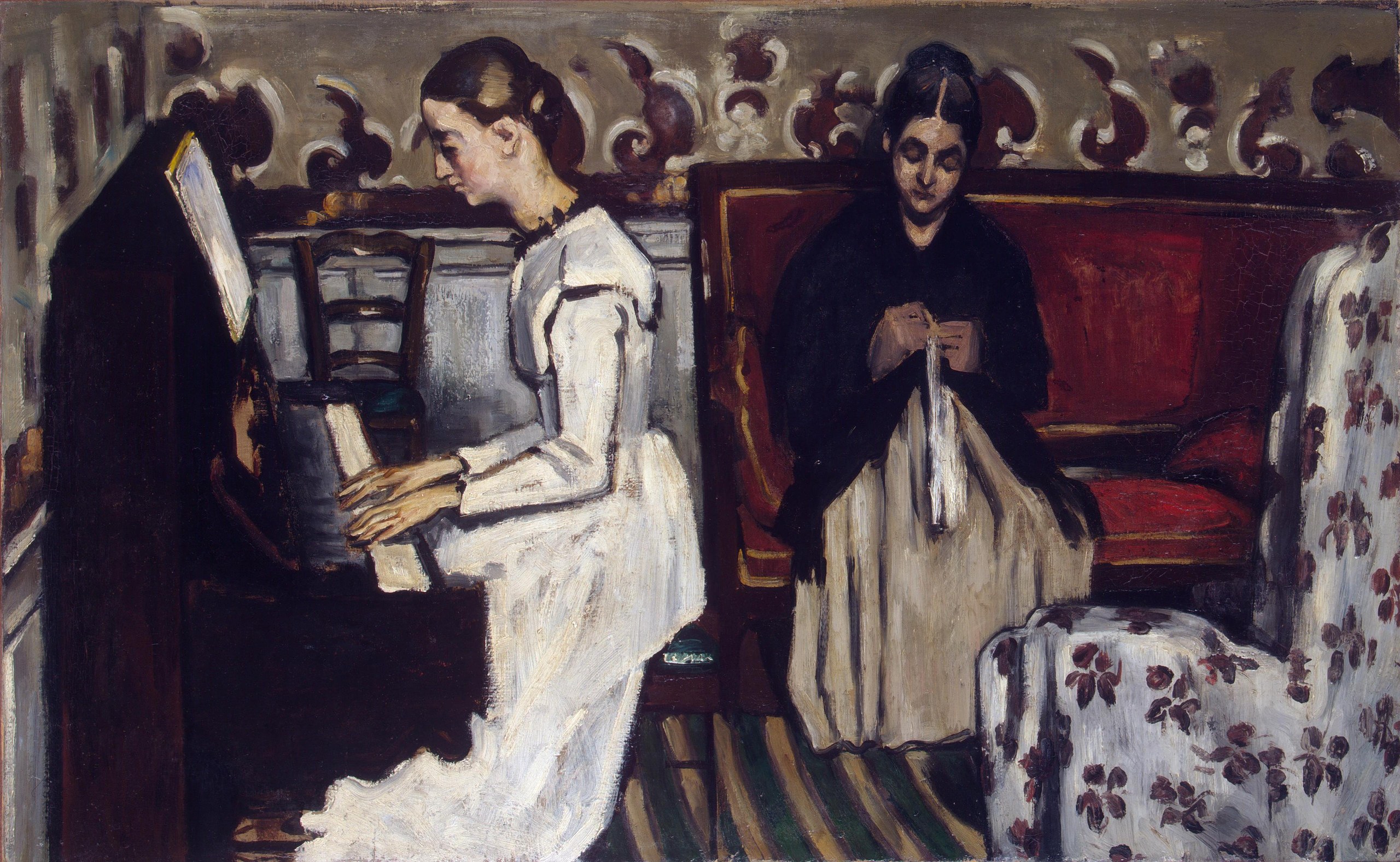
Jeune Fille au piano (Girl at the Piano - The Overture to Tannhauser)
Paul Cézanne · 1869
State Hermitage Museum
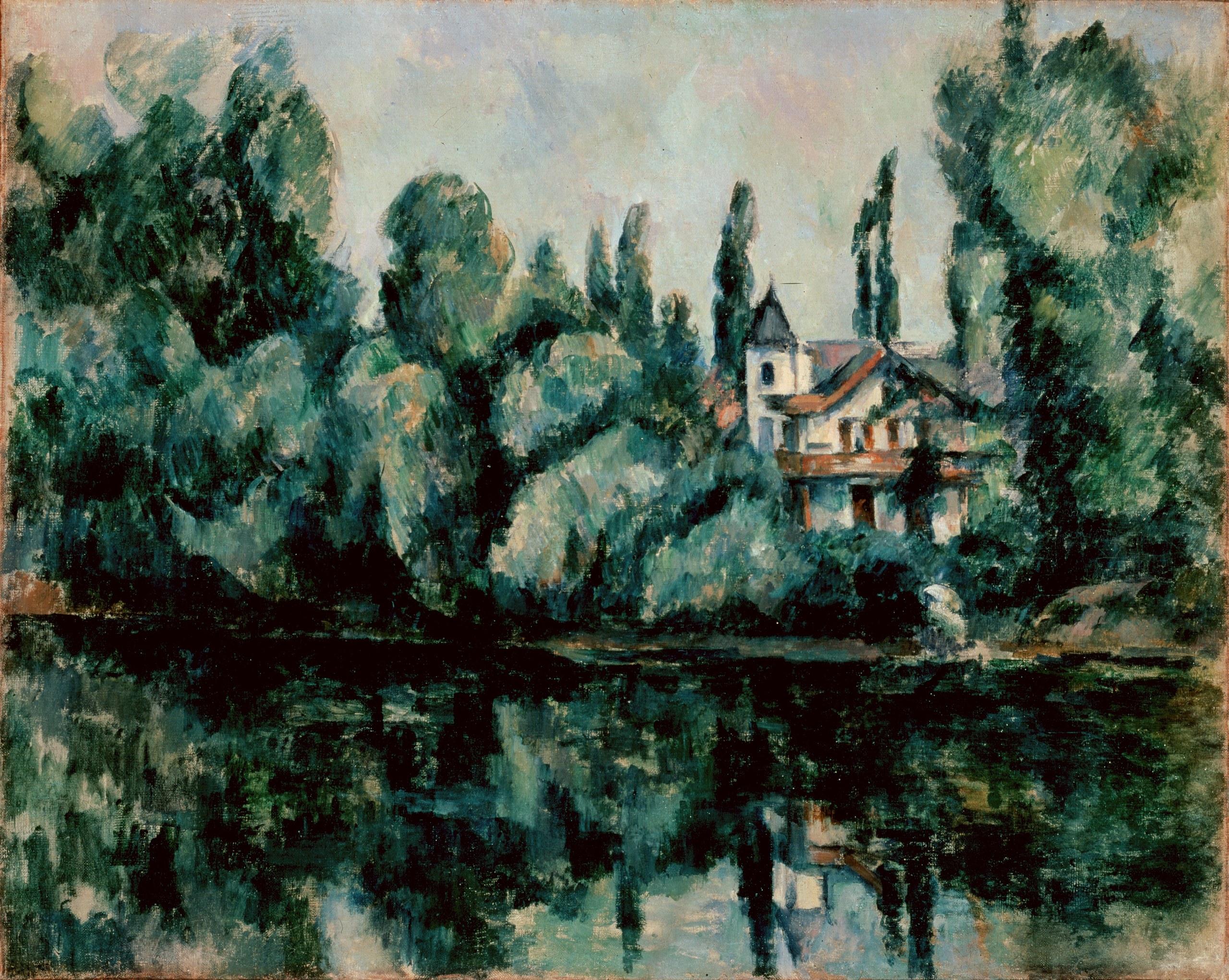
Along the Banks of the Marne
Paul Cézanne · 1888
State Hermitage Museum
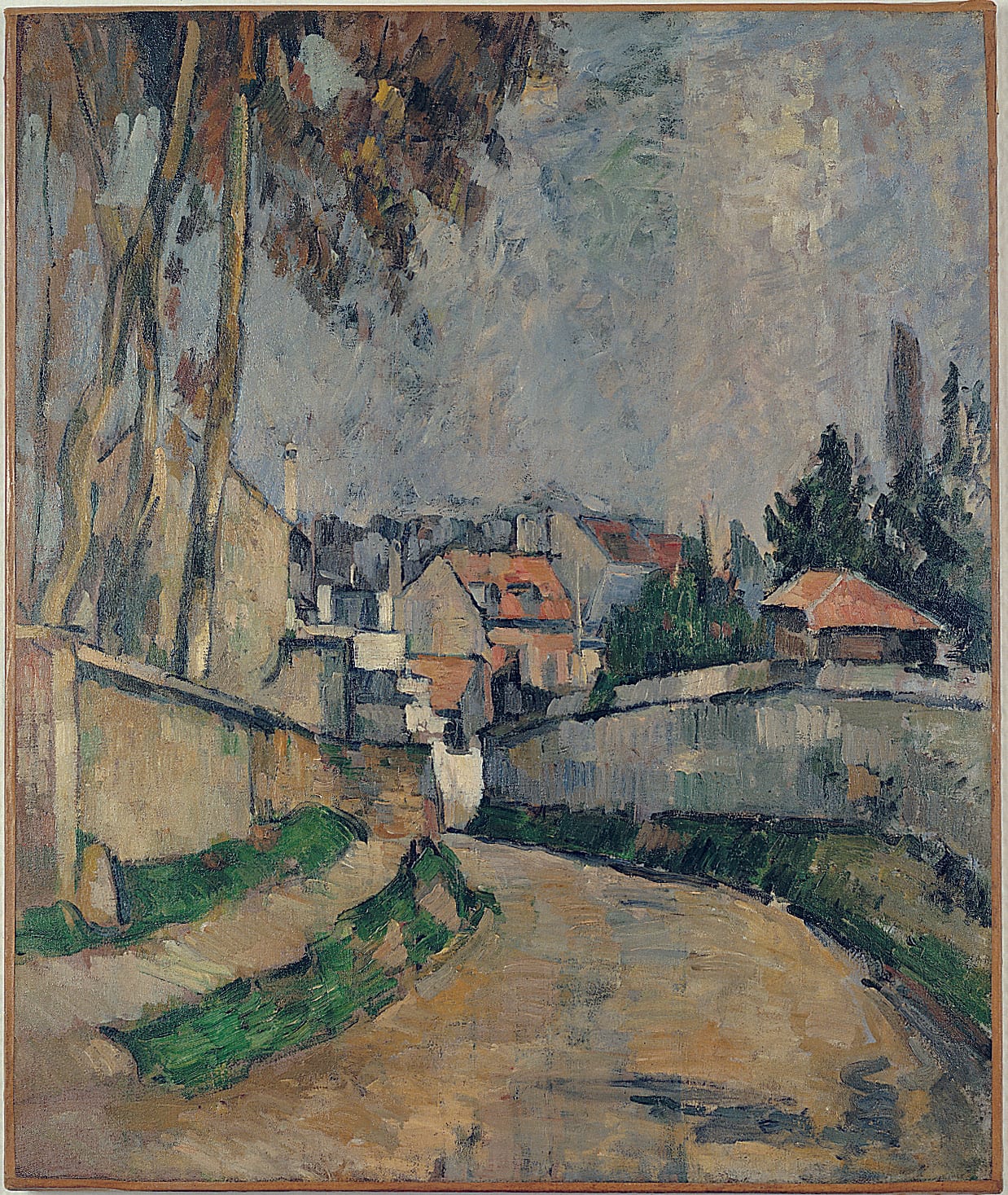
Houses by the Road II
Paul Cézanne · 1881
Tel Aviv Museum of Art
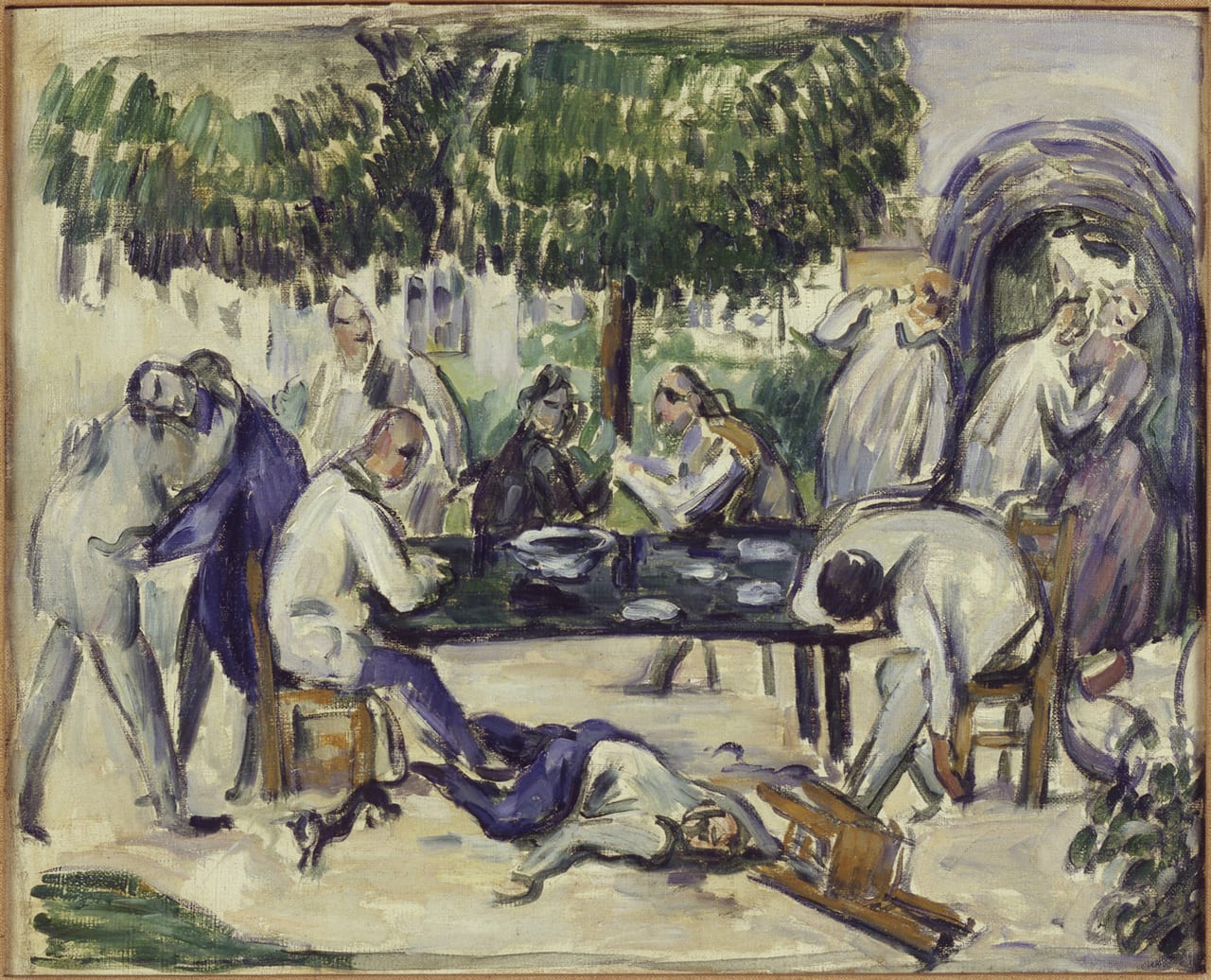
Untitled
Paul Cézanne · 1876
Tel Aviv Museum of Art
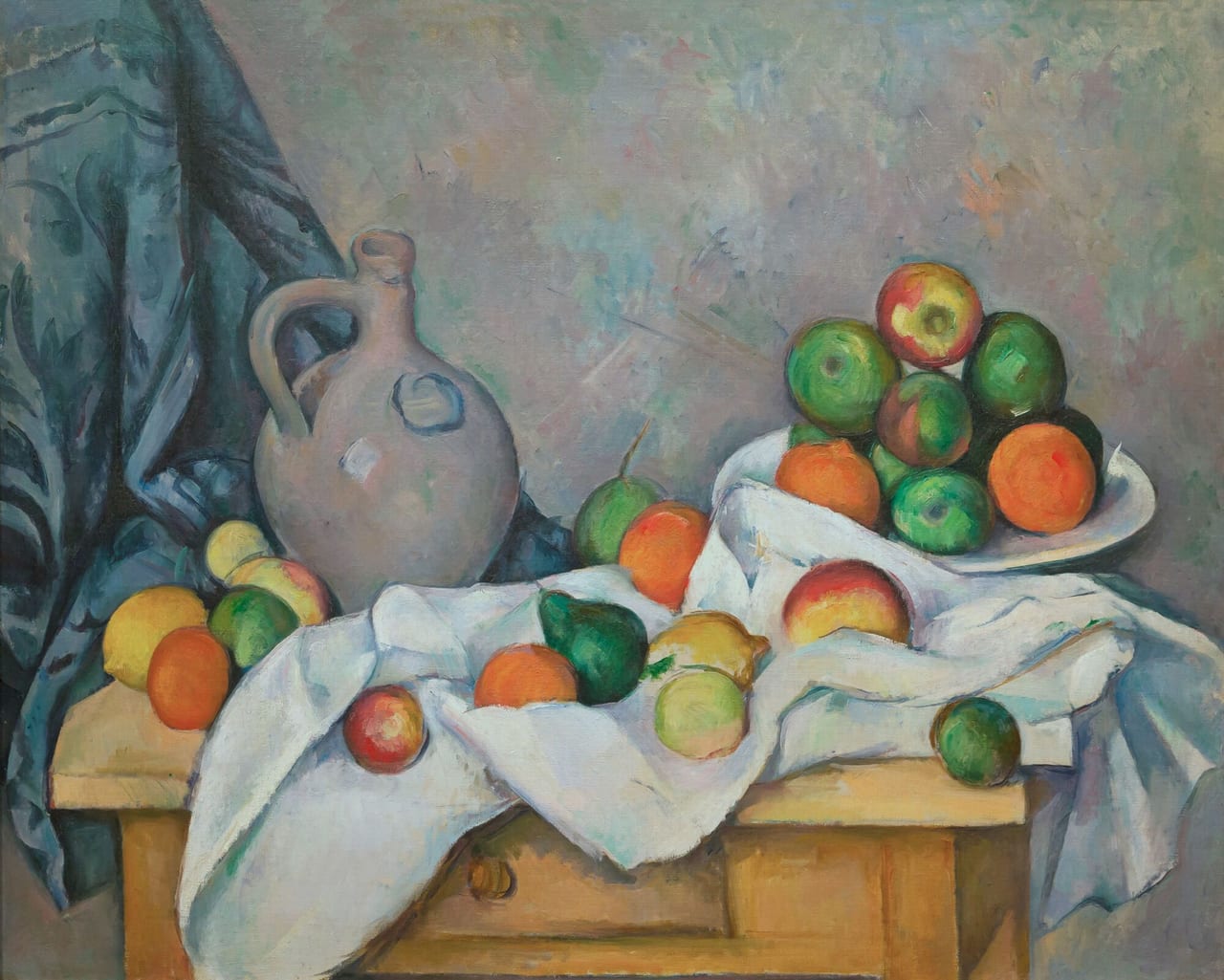
Rideau, Cruchon et Compotier
Paul Cézanne · 1893
Whitney Museum
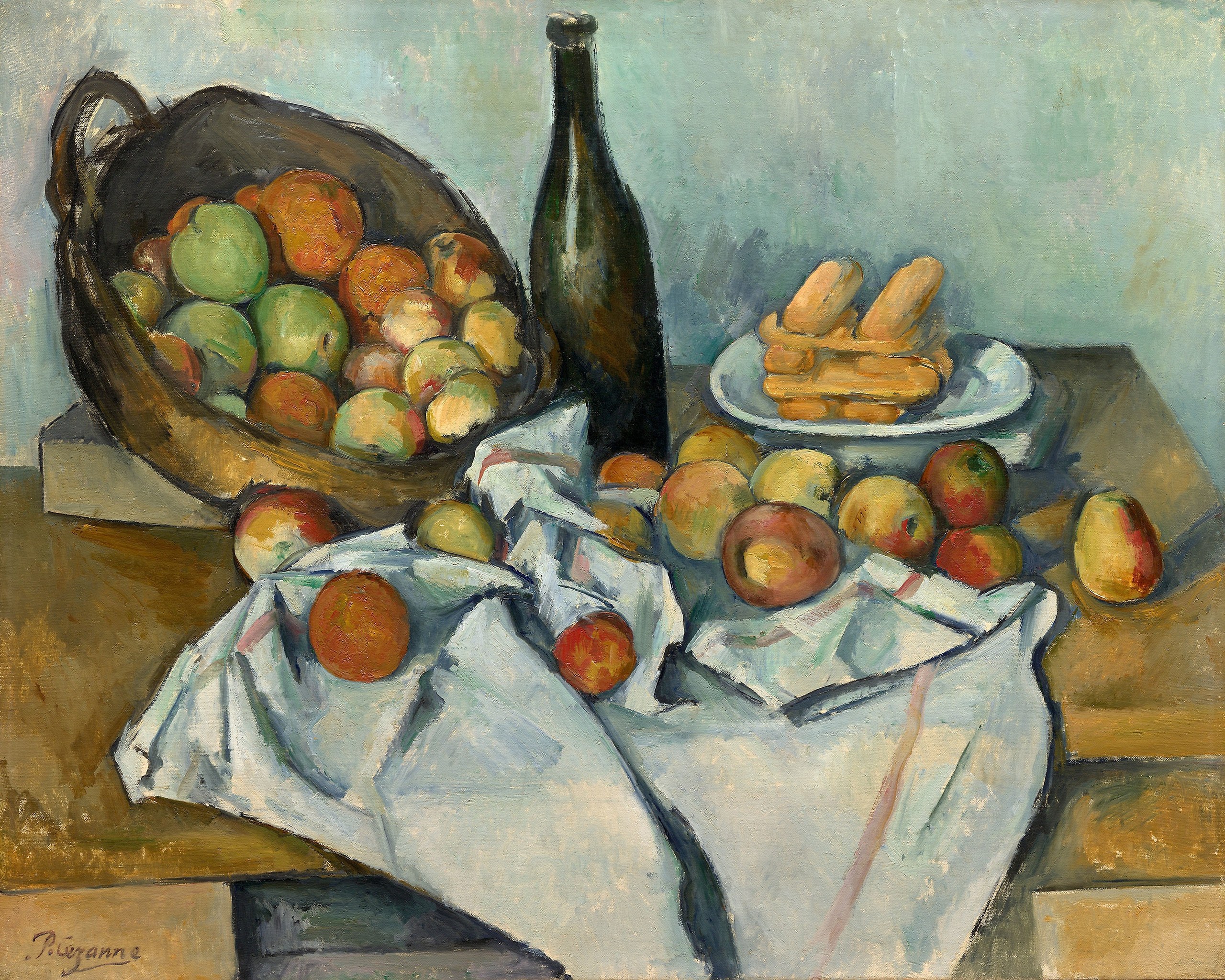
The Basket of Apples
Paul Cézanne · 1893
The Art Institute of Chicago
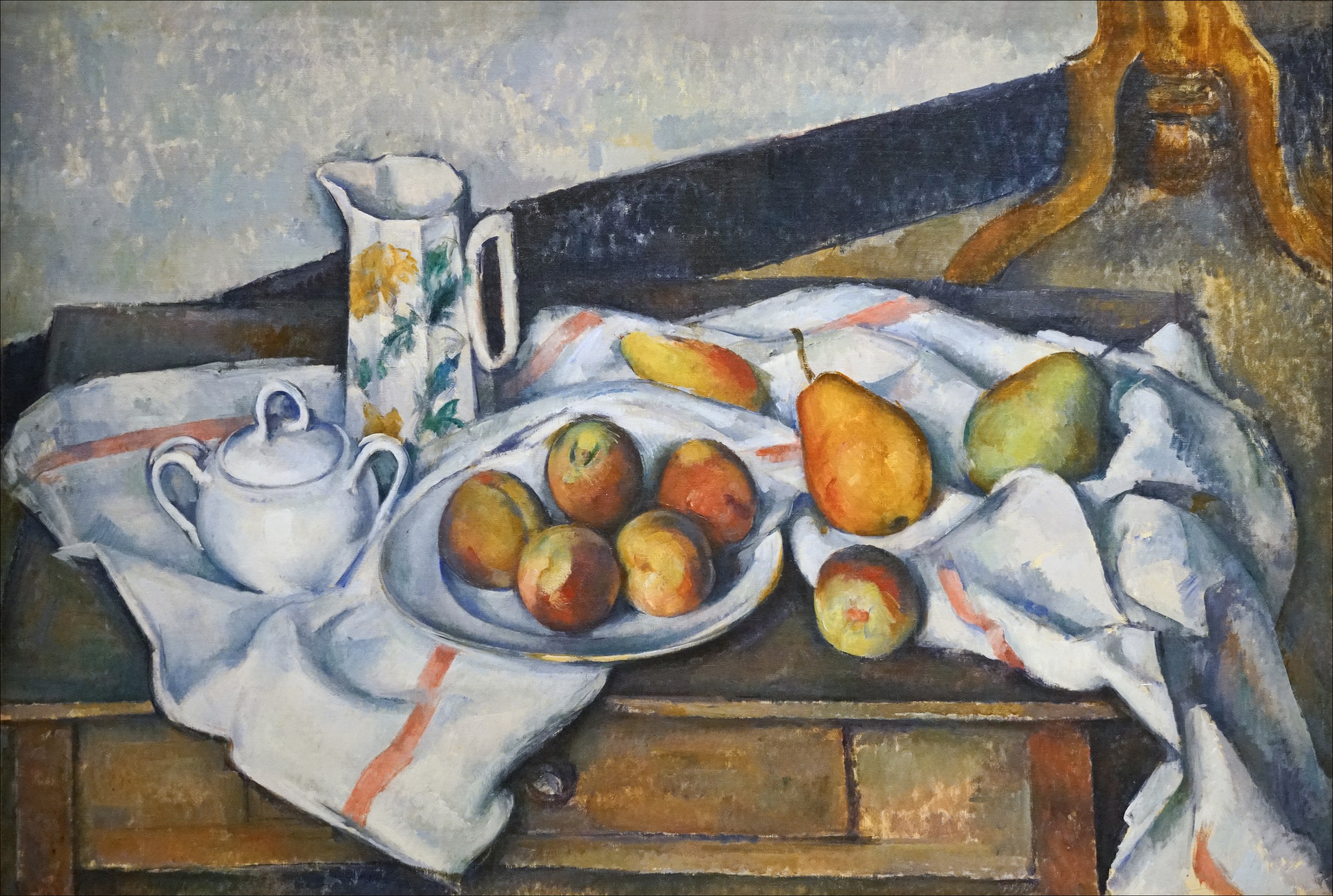
Peaches and Pears
Paul Cézanne · 1890
Pushkin Museum
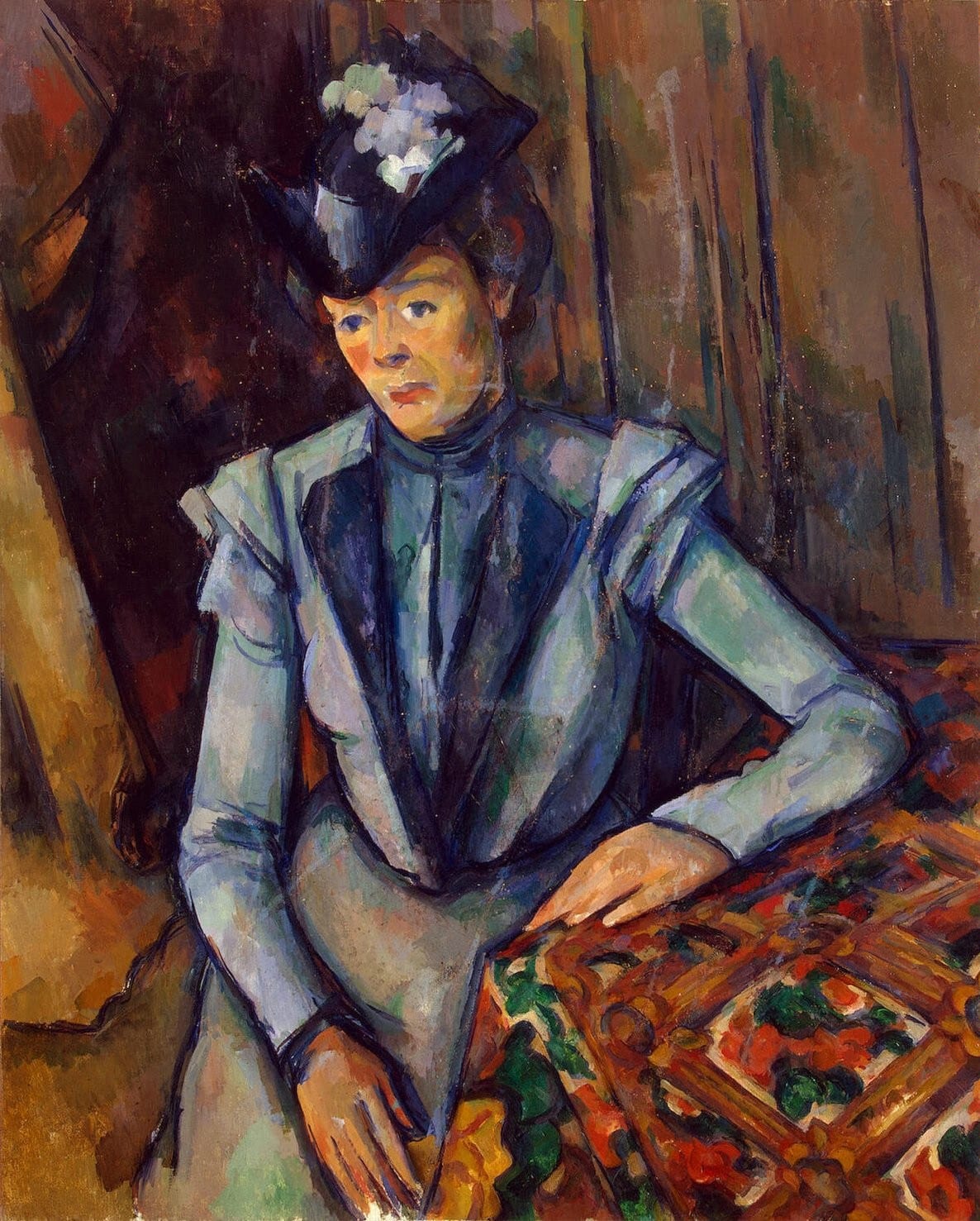
Lady in Blue
Paul Cézanne · 1904
State Hermitage Museum
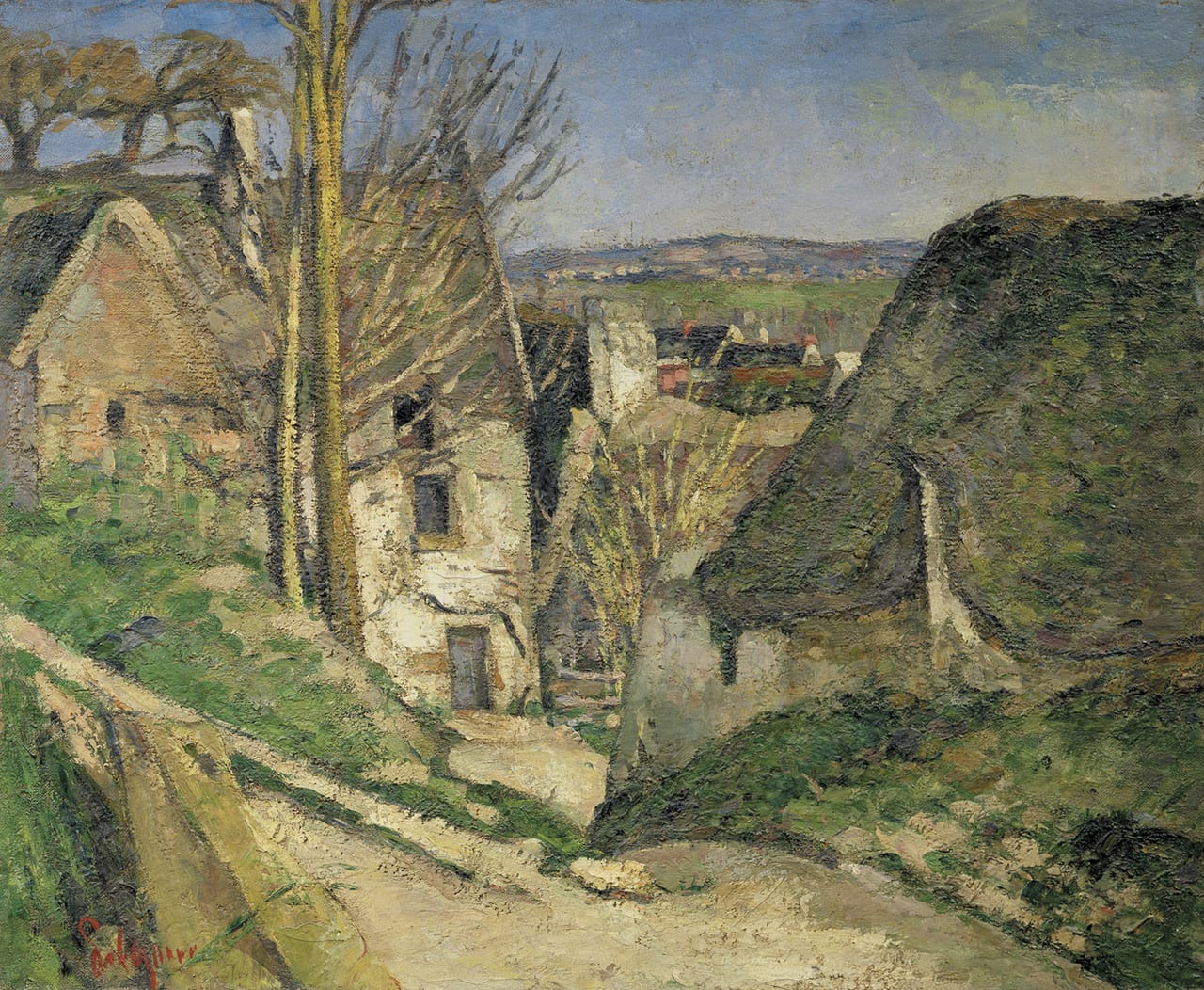
La Maison du pendu, Auvers-sur-Oise
Paul Cézanne · 1874
Musée d'Orsay
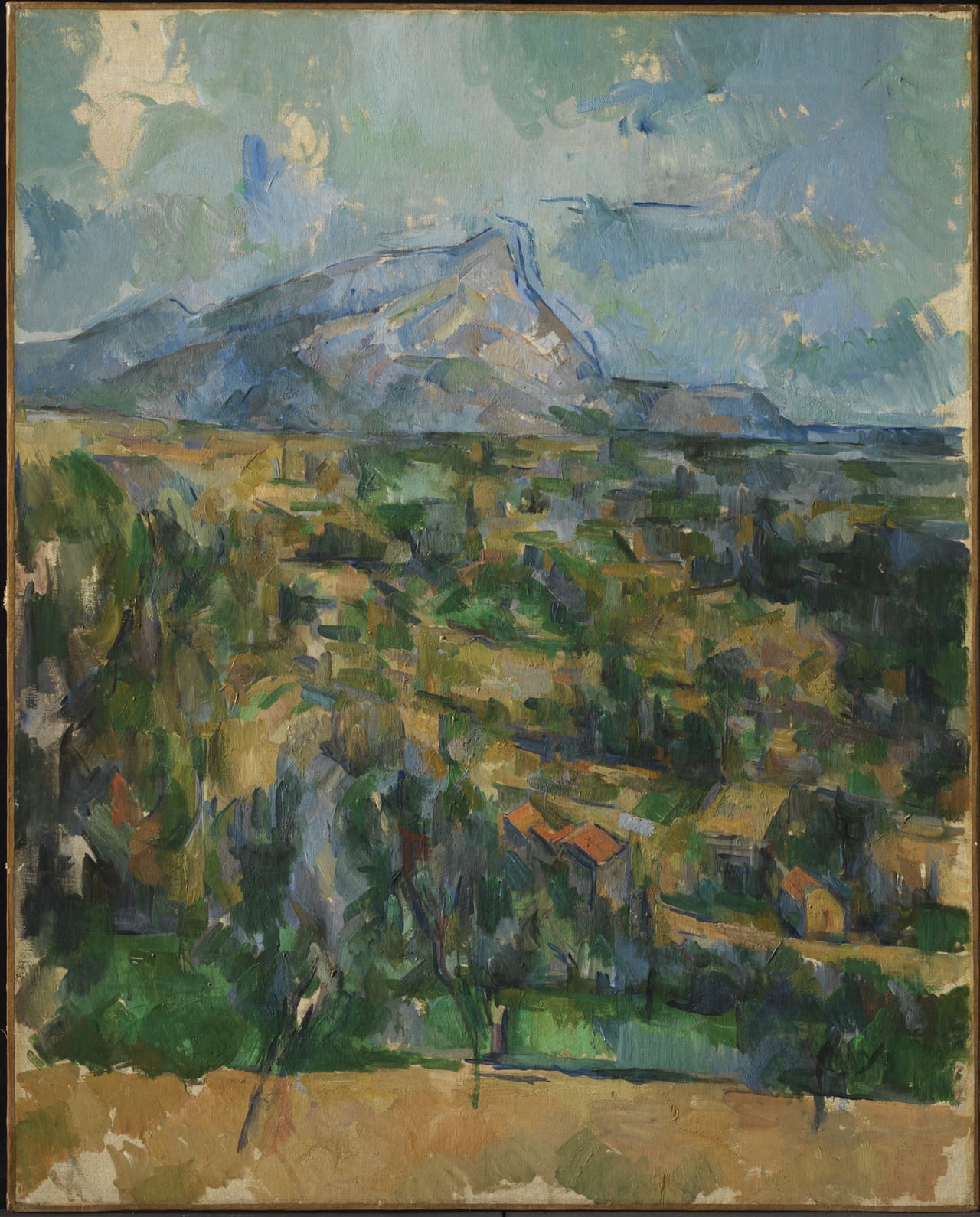
Mont Sainte-Victoire
Paul Cézanne · 1902
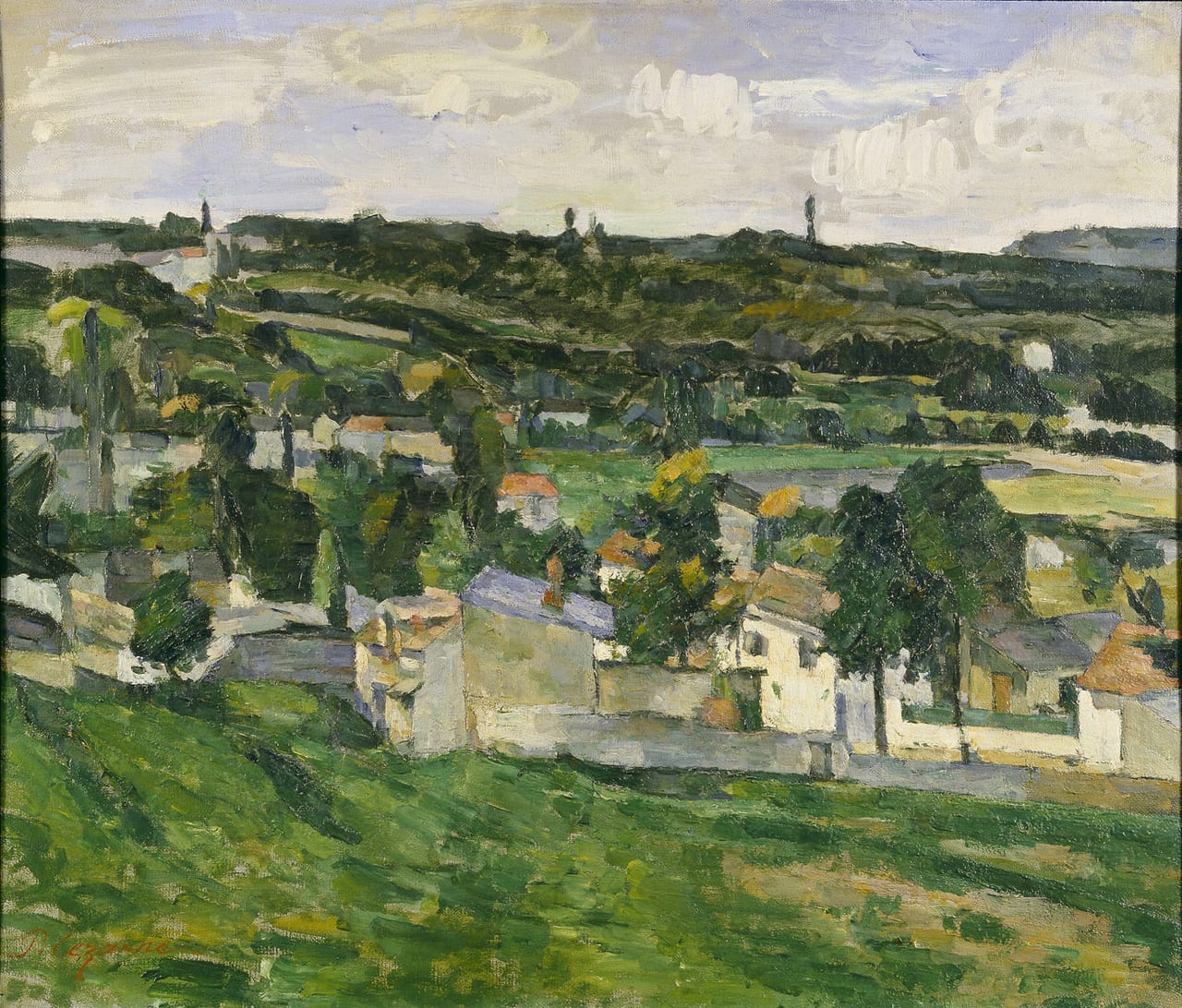
View of Auvers-sur-Oise
Paul Cézanne · 1878
Ashmolean Museum
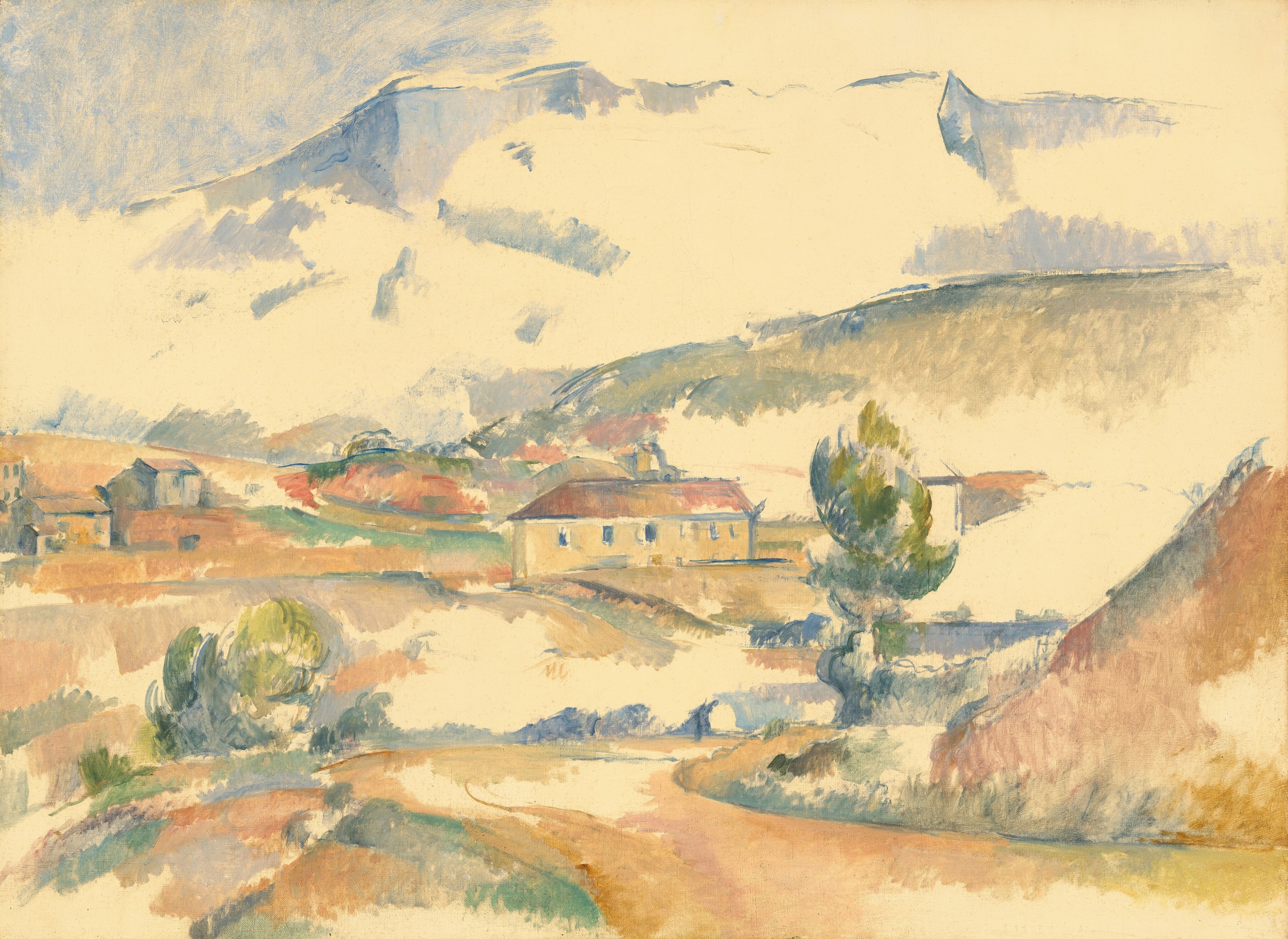
Montagne Sainte-Victoire, from near Gardanne
Paul Cézanne
National Gallery of Art
Works worth knowing
9 of Paul Cézanne's works, and what makes each one worth a look.
Mardi Gras
Paul Cézanne · 1888
Pushkin Museum
Pierrot and Harlequin or Mardi Gras is an 1888 to 1890 oil on canvas painting by Paul Cézanne, now in the Pushkin Museum in Moscow. As the title suggests, it shows the commedia dell'arte characters Pierrot and Harlequin. It was in Victor Chocquet's collection from 1890 to 1899 before being bought by Paul Durand-Ruel, who kept it until 1904, when it was bought by Sergei Shchukin.
Apples and Oranges
Paul Cézanne · 1899
Musée d'Orsay
Still Life with Apples and Oranges is a still-life oil painting dating from c. 1899 by the French artist Paul Cézanne. It is currently housed at the Musée d'Orsay in Paris.
Pont de Maincy
Paul Cézanne · 1879
Musée d'Orsay
The Pont de Maincy is a painting by a French painter Paul Cézanne who resided during this period in Melun, a neighboring commune of Maincy, France. The work, measuring from 58.5 cm south 72.5 cm, is preserved at the Musée d'Orsay in Paris. Main exhibitions: London (1914, 1996), Paris (1926, 1936, 1995–2011), Beijing (1989), New York (2005).
Jeune Fille au piano (Girl at the Piano - The Overture to Tannhauser)
Paul Cézanne · 1869
State Hermitage Museum
The Overture to Tannhäuser is an 1869 oil-on-canvas painting by the French Post-Impressionist artist Paul Cézanne, now in the Hermitage Museum in Saint Petersburg. It came from the Moscow collection of Ivan Morozov. The painting shows two women, usually identified as Cézanne's sisters but possibly the daughters of his uncle Dominique Aubert, at the Cézanne family home near Aix-en-Provence.
The Basket of Apples
Paul Cézanne · 1893
The Art Institute of Chicago
The Basket of Apples is a still-life oil painting by French artist Paul Cézanne, which he created c. The painting rejected naturalistic representation in favor of distorting objects to create multiple perspectives. This approach eventually influenced other art movements, including Fauvism and Cubism.
Peaches and Pears
Paul Cézanne · 1890
Pushkin Museum
Still Life with Peaches and Pears or Still Life with Sugar Bowl is an oil-on-canvas painting by the French artist Paul Cézanne, from 1888 to 1890. It is held at the Pushkin Museum, in Moscow It is similar to another still life by the artist which is now in the National Museum of Art, Architecture and Design, in Oslo. It was bought from Ambroise Vollard in 1912 by Ivan Morozov, whose collections were seized by the Soviet state in the spring of 1918.
Lady in Blue
Paul Cézanne · 1904
State Hermitage Museum
Lady in Blue is an oil on canvas painting by Paul Cézanne, executed c. 1900, now in the Hermitage Museum in Saint Petersburg, Russia. One of Cézanne's last portraits of a woman, it shows the painter's governess Madame Brémond.
La Maison du pendu, Auvers-sur-Oise
Paul Cézanne · 1874
Musée d'Orsay
The Hanged Man's House is an 1873 oil-on-canvas painting by the French Post-Impressionist artist Paul Cézanne. The painting is exhibited at the Musée d'Orsay in Paris. The Hanged Man's House was presented at the First Impressionist Exhibition in 1874 and was the first painting that Cézanne sold to a collector.
How Paul Cézanne worked
From the record of their own practice.
Cézanne's early work is often concerned with the figure in the landscape and includes many paintings of groups of large, heavy figures in the landscape, imaginatively painted. Later in his career, he became more interested in working from direct observation and gradually developed a light, airy painting style. Nevertheless, in Cézanne's mature work there is the development of a solidified, almost architectural style of painting. Throughout his life, he struggled to develop an authentic observation of the seen world by the most accurate method of representing it in paint that he could find. To this end, he structurally ordered whatever he perceived into simple forms and colour planes.
Where the work hangs
The museums that hold it, and their visitor guides.
National Gallery of Art
62 in the archive · Washington, D.C.
Musée d'Orsay
5 in the archive · Paris
State Hermitage Museum
4 in the archive · Saint Petersburg
Tel Aviv Museum of Art
2 in the archive · Tel Aviv
Pushkin Museum
2 in the archive · Moscow
Museo Soumaya
1 in the archive · Mexico City
Ashmolean Museum
1 in the archive · Oxford
The Art Institute of Chicago
1 in the archive · Chicago, Illinois
Whitney Museum
1 in the archive · New York
Musée de l'Orangerie
1 in the archive · Paris
Thyssen-Bornemisza Museum
1 in the archive · Madrid
If you like Paul Cézanne
Artists held by the same museums.
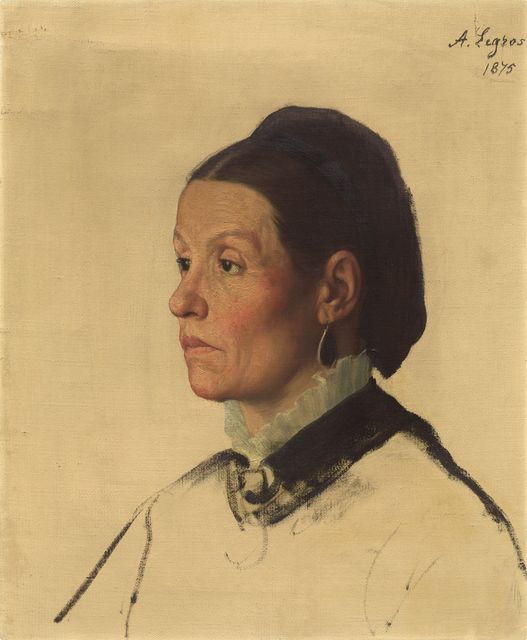
Alphonse Legros
French · 561 in the archive
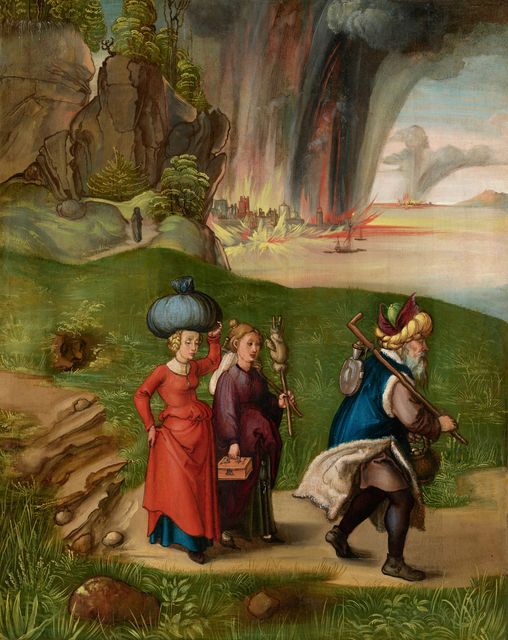
Albrecht Dürer
German · 289 in the archive
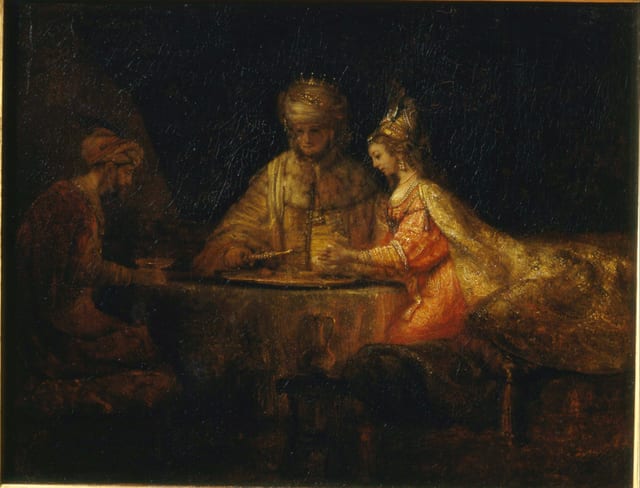
Rembrandt van Rijn
Dutch · 264 in the archive
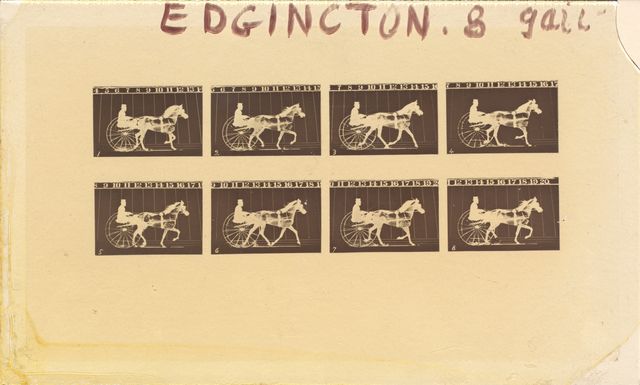
Eadweard Muybridge
English · 259 in the archive
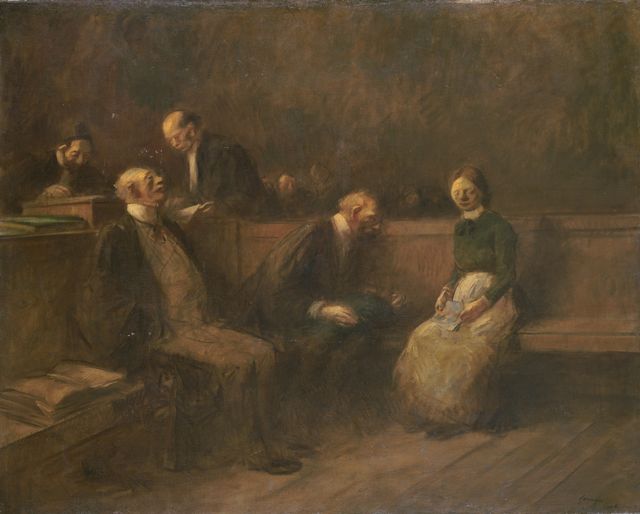
Jean-Louis Forain
French · 259 in the archive
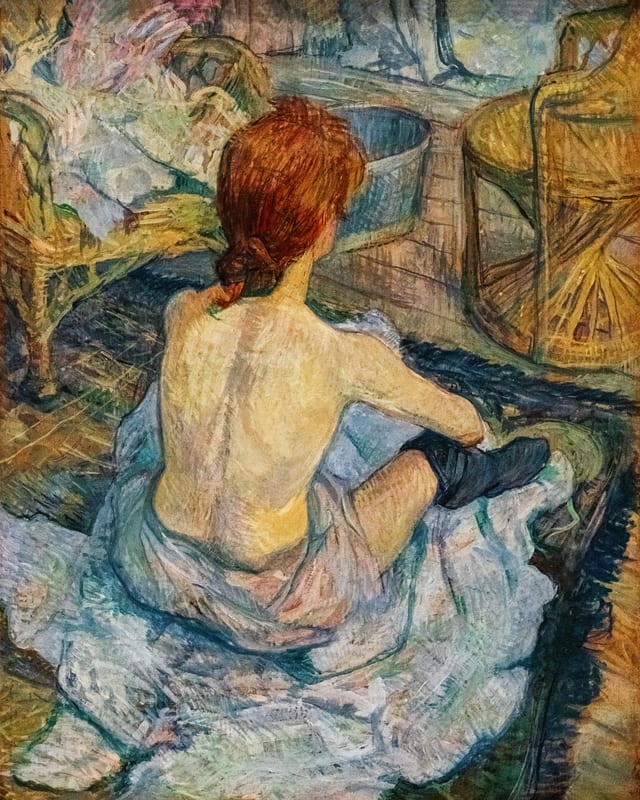
Henri de Toulouse-Lautrec
French · 246 in the archive
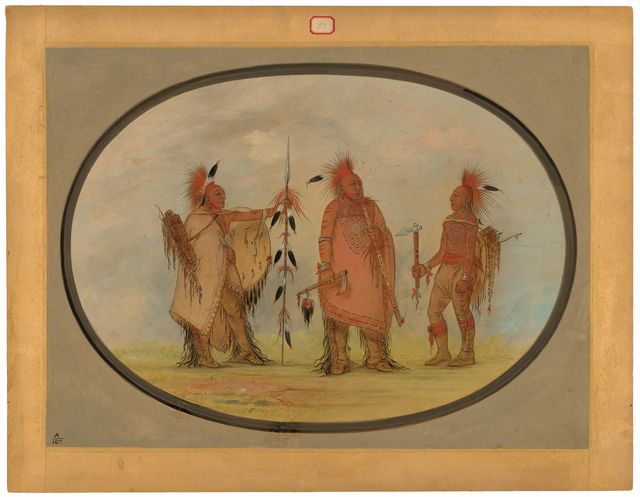
George Catlin
United States · 223 in the archive
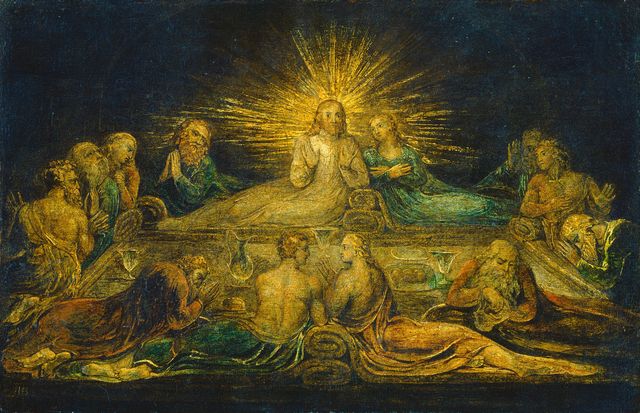
William Blake
United Kingdom of Great Britain and Ireland · 173 in the archive
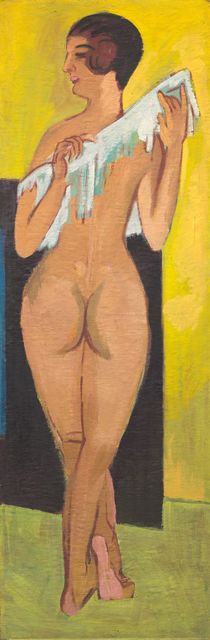
Ernst Ludwig Kirchner
German · 148 in the archive
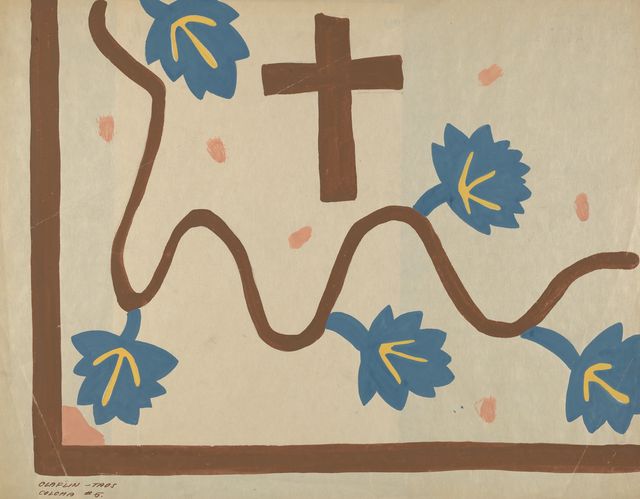
Majel G. Claflin
United States · 135 in the archive
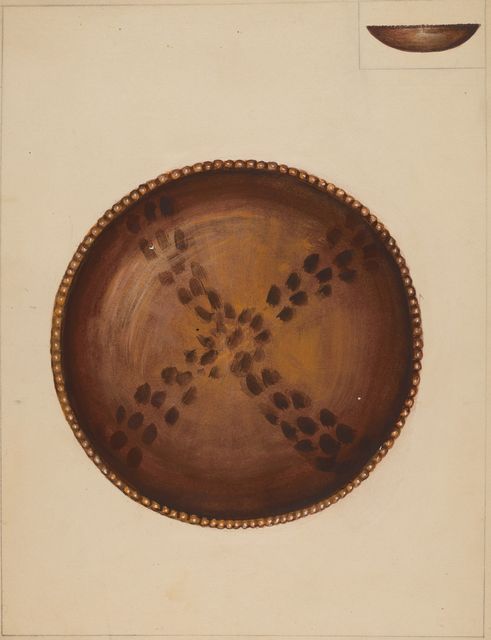
Mina Lowry
United States · 124 in the archive
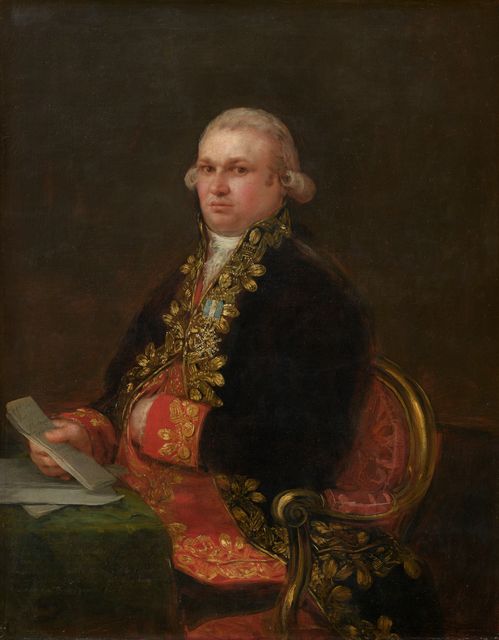
Francisco Goya
Spanish · 116 in the archive
Invite the masters into your living room.
Paul Cézanne on your TV, phone, or tablet. Free to start.
View on MomentableIndependent guide by Momentable · biography from Wikipedia · artworks are in the public domain and credited to the museum that holds them