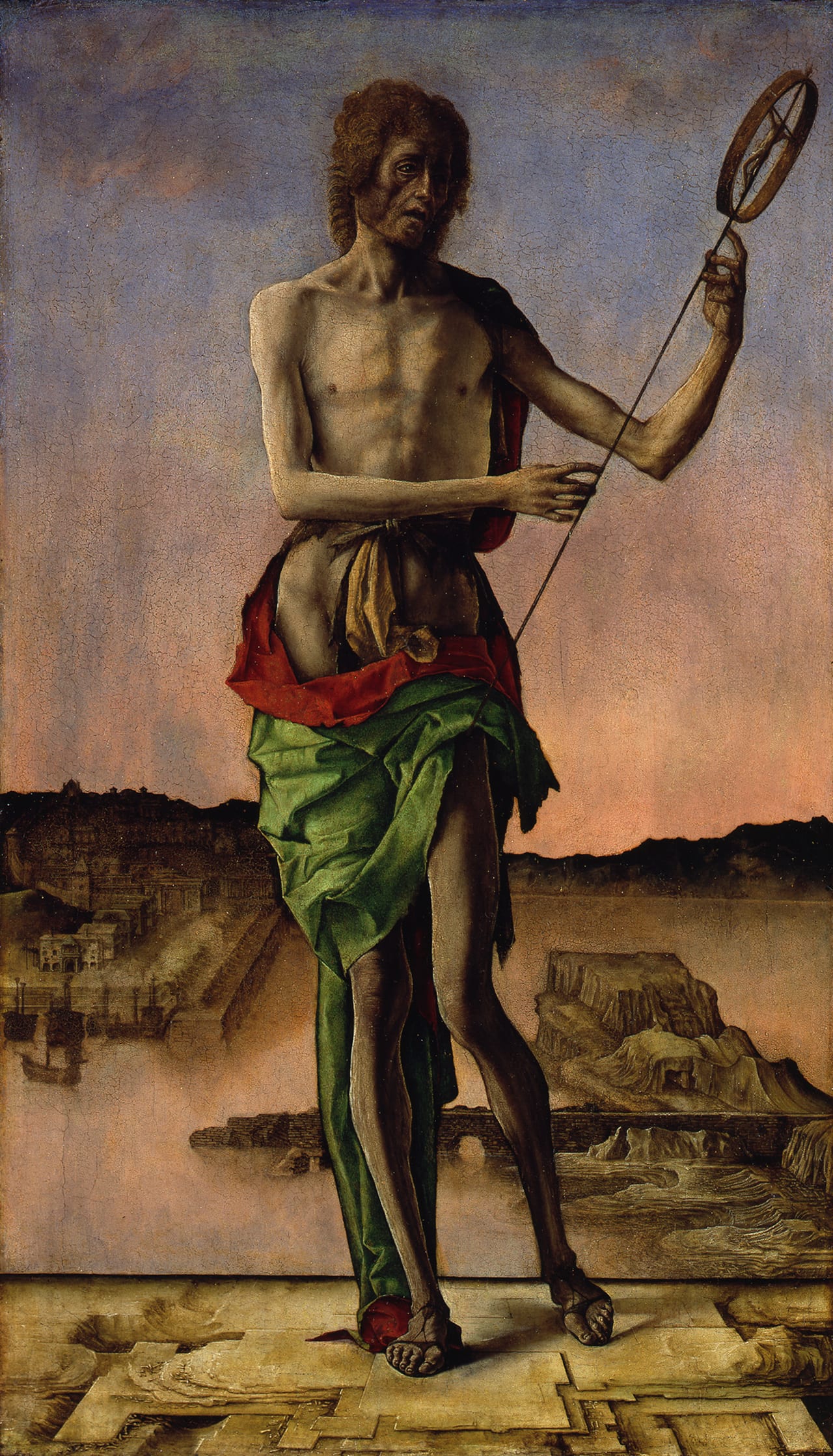
Apotheosis of St Ursula
Vittore Carpaccio

Renaissance
Florence
Early in the fifteenth century, amid a revival of classical learning, painters in Italy worked out linear perspective, while in Bruges Jan van Eyck built up layers of oil to catch surface and natural light. Humanism turned the anonymous craftsman into someone pursuing an intellectual calling, and made a few painters the first celebrity artists.
Florence, and an old world reborn
The word means rebirth: classical learning revived, from the fourteenth century to the sixteenth, by Europe’s painters, sculptors, architects, musicians and writers, who looked harder at nature and thought more of the individual. It was less a clean break than a long turn. Curiosity about nature and humanist study were already alive in the late Middle Ages; in fifteenth- and sixteenth-century Italy they took command.
The forerunner was Giotto, who freed Italian painting from the Byzantine manner of the early Middle Ages. His frescoes in the Arena Chapel at Padua, which probably date from just before 1305, fill convincing architectural spaces with grave, expressive and solidly weighted figures, and Dante, his contemporary, already saw that something new had begun.
Florence offered the arts uniquely favourable ground. After the goldsmith Lorenzo Ghiberti beat them in the 1401 competition for the Baptistery doors, Brunelleschi and Donatello went to Rome to study ancient buildings and statues; once back in Florence they put that study to work, and the ordered art of antiquity was born again. Masaccio, the founder of Renaissance painting and its most revolutionary hand, modelled monumental figures with light as Giotto had, set them in believable space with linear perspective, and brought the discoveries of his friend Donatello’s sculpture into painting; he was dead at 27.
Merchant fortunes paid for palaces, churches and monasteries, and the Medici, masters of the city from 1434 until Lorenzo de’ Medici died in 1492, funded almost every branch of its humanist and artistic life. Humanism changed what a painter was: no longer an anonymous craftsman but a person engaged in intellectual work. The Bible still supplied much of the subject matter, and the Church many of the commissions, yet Christ and the Virgin now stood in landscapes taken from the visible world instead of against a field of gold, and portraits, ancient myth and scenes of contemporary life joined the repertoire.
Space, atmosphere and oil
Perspective gave painters a method for building convincing depth on a flat surface. Linear perspective, worked out in Italy early in the fifteenth century with Paolo Uccello among its pioneers, makes parallel lines seem to run together toward one point on the horizon; Alberti described its best-known system in his treatise On Painting of 1435. With it a painter could calculate, consistently, how large anything should look at any distance.
Piero della Francesca, a mathematical theorist as well as a painter, gave his figures clearly defined volume and his spaces exact perspective, balanced by a naturalism drawn from Netherlandish art.
Aerial perspective does the same work with tone and colour, because the air changes a landscape as it recedes. Alberti noticed the effect; Leonardo studied it far more thoroughly in his writings. It shows first in Netherlandish pictures of the early fifteenth century and only later in Italian ones, and its fine gradations of colour suit oil best.
Northern Europe had painted in oil since the thirteenth century. Jan van Eyck built it up in translucent glazes to render surfaces and natural light with minute realism, and the innovations of Van Eyck and Campin reached Italy in the early fifteenth century; central Italian painters took oil up in earnest soon after Hugo van der Goes’s Portinari Altarpiece arrived in Florence in 1483. Most early Italian panels had been painted in egg tempera. In the later fifteenth century the two were often combined, and after 1500 tempera grew rare.
Antonello da Messina brought the oil medium to northern Italy, and Venice, whose damp climate ruled out fresco, adopted it quickly. Giovanni Bellini, Giorgione, Titian, Tintoretto and Veronese built from it a lyrical Venetian manner of rich colour, sensuous paint and extravagant settings. Visiting the city in about 1506, Albrecht Dürer wrote that the aged Bellini was still the best painter of all, Titian joined Bellini’s workshop, then the most important in the city, in 1507 or soon after, and went on to become the greatest painter of sixteenth-century Venice.
The High Renaissance, and the rest of Europe
For some thirty-five years, from the early 1490s until imperial troops sacked Rome in 1527, three men dominated: Leonardo, the solitary intellectual whom no branch of study escaped; Michelangelo, who drew on the human body as the supreme vehicle of emotion; and Raphael, whose pictures are harmonious, beautiful and serene. Leonardo’s restless research into anatomy, flight and plant life left him little time to paint, and his fame rests on a few finished works, among them the Last Supper of 1495 to 1498, now badly deteriorated, on the refectory wall of Santa Maria delle Grazie in Milan.
Around 1520 Mannerism took over, bringing drama into art that stayed realistic. Painters in northern Italy, Correggio and Titian among them, went on painting Venus and the Virgin with no sign of conflict.
North of the Alps, the early painters cared more for exact detail and the symbolic meaning of objects than for scientific perspective and anatomy. Rogier van der Weyden’s naturalism and pathos made types for portraits and religious scenes that were copied across the Netherlands, Spain and Portugal, and even Italy, until the middle of the sixteenth century. Dürer, the archetypal Renaissance artist of the north, went to Italy, added proportion and perspective to his northern eye for surface, and through his prints shaped Italian artists in turn.
In Spain, Bartolomé Bermejo, counted the greatest Spanish painter of the fifteenth century, handled oil so well that he may have trained in the Netherlands; his Saint Michael, for which he took a first payment in February 1468, is his earliest documented work.
Artists
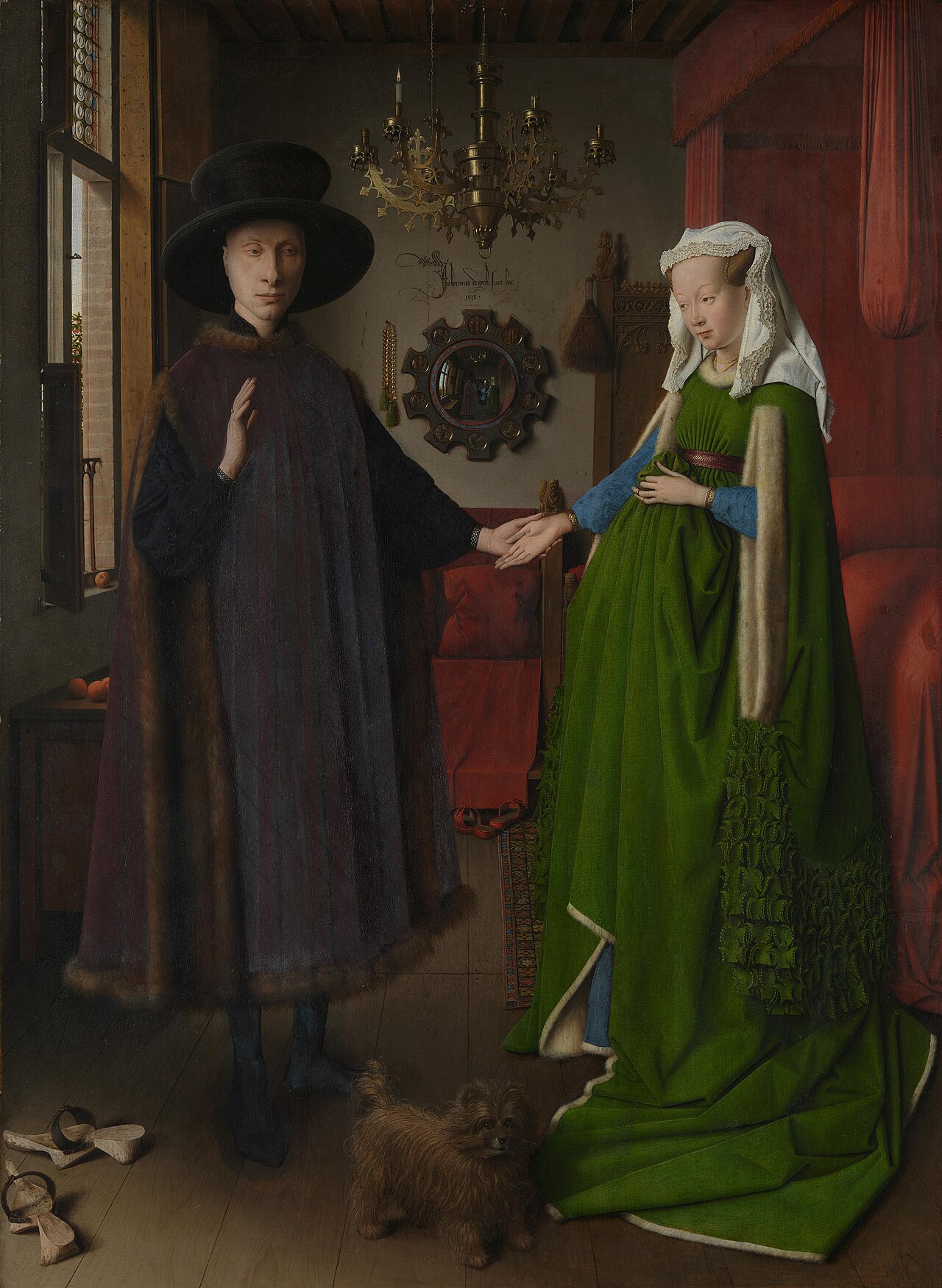
Jan van Eyck
Credited with a new way of painting: minutely real surfaces and natural light, built up in translucent glazes of oil. From 1425 he was painter to Philip the Good, Duke of Burgundy, and the Arnolfini Portrait is signed and dated 1434.
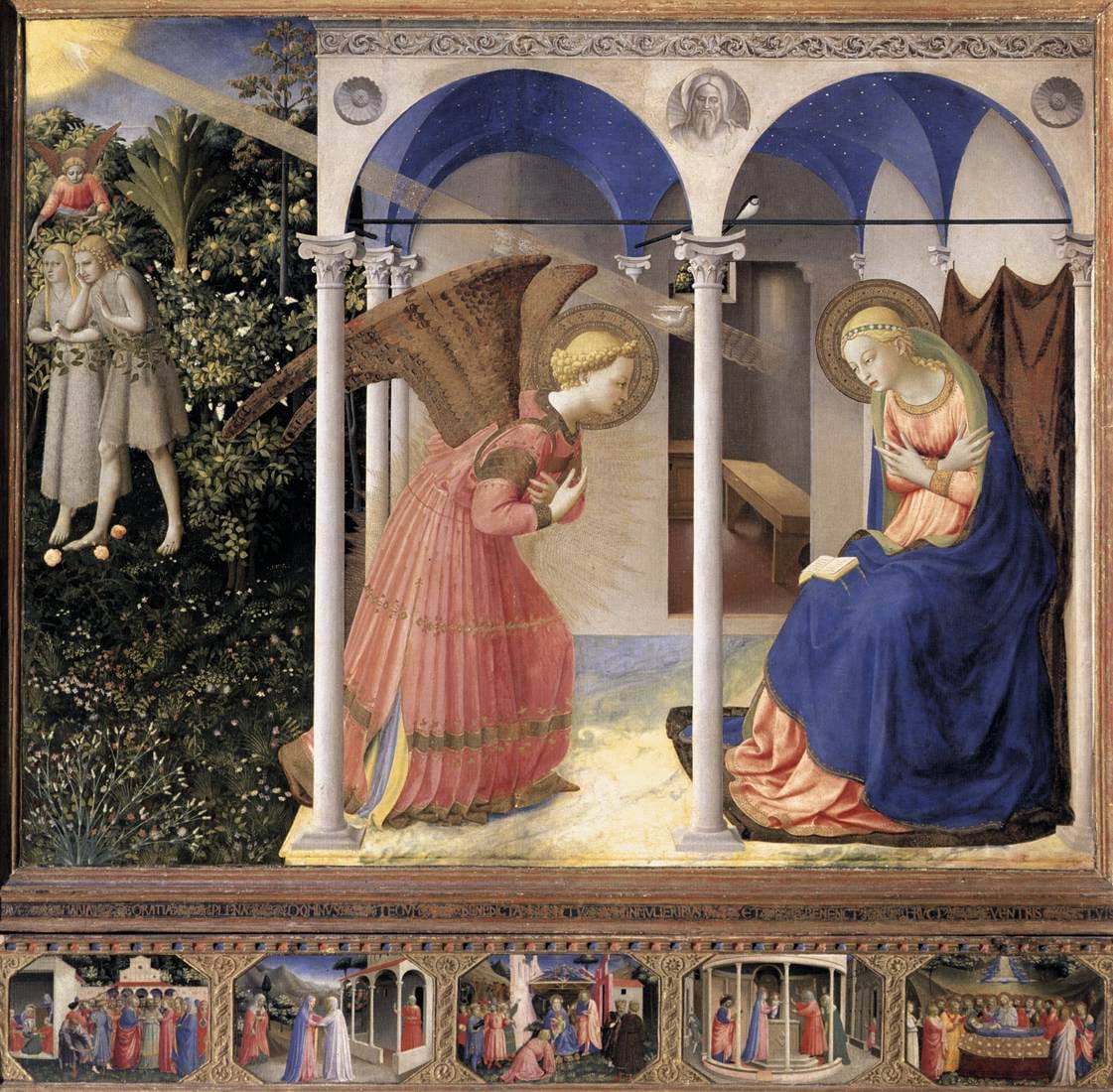
Fra Angelico
One of the principal painters of early Renaissance Florence, and a Dominican of the friary at Fiesole, where he became prior. He gave his figures new volume and his spaces linear perspective, and his most famous works are the frescoes painted after 1436 for the friary of San Marco in Florence.
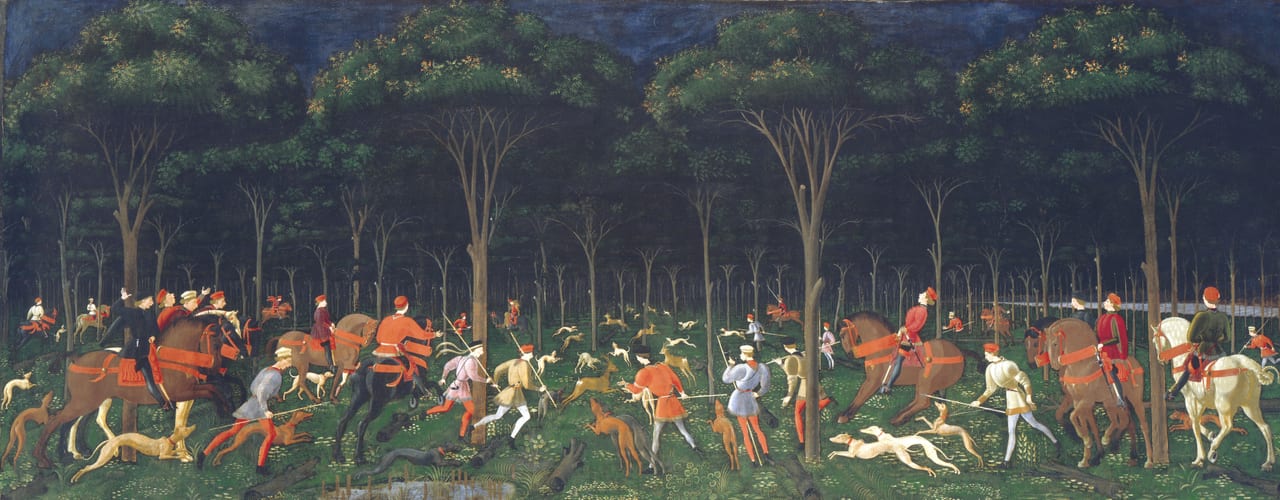
Paolo Uccello
Trained under the sculptor Ghiberti, he joined a Gothic love of ornament to a profound interest in linear perspective, and was one of the pioneers of its study.
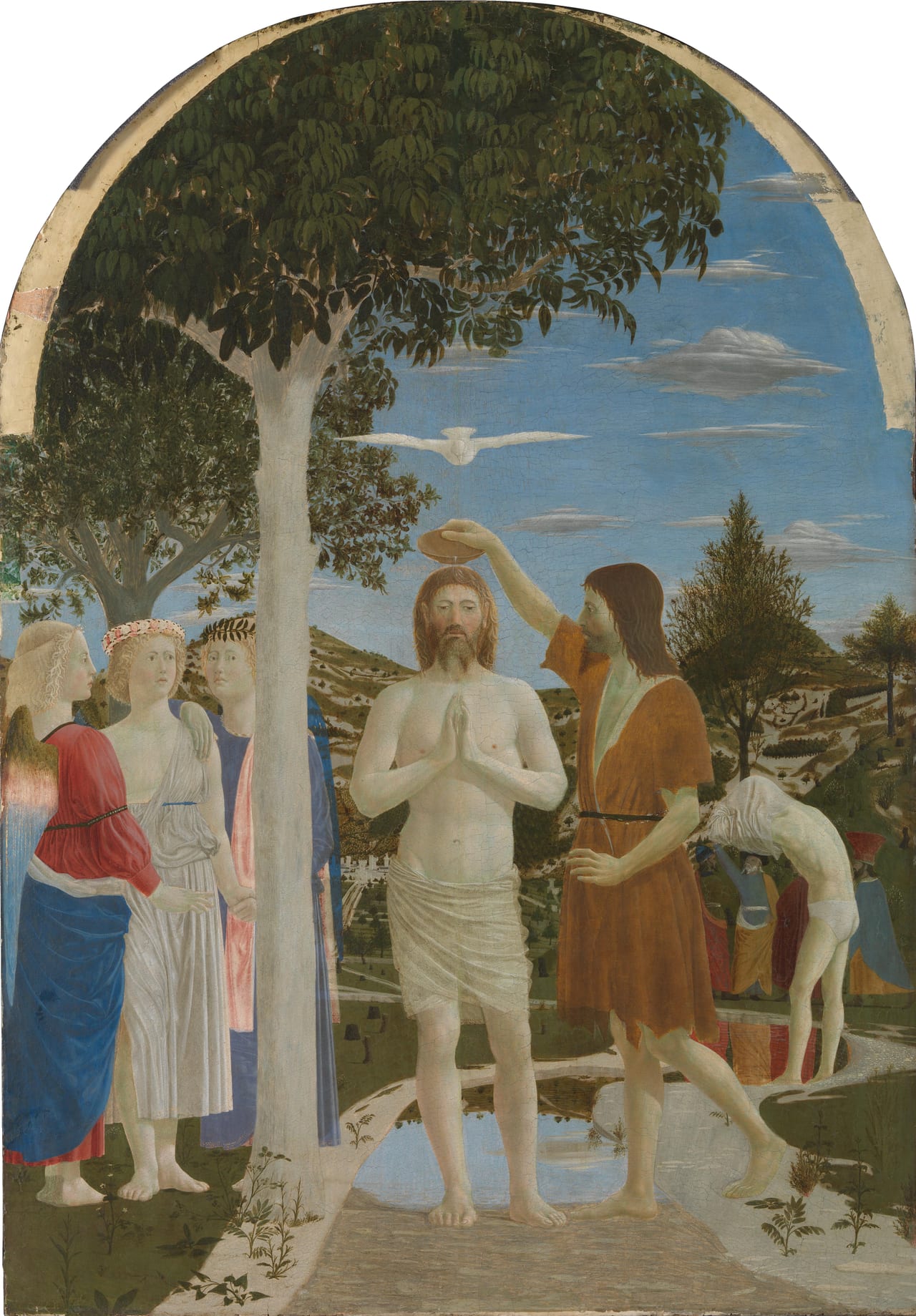
Piero della Francesca
One of the most admired Italian painters of the fifteenth century, and a mathematical theorist whose figures have clearly defined volume and whose perspective is exact. He kept his links with Sansepolcro, which can be seen in the background of The Baptism of Christ.
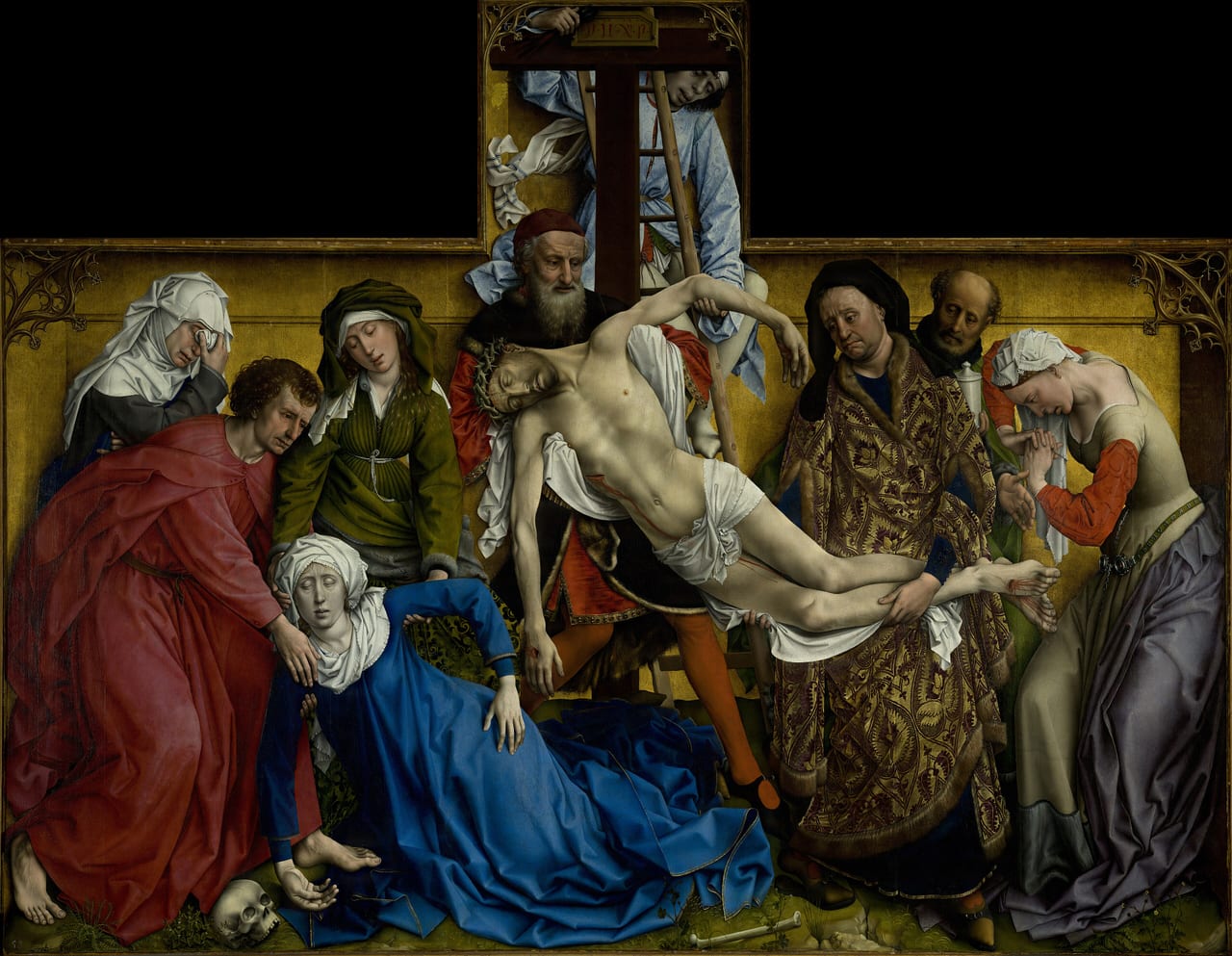
Rogier van der Weyden
Apprenticed to Robert Campin in Tournai and made painter to the city of Brussels in 1435, he was famed across Europe for naturalistic detail and expressive pathos. The Descent from the Cross in Madrid is among his greatest works.
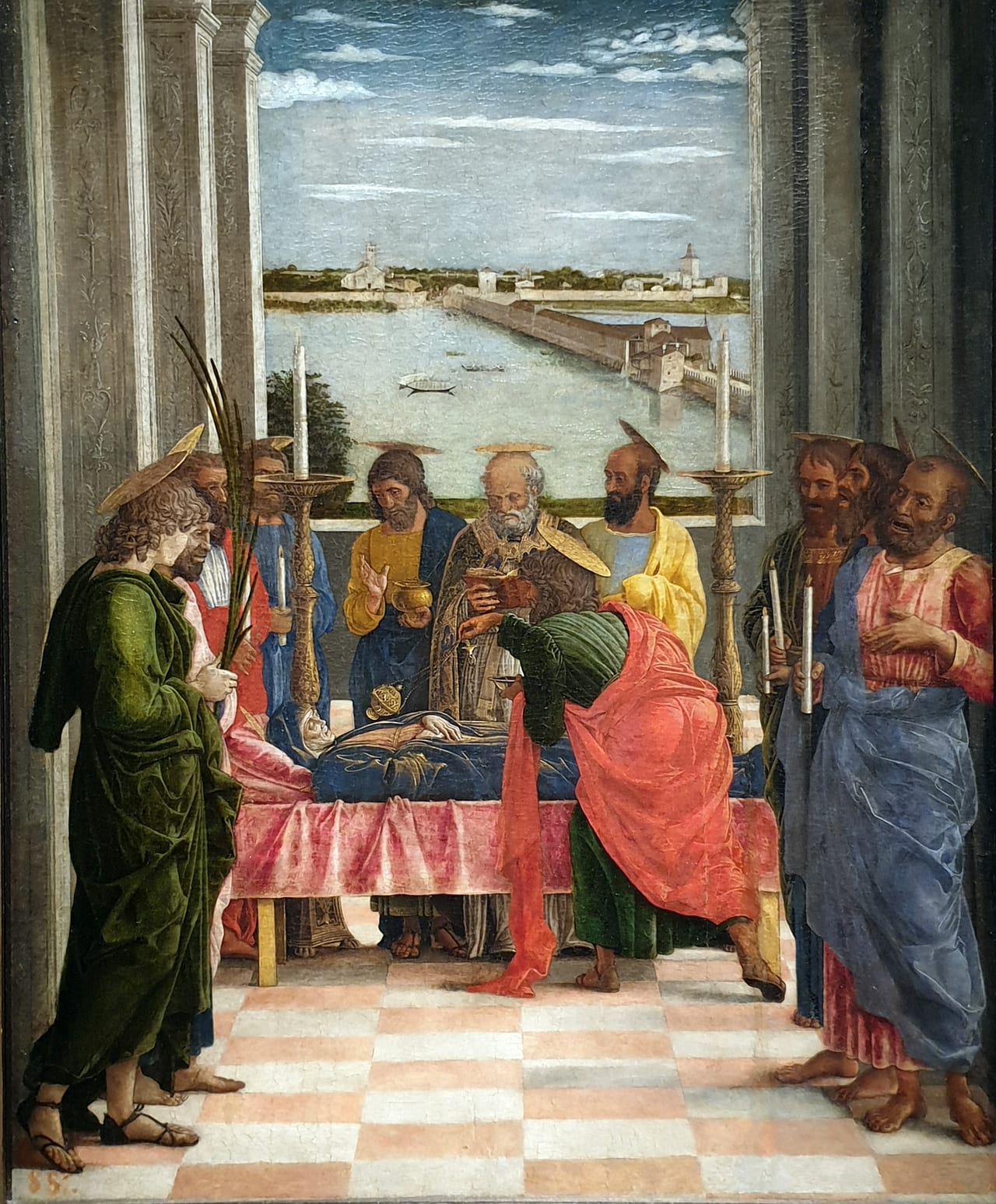
Andrea Mantegna
Death of the Virgin is by Andrea Mantegna, born near Padua, who married into the Bellini family in 1453 and from 1460 served the Gonzaga in Mantua as court artist. A scholar of the antique, he found a way of painting that imitates classical sculpture, and was knighted by 1484, a rare honour for an artist.
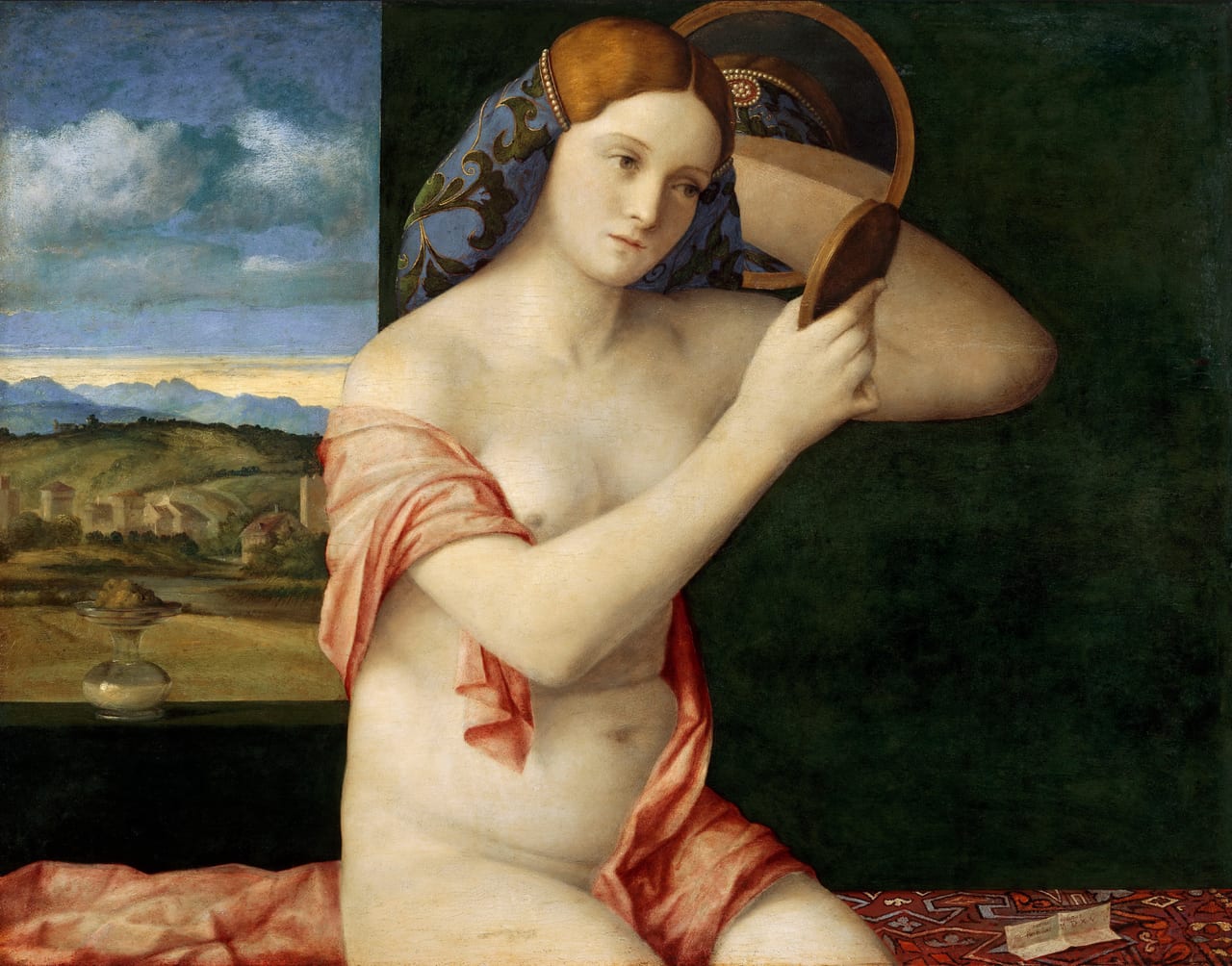
Giovanni Bellini
Among the most influential Venetian artists, at work in his city for sixty-five years and celebrated for his natural light, his tender Madonnas and his altarpieces. In old age he turned to a few secular subjects.
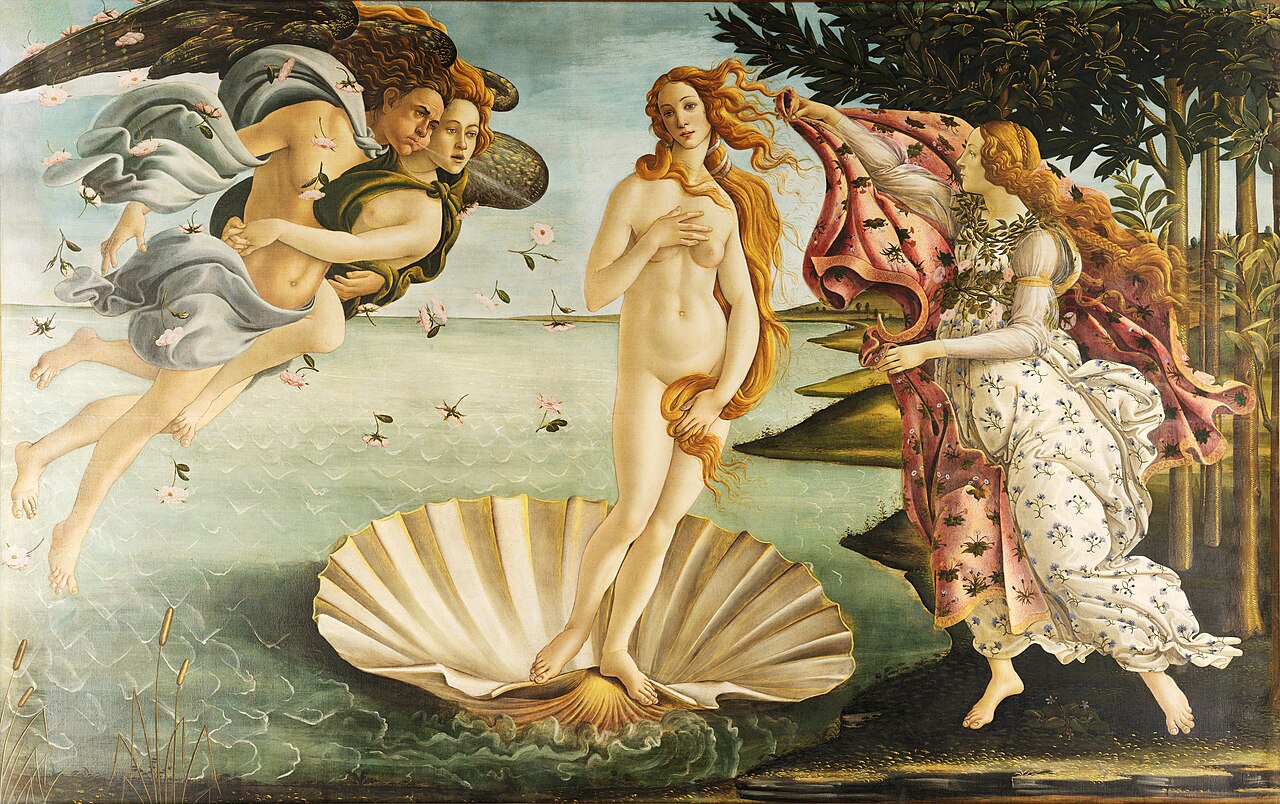
A pupil of Filippo Lippi who worked almost all his life for the Medici and their circle. His most inventive years, 1478 to 1490, produced the famous mythologies, The Birth of Venus among them, joining a decorative use of line, perhaps owed to his goldsmith’s training, to elements of the classical tradition.
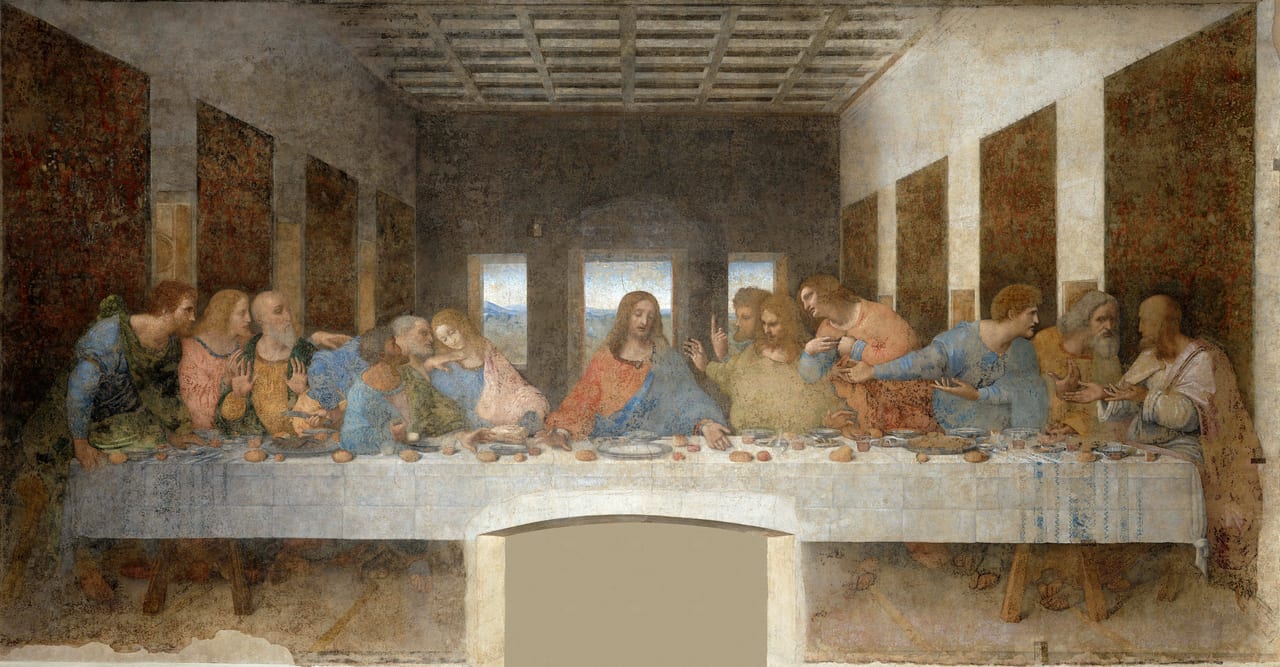
Painter, sculptor, architect, engineer and scientist, trained in Florence with the sculptor Andrea Verrocchio. His Last Supper, painted for the refectory wall of Santa Maria delle Grazie, makes every pose, gesture and face show what the mind is doing.
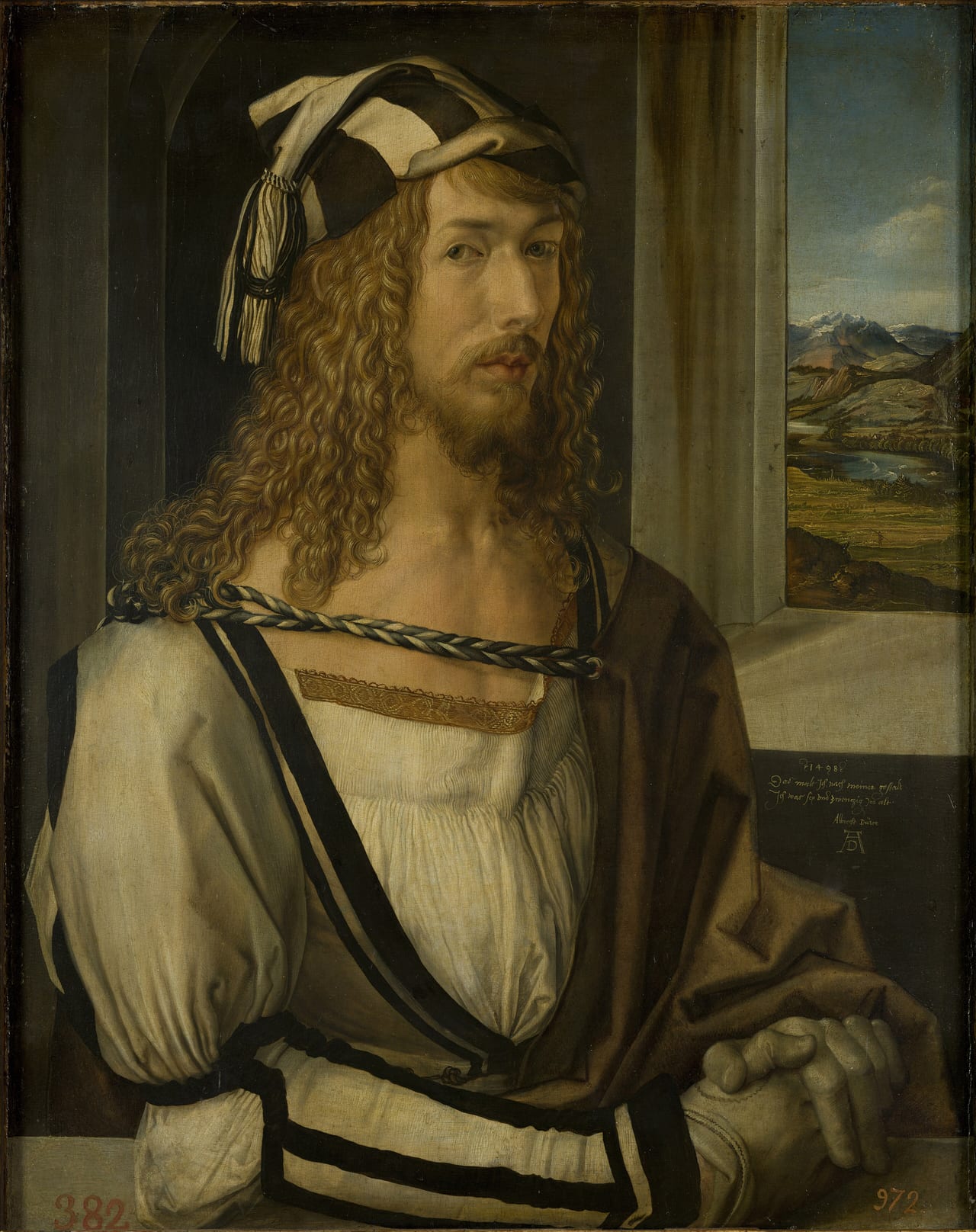
Self-Portrait is by Albrecht Dürer, the archetypal Renaissance artist of northern Europe. He went to Italy, joined proportion and perspective to the northern taste for surface detail, and through his prints influenced Italian artists in turn.
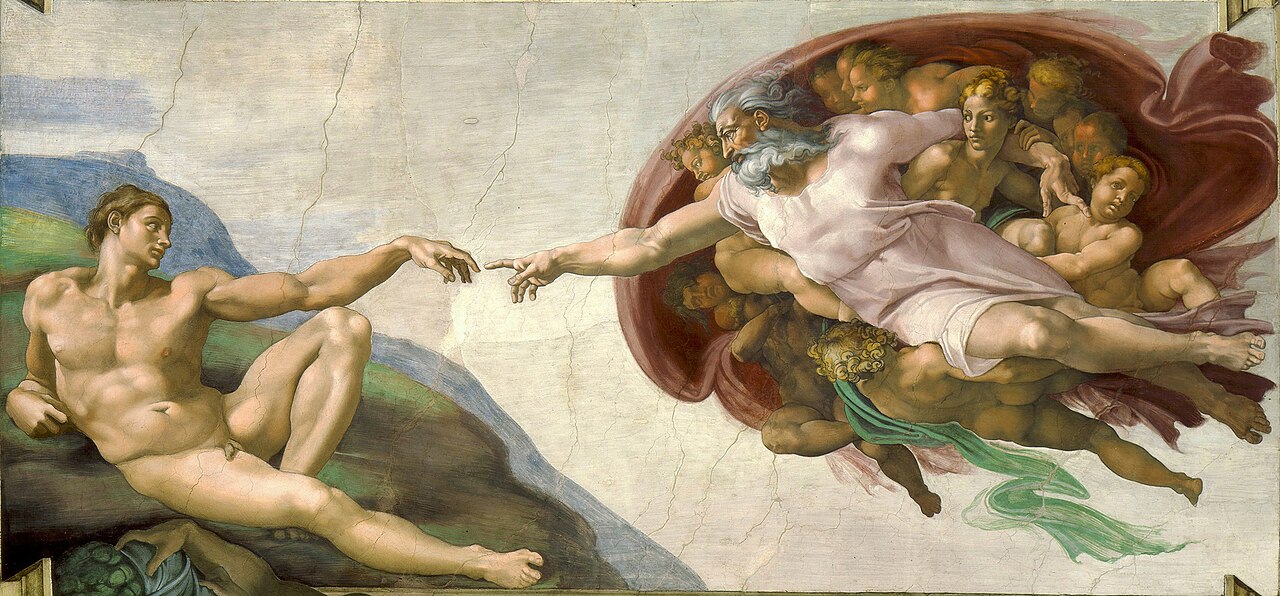
Painter, sculptor, architect and poet, the first artist his contemporaries hailed as a genius. From 1508 to 1512 he painted the Sistine Chapel vault with the Old Testament from the Creation to Noah, and its twisting, crowded figures became the chief source of Mannerism.
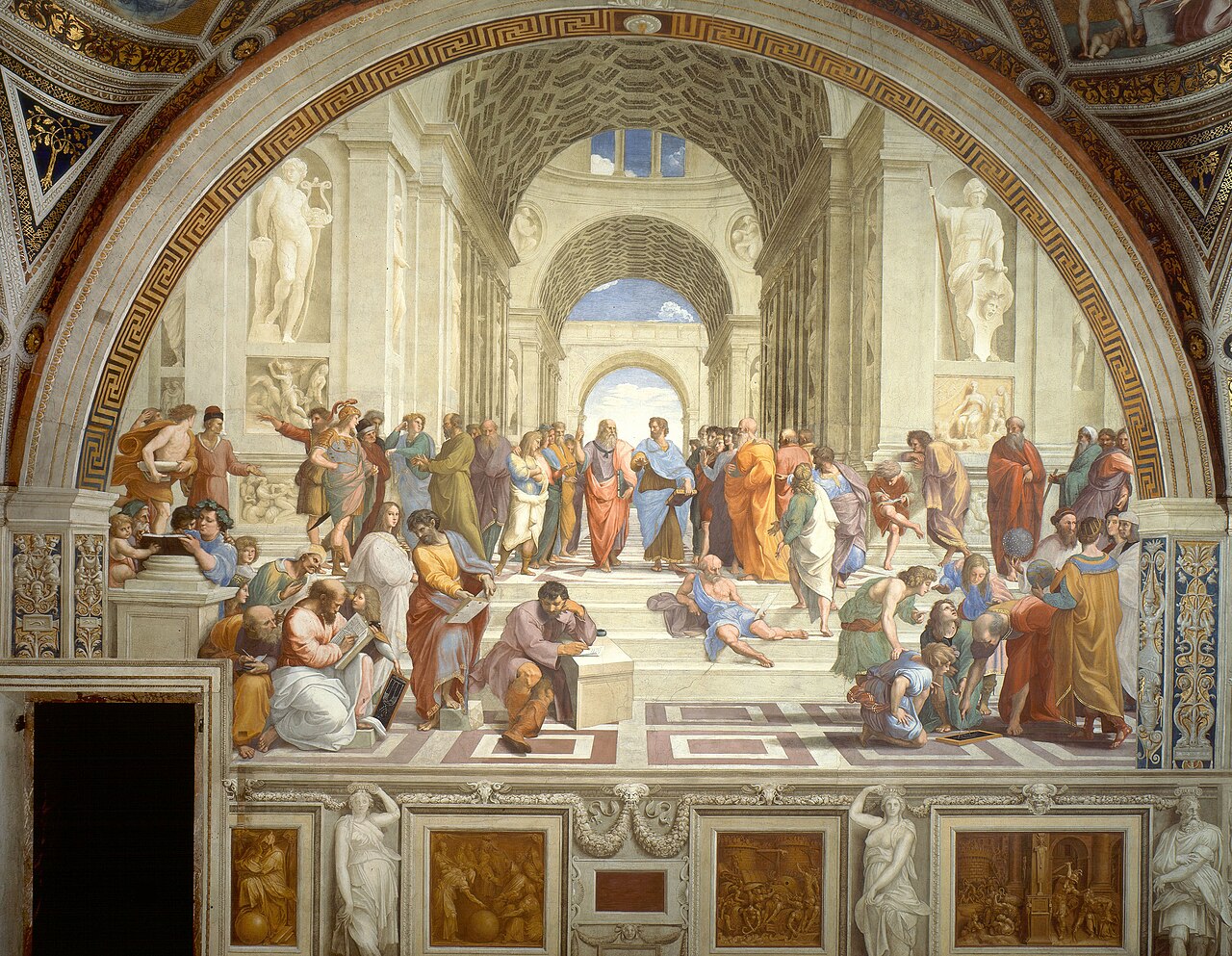
Son of a court painter in Urbino, called to Rome in 1508 to help redecorate the papal apartments for Julius II; there he grew into one of the greatest of all history painters. For centuries he has stood as the supreme painter of the High Renaissance.
Artworks
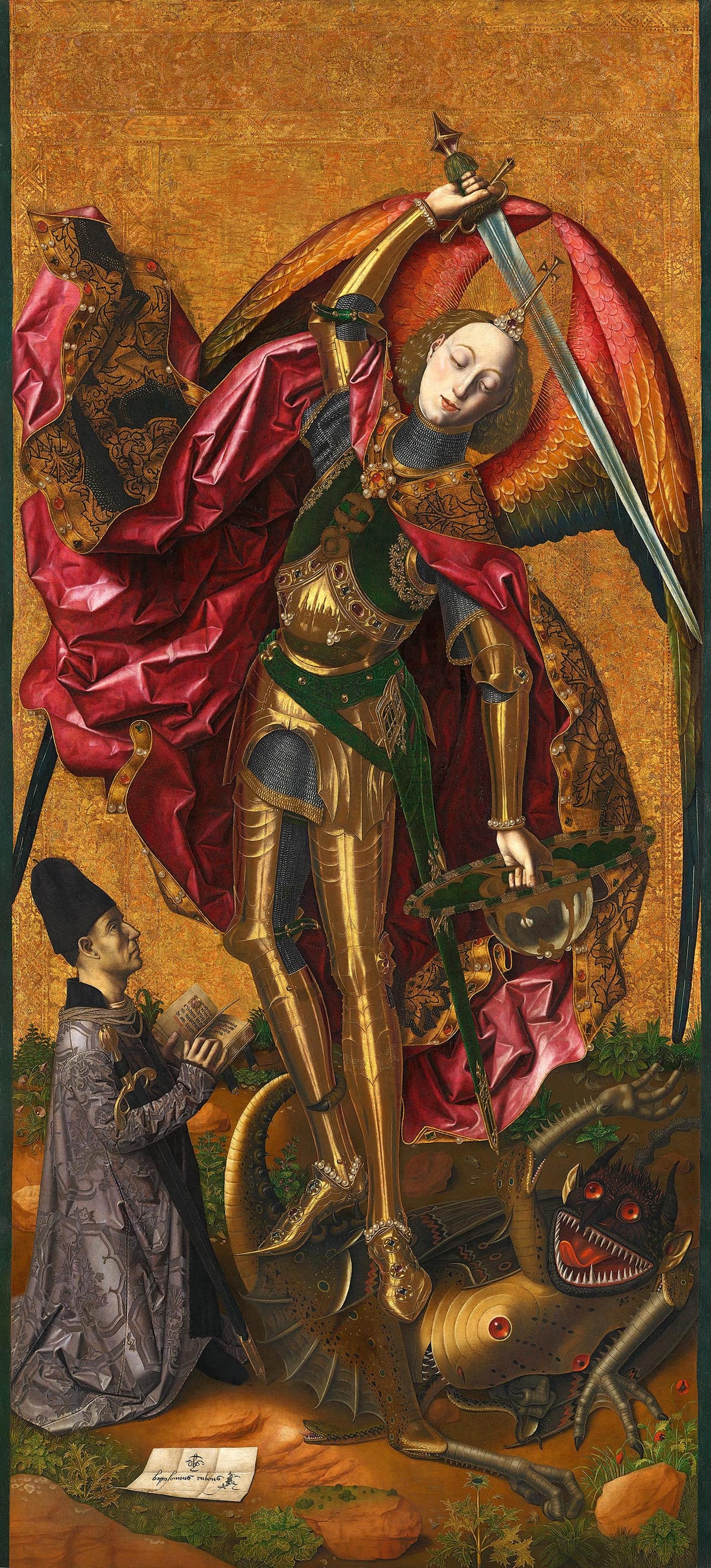
Saint Michael Triumphs over the Devil
Bartolomé Bermejo · 1468
National Gallery
The archangel, his armour plated in gilt and set with gems, raises his sword over a hideous devil, and his many-coloured wings curve around the donor kneeling at his feet: Antoni Joan, lord of Tous, marked as a knight by his gold chain and sword. Almost certainly the centre of the high altarpiece of San Miguel in Tous, near Valencia, it carries Bermejo’s signature on a folded parchment at the lower left, and it is the most important fifteenth-century Spanish painting in Britain.
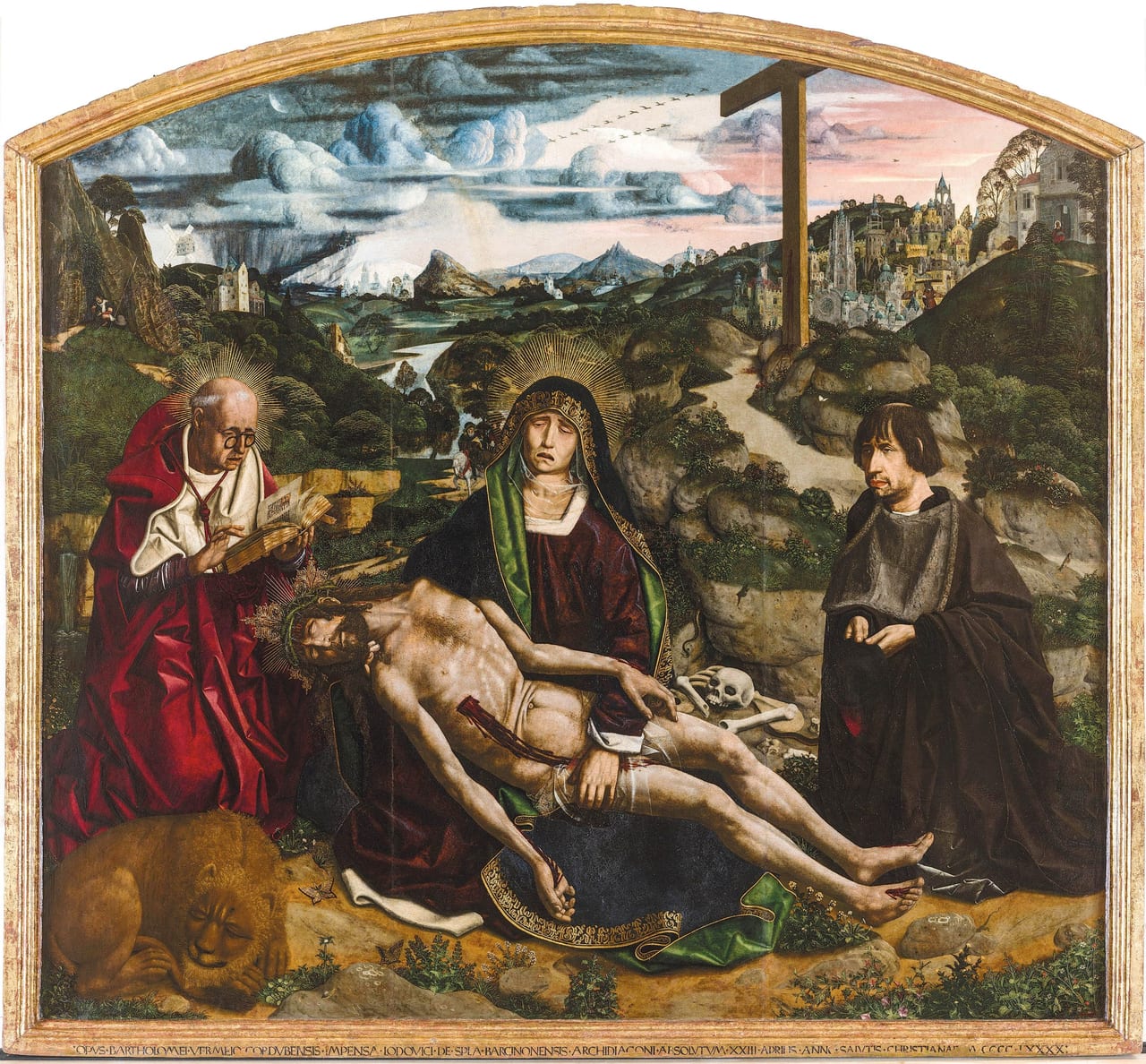
Piedad with Canon Lluís Desplà
Bartolomé Bermejo · 1490
Cathedral of the Holy Cross and Saint Eulalia
The Virgin mourns over the body of her son. Saint Jerome kneels reading his Bible beside the dead Christ, and the patron, Canon Lluís Desplà, kneels at the right, and the mountain weather is set down in detail unusual for its time. Made for the canon’s private oratory and dated 1490 on its frame, it is the last work Bermejo finished, and it is now in Barcelona Cathedral.
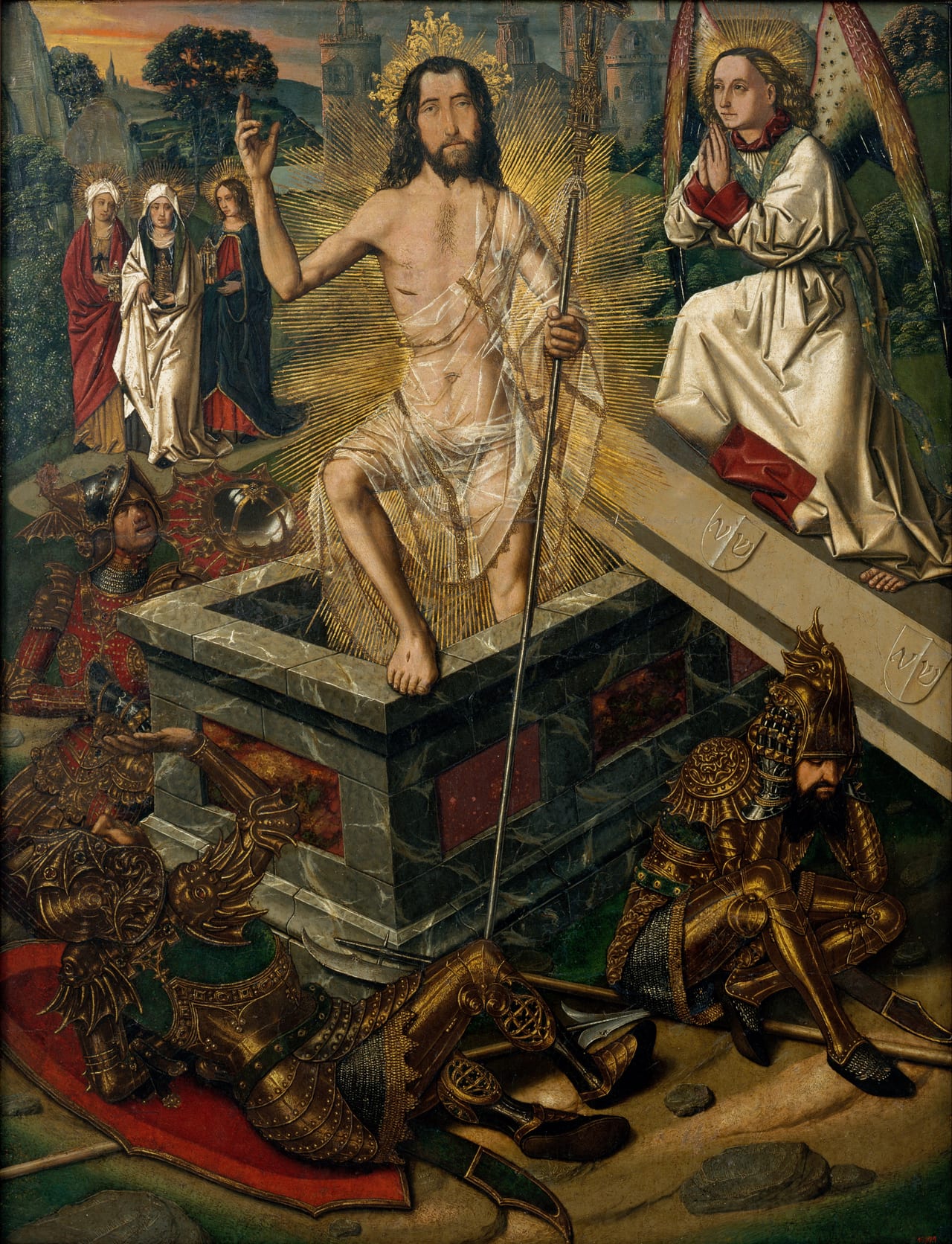
Resurrection of Christ
Bartolomé Bermejo
Museu Nacional d'Art de Catalunya
Christ rises from the tomb under an angel’s adoring gaze while the guards cower; far behind, the three Marys walk out with jars of perfume to anoint the body. One of four surviving compartments of Bermejo’s altarpiece of Christ, it is now in the National Art Museum of Catalonia.
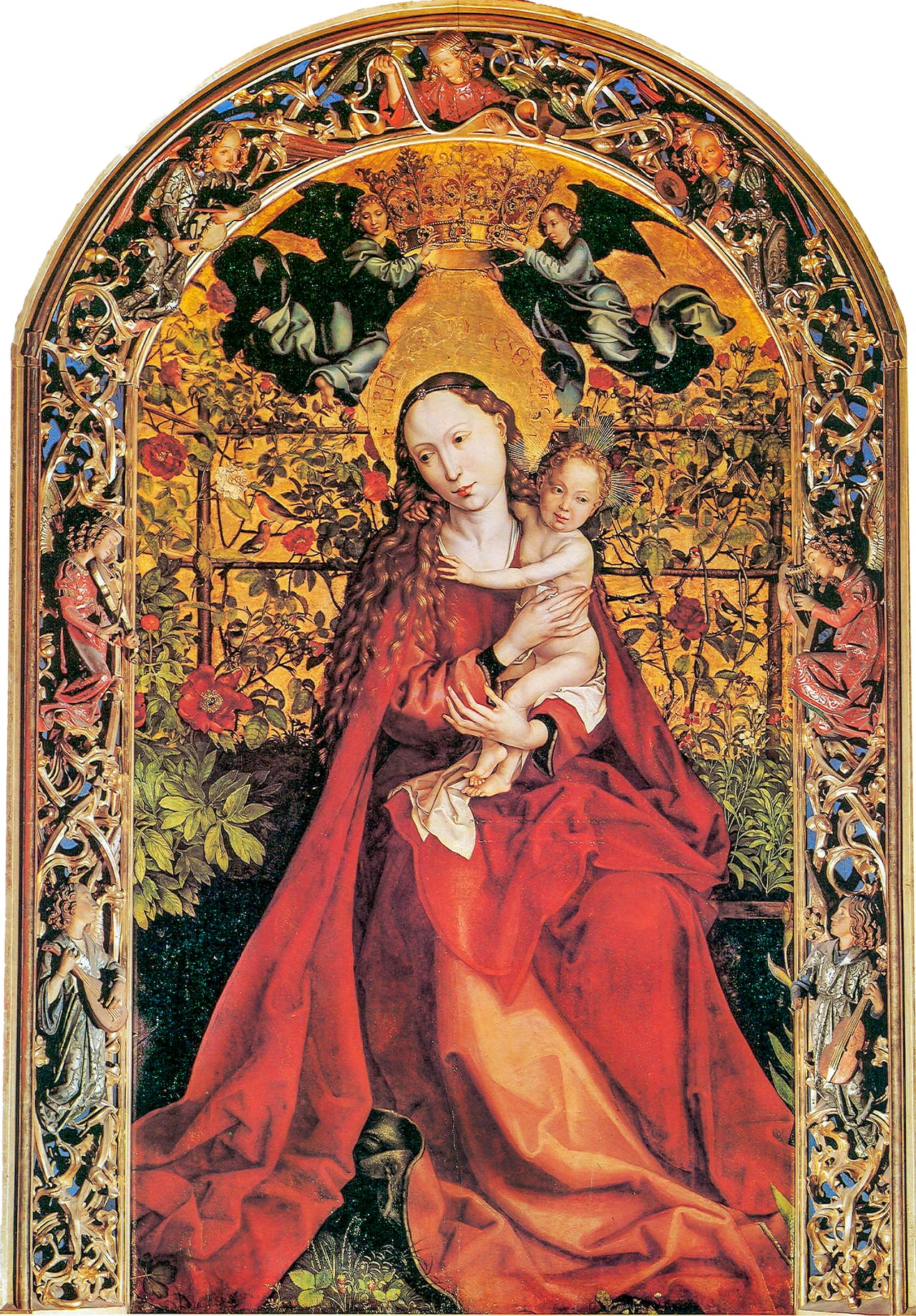
Madonna of the Rose Bower
Martin Schongauer · 1473
Dominican Convent
A life-size Virgin, dressed in red rather than the customary blue, holds the Child in an enclosed garden of roses alive with finches. Schongauer, famous above all as an engraver, painted it in 1473 for St Martin’s Church in Colmar; stolen in 1972 and recovered the next year, it now stands in the choir of the town’s former Dominican church.

Predella of the Barbadori altarpiece
Filippo Lippi
Uffizi Gallery
Three scenes from the foot of Filippo Lippi’s altarpiece of 1437 to 1438: Saint Frediano turning the course of the river Serchio, the Virgin told of her coming death as the apostles arrive, and Saint Augustine’s vision. Napoleon’s troops took the altarpiece to France in 1810; its main panel stayed in the Louvre, while the predella came back to Florence and is in the Uffizi.
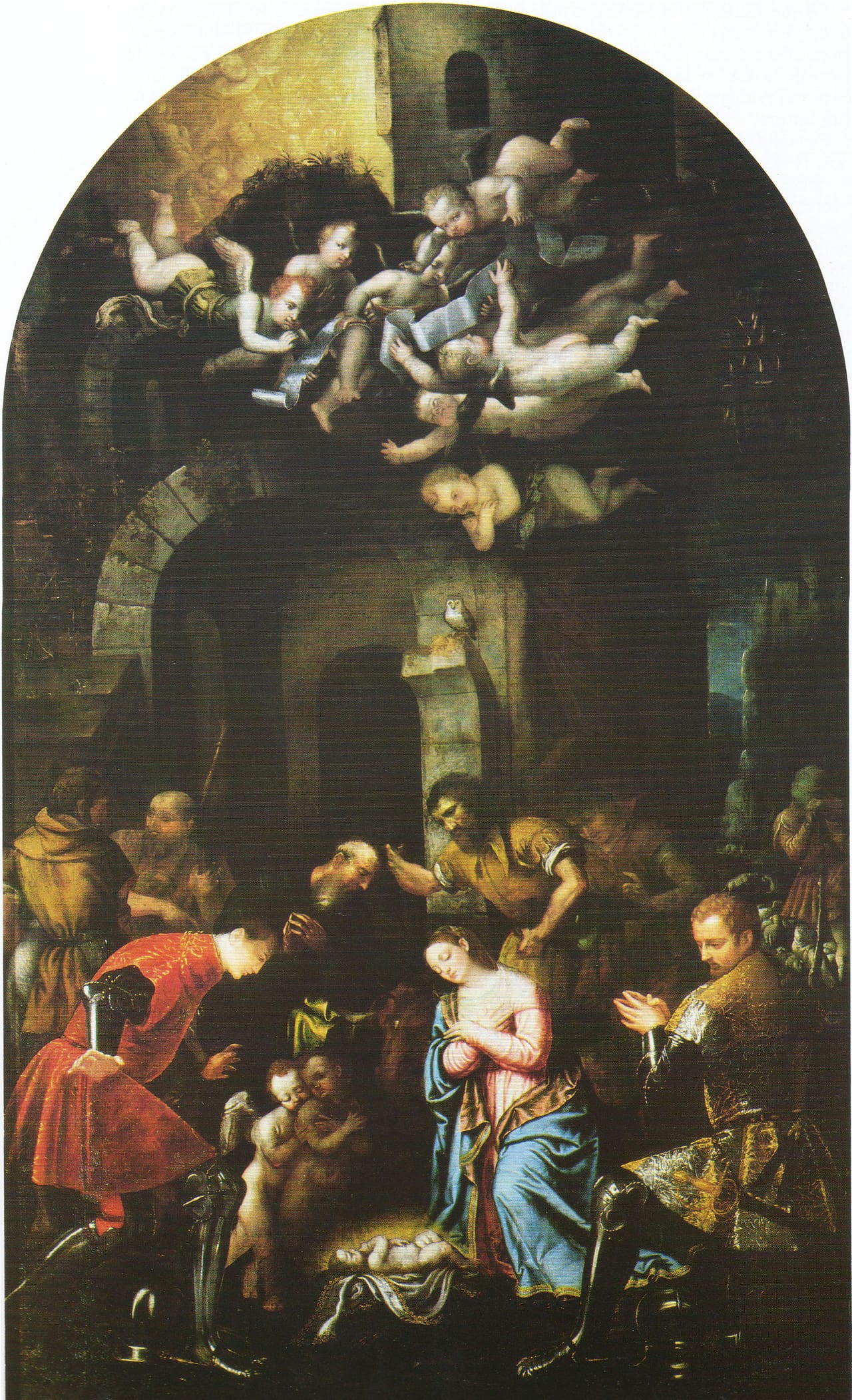
Adoration of the Shepherds with the Saints Nazario and Celso
Moretto da Brescia · 1540
Church of Saints Nazarius and Celsus
An Adoration of the Shepherds in which the church’s two patron saints, Nazarius and Celsus, take part. Painted in 1540 and still in Santi Nazaro e Celso in Brescia, it was recorded there in 1630 as the altarpiece of the Averoldi Chapel under another painter’s name, and was securely given to Moretto only in the late twentieth century. Among his most debated works, it marks his turn towards Mannerism, and its 1987 restoration uncovered a great many changes of mind.
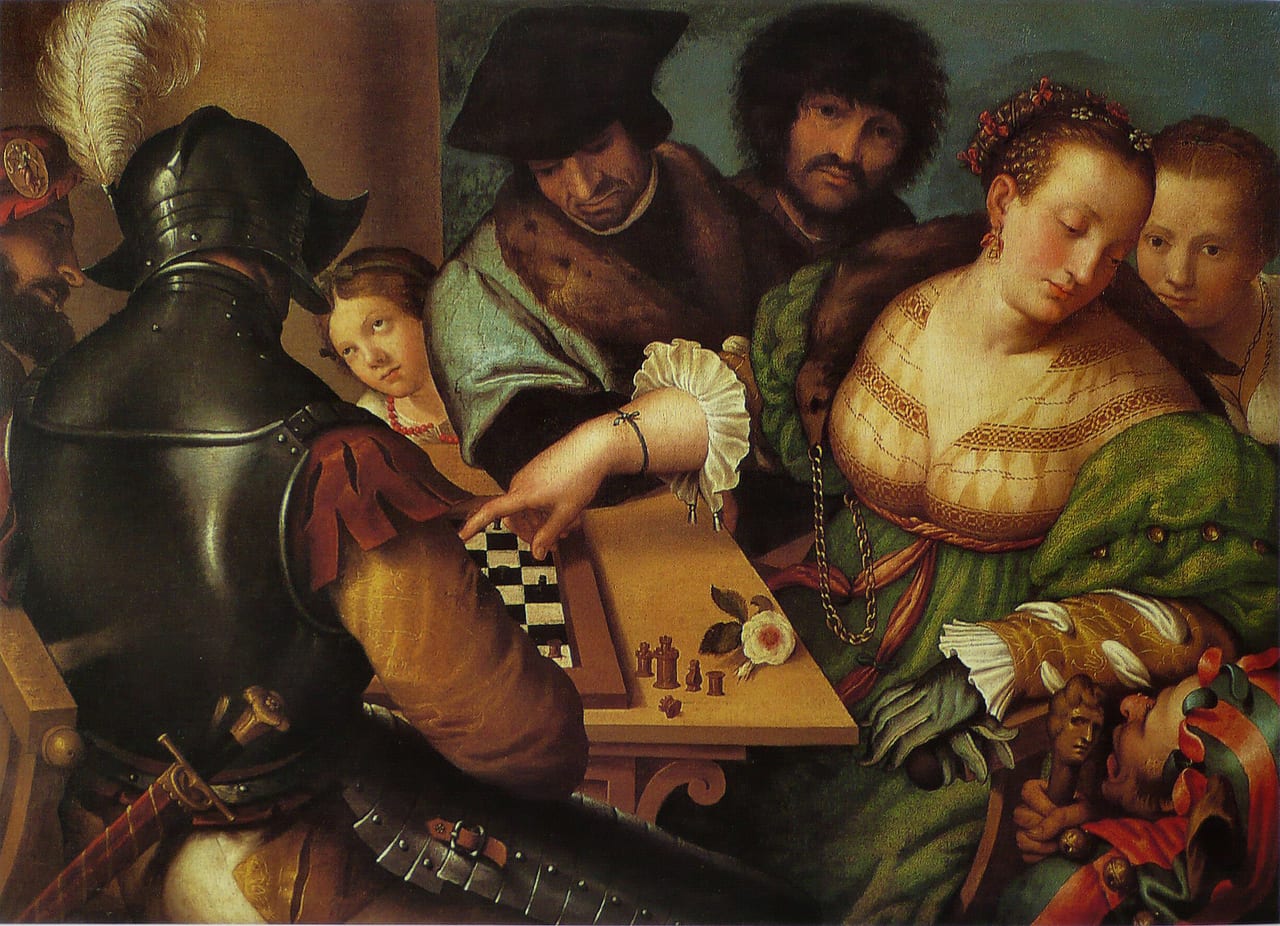
Game of Chess
Giulio Campi · 1530
Museo Civico d'Arte Antica
Painted around 1530 by Giulio Campi of Cremona. When Roberto Longhi first published it, in 1963, he gave it to Sofonisba Anguissola; Mina Gregori attributed it to Campi. It has been in Turin’s Museo Civico d’Arte Antica since 1970.
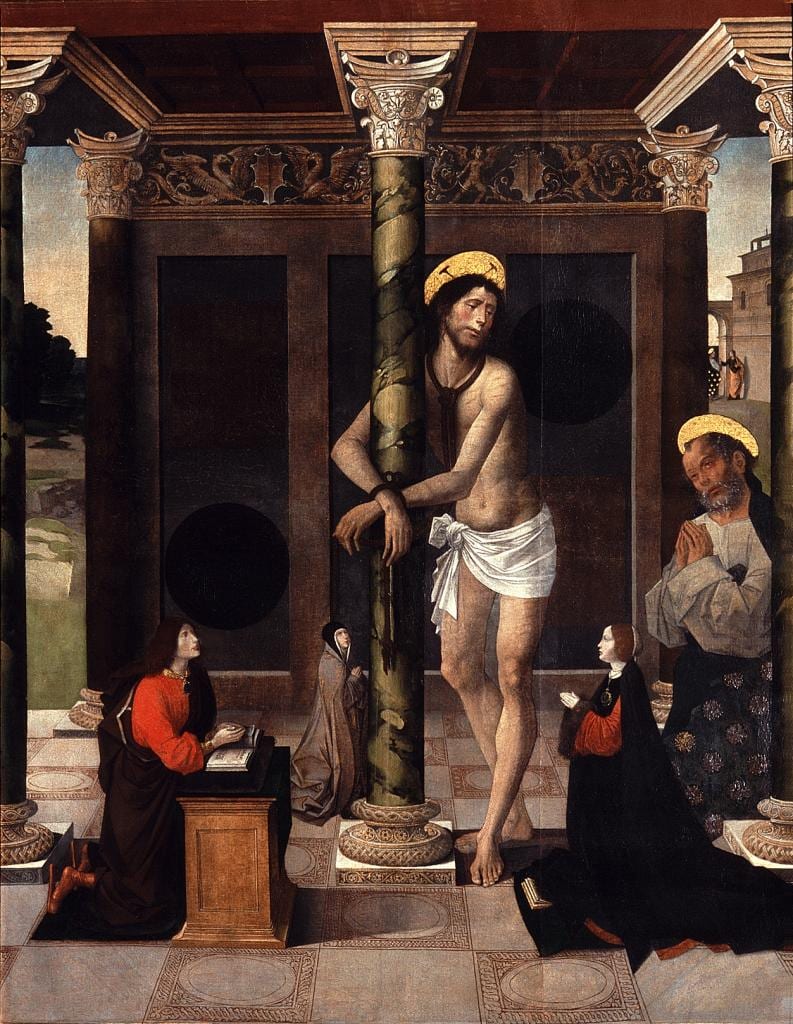
Christ tied to the column with Saint Peter and the donors
Alejo Fernández · 1508
Museum of Fine Arts of Córdoba
A work of Alejo Fernández’s years in Córdoba, which ended with his move to Seville in 1508; in Córdoba, Flemish example turned him to perspective and the construction of space. Kept in the city’s own museum, it shows the influence of Bramante, as does his Last Supper triptych in Zaragoza from the same years.
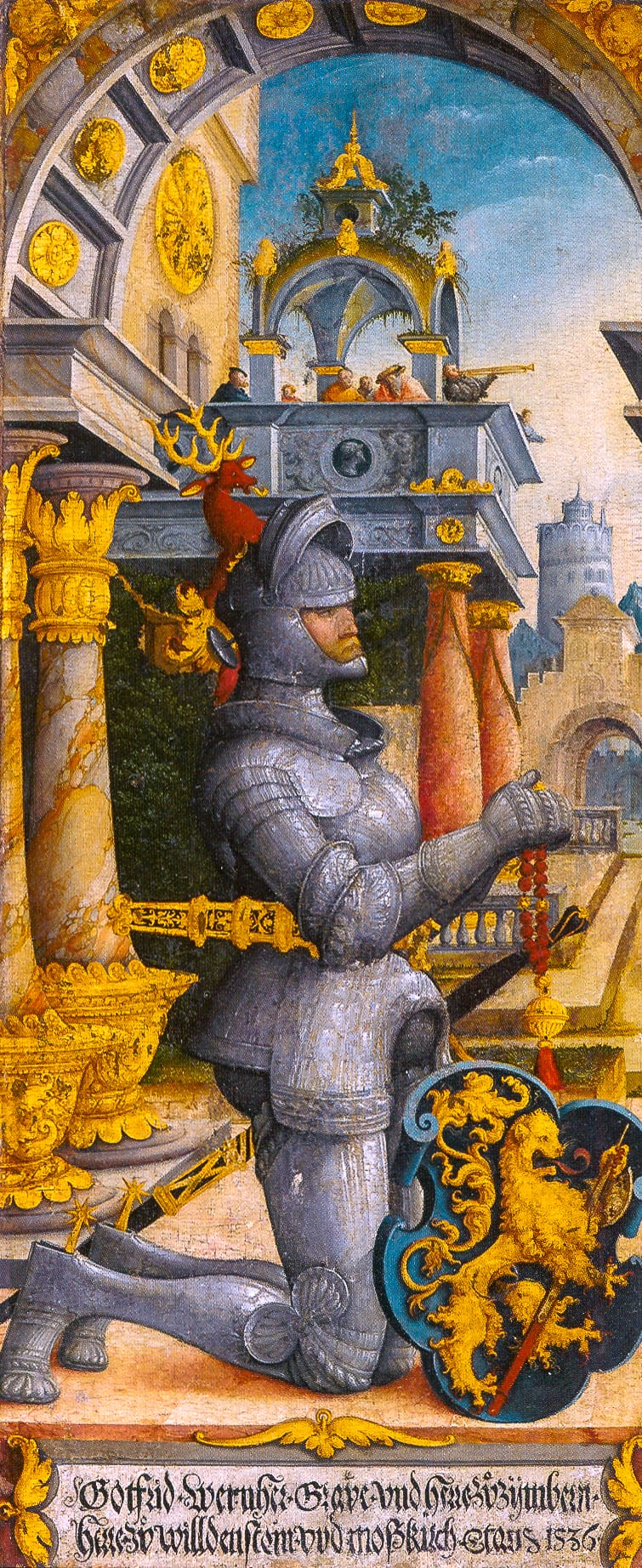
Der kniende Stifter Graf Gottfried Werner von Zimmern – Christus am Ölberg
Master of Messkirch · 1536
Staatsgalerie Stuttgart
A donor panel for Count Gottfried Werner von Zimmern, the patron who called the anonymous Master of Meßkirch to his town. The painter is named after the eleven altarpieces he made there for the church of St Martin between 1536 and 1540.
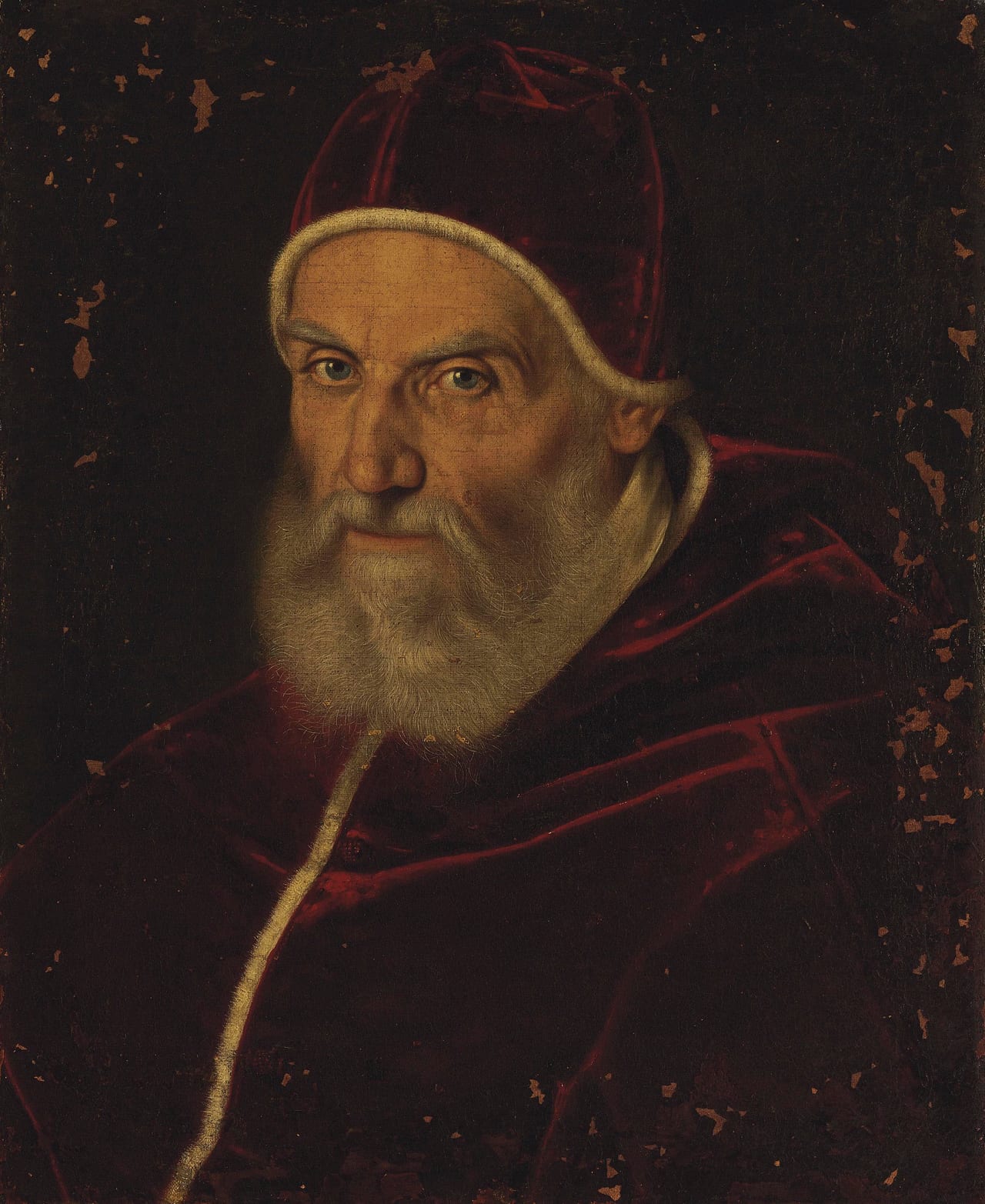
Portrait of Pope Gregory XIII, bust-length
Scipione Pulzone
Scipione Pulzone, active chiefly in Rome, excelled above all as a portraitist, prized for the quality of his detail, and he painted the popes of his day: Pius V, and Gregory XIII, the sitter here.
Sources
- Britannica, “Renaissance art”
- National Gallery, London, “Giotto”
- National Gallery, London, “Masaccio”
- National Gallery, London, “Linear perspective”
- Tate, “Perspective”
- National Gallery, London, “Aerial perspective”
- National Gallery, London, “Oil”
- National Gallery, London, “Tempera”
- National Gallery, London, “Piero della Francesca”
- National Gallery, London, “Jan van Eyck”
- National Gallery, London, “Fra Angelico”
- National Gallery, London, “Paolo Uccello”
- National Gallery, London, “Rogier van der Weyden”
- National Gallery, London, “Andrea Mantegna”
- National Gallery, London, “Giovanni Bellini”
- National Gallery, London, “Sandro Botticelli”
- National Gallery, London, “Leonardo da Vinci”
- National Gallery, London, “Albrecht Dürer”
- National Gallery, London, “Michelangelo”
- National Gallery, London, “Raphael”
- National Gallery, London, “Titian”
- National Gallery, London, “Saint Michael Triumphs over the Devil”
- National Gallery, London, “Bartolomé Bermejo”
- Wikipedia, “Pieta with Canon Lluís Desplà”
- Wikipedia, “Resurrection of Christ (Bermejo)”
- Wikipedia, “Madonna of the Rose Bower (Schongauer)”
- National Gallery, London, “Martin Schongauer”
- Wikipedia, “Barbadori Altarpiece”
- Wikipedia, “Adoration of the Shepherds with Saints Nazarius and Celsus”
- Wikipedia, “The Chess Game”
- Wikipedia, “Alejo Fernández”
- Wikipedia, “Master of Meßkirch”
- Wikipedia, “Scipione Pulzone”
- Wikipedia, “The Last Supper (Leonardo)”
- Apotheosis of St Ursula — Public domain via Wikimedia Commons (Public domain)
- The Last Supper — Public domain via Wikimedia Commons (Public domain)
- Saint Michael Triumphs over the Devil — Public domain via Wikimedia Commons (Public domain)
- Piedad with Canon Lluís Desplà — Public domain via Wikimedia Commons (Public domain)
- Resurrection of Christ — Public domain via Wikimedia Commons (Public domain)
- Madonna of the Rose Bower — Public domain via Wikimedia Commons (Public domain)
- Predella of the Barbadori altarpiece — CC0 via Wikimedia Commons (CC0)
- Adoration of the Shepherds with the Saints Nazario and Celso — Public domain via Wikimedia Commons (Public domain)
- Game of Chess — Public domain via Wikimedia Commons (Public domain)
- Christ tied to the column with Saint Peter and the donors — Public domain via Wikimedia Commons (Public domain)
- Der kniende Stifter Graf Gottfried Werner von Zimmern – Christus am Ölberg — Public domain via Wikimedia Commons (Public domain)
- Portrait of Pope Gregory XIII, bust-length — Public domain via Wikimedia Commons (Public domain)
Invite Renaissance into your living room