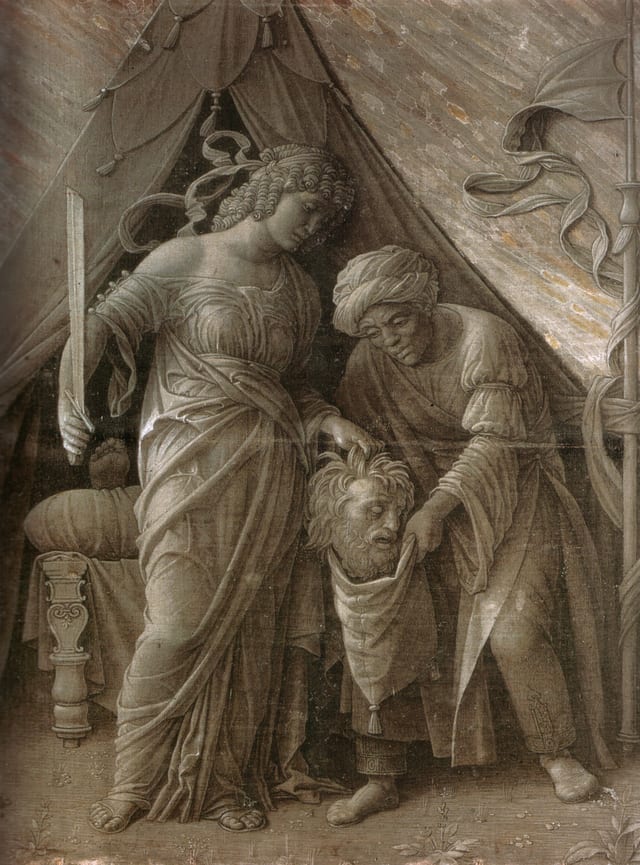
Judith with the Head of Holofernes
Andrea Mantegna · 1497

Andrea Mantegna
Republic of Venice · 1431–1506
Andrea Mantegna was an Italian Renaissance painter, a student of Roman archaeology, and the son-in-law of Jacopo Bellini. Like other artists of the time, Mantegna experimented with perspective, e.g. by lowering the horizon in order to create a sense of greater monumentality. His flinty, metallic landscapes, and somewhat stony figures give evidence of a fundamentally sculptural approach to painting. He also led a workshop that was the leading producer of prints in Venice before 1500.
Independent artist guide by Momentable. Biography from Wikipedia; artworks credited to the museums that hold them.
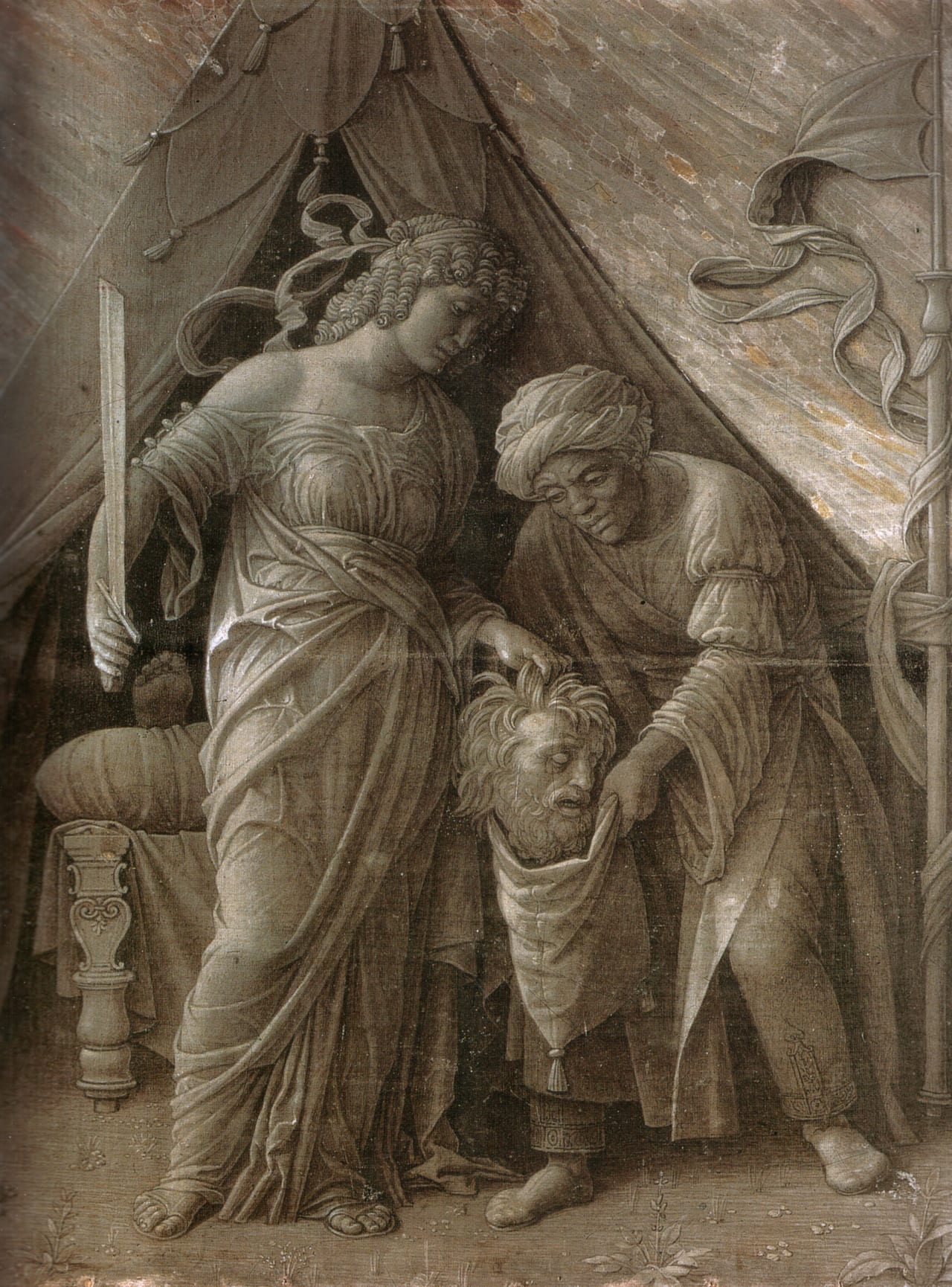 LIVENow streaming · Judith with the Head of Holofernes
- life
- 1431–1506life
- rights
- Public domainrights
The work
A selection of 7 works, free to stream.
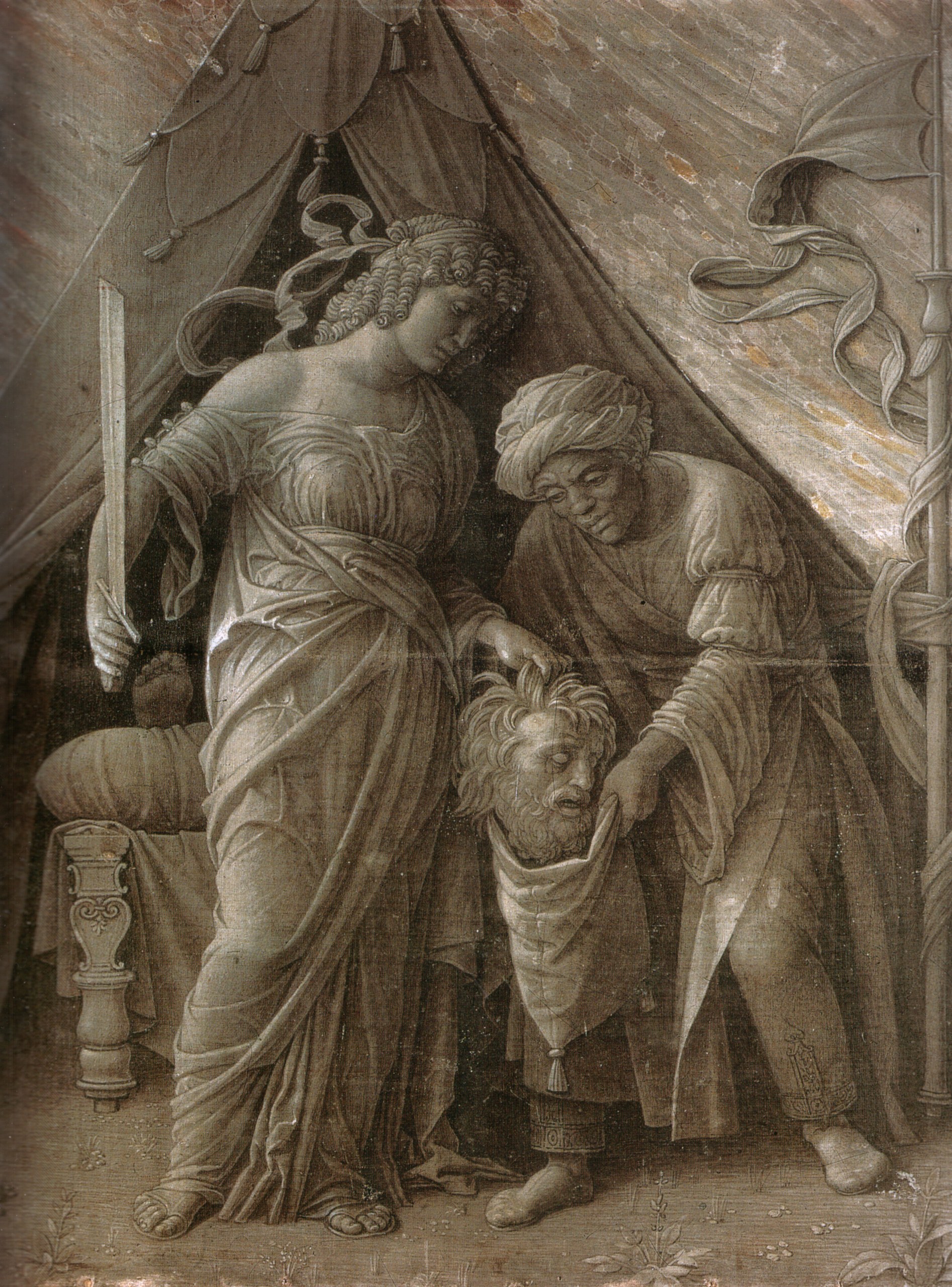
Judith with the Head of Holofernes
Andrea Mantegna · 1497
National Gallery of Ireland
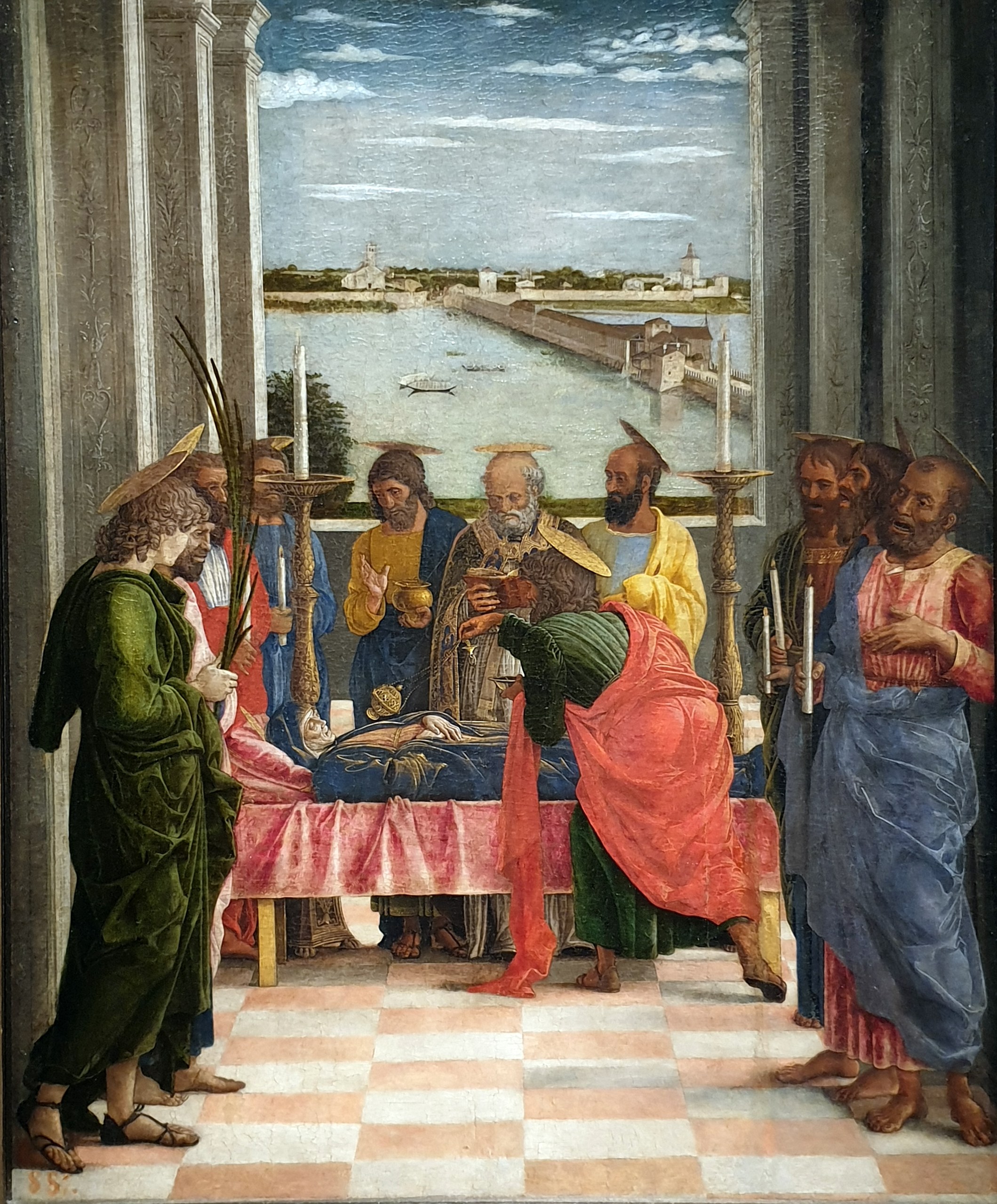
Death of the Virgin
Andrea Mantegna · 1462
Museo del Prado
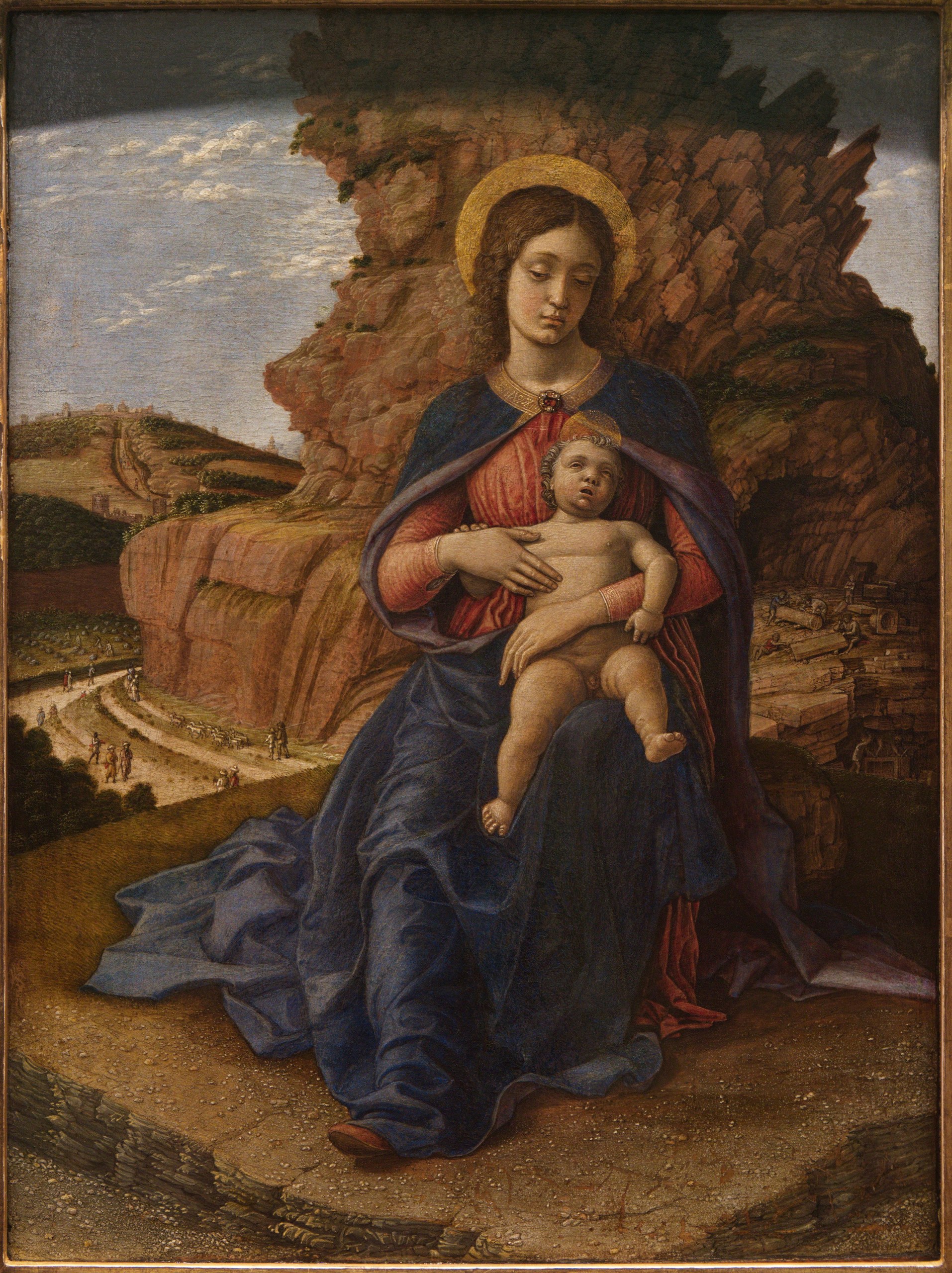
Madonna of the Caves
Andrea Mantegna · 1489
Uffizi Gallery
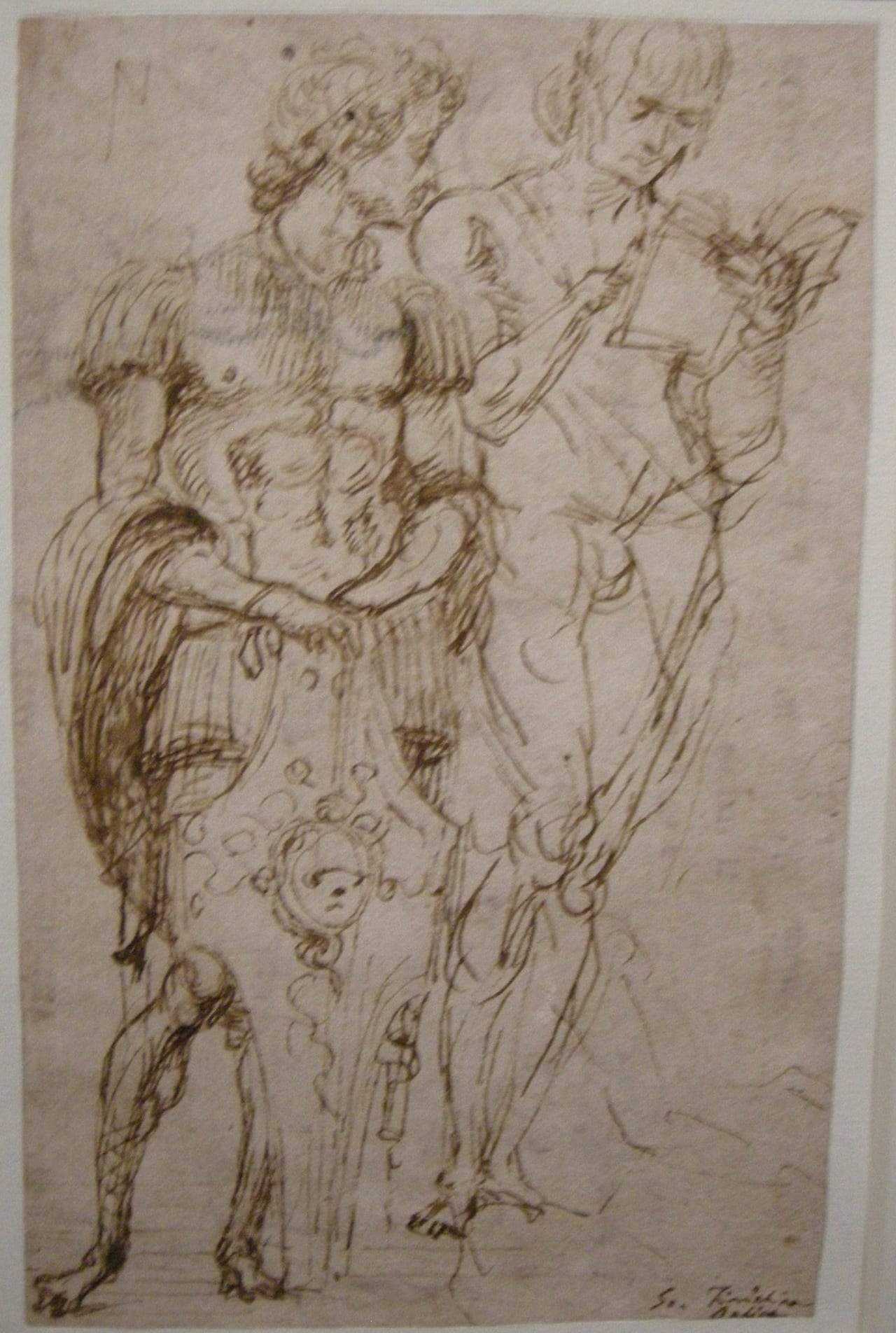
Two Standing Male Figures (recto); A Man Reclining and Other Studies (verso)
Andrea Mantegna · 1456
Getty Center
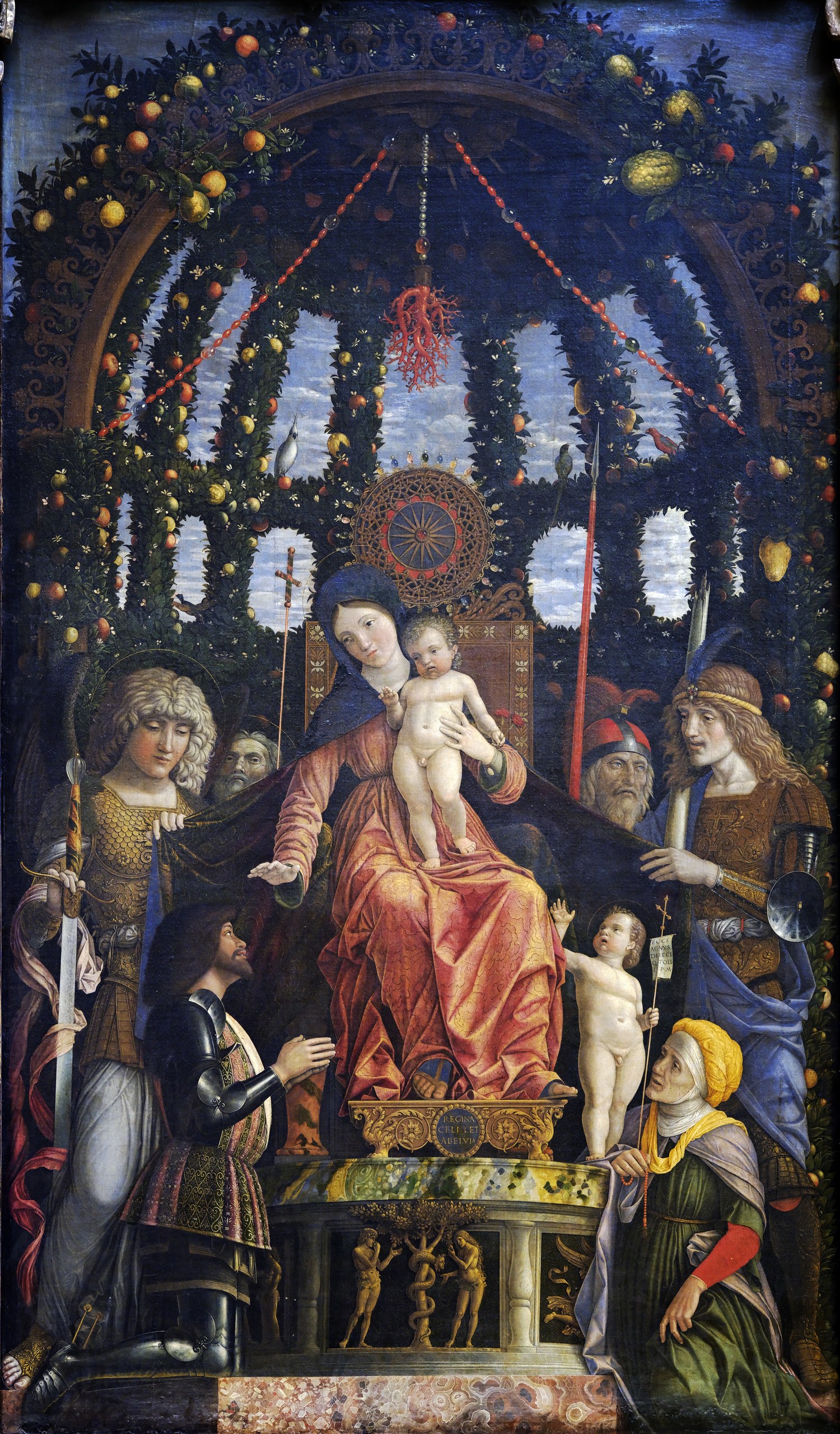
Madonna della Vittoria
Andrea Mantegna · 1495
Louvre
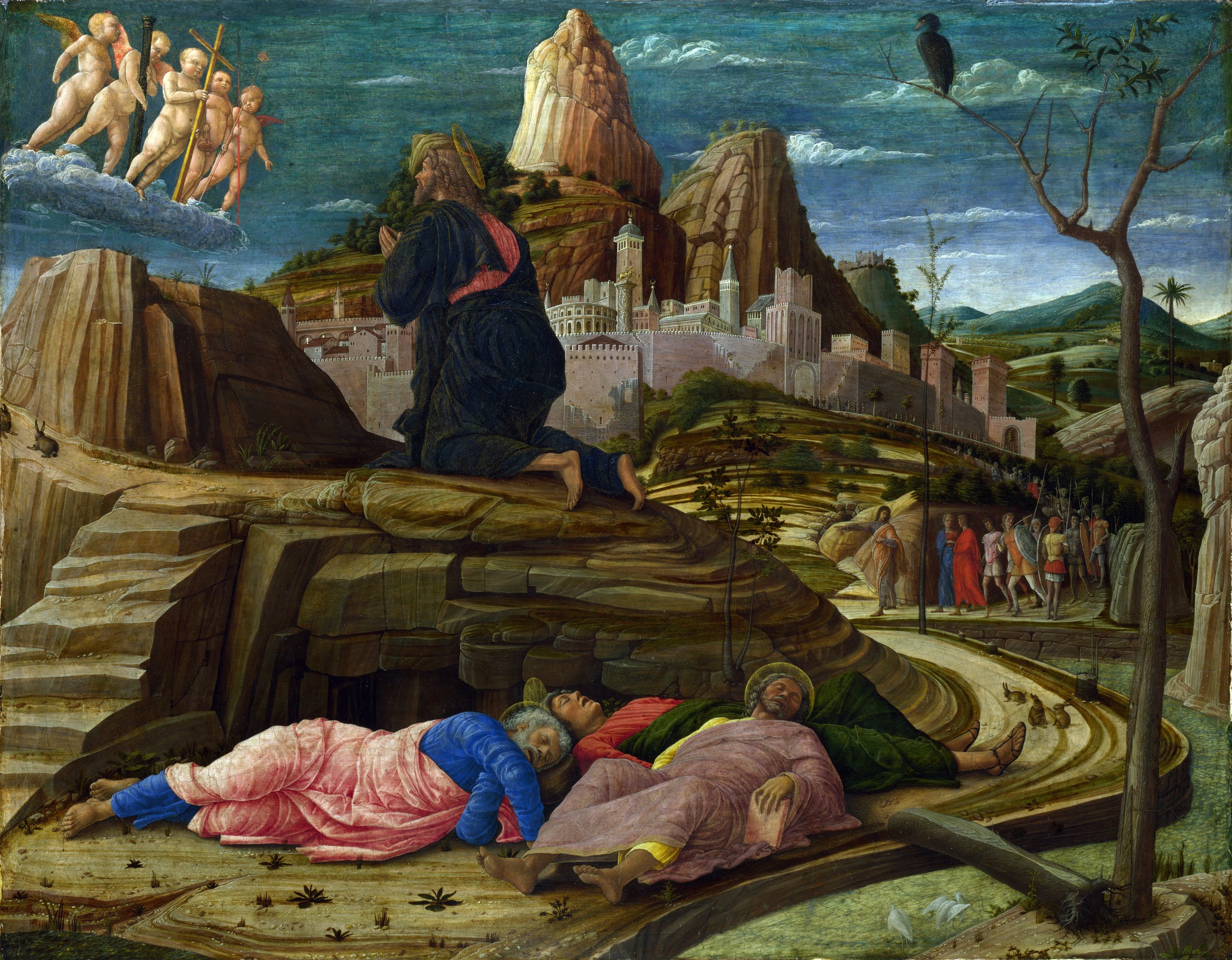
The Agony in the Garden
Andrea Mantegna · 1450
National Gallery
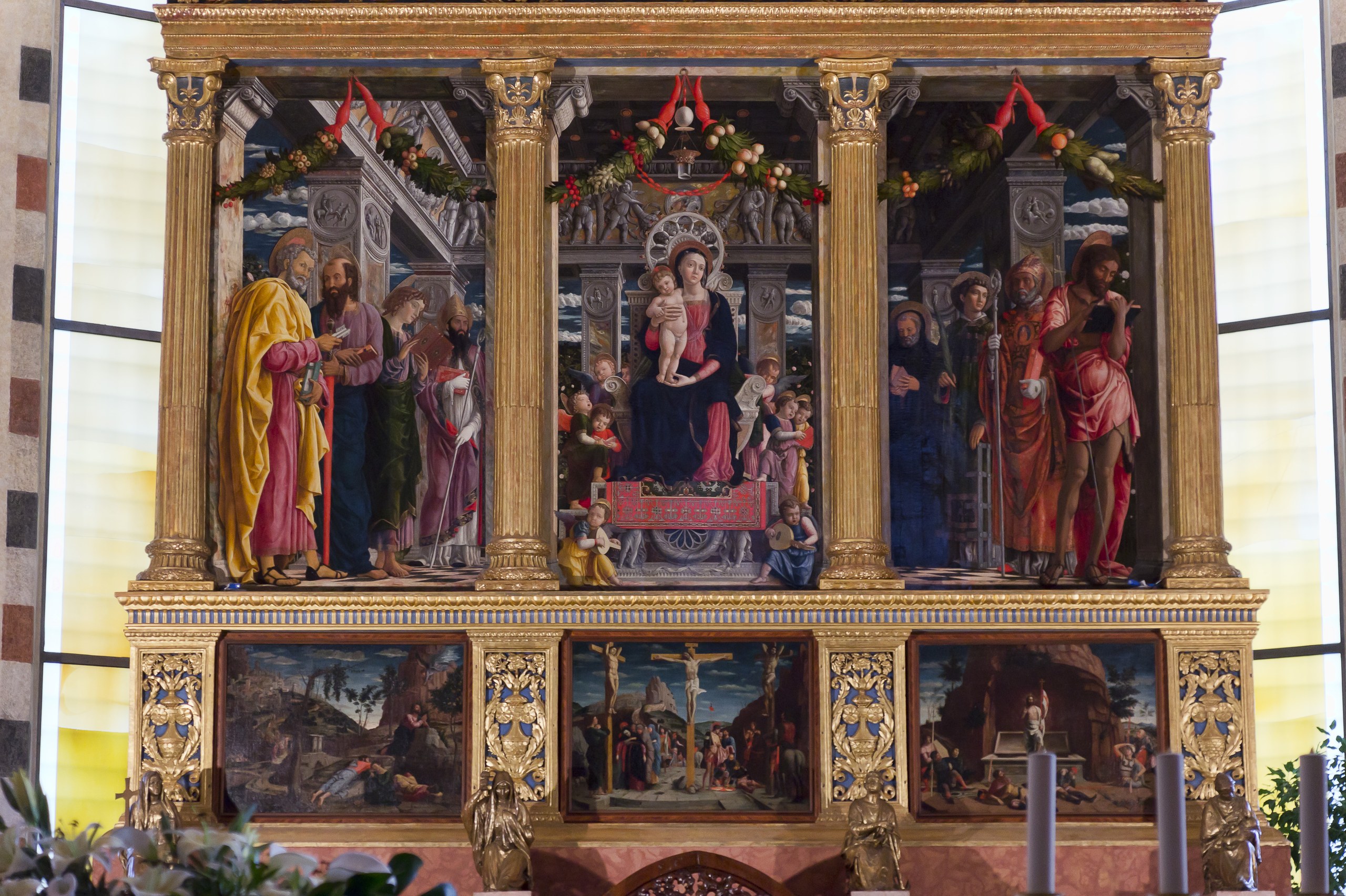
San Zeno Altarpiece
Andrea Mantegna · 1457
Works worth knowing
6 of Andrea Mantegna's works, and what makes each one worth a look.
Judith with the Head of Holofernes
Andrea Mantegna · 1497
National Gallery of Ireland
Judith with the Head of Holofernes is a c. 1495 glue tempera on canvas painting by Andrea Mantegna, now in the National Gallery of Ireland in Dublin. It is in the grisaille style.
Death of the Virgin
Andrea Mantegna · 1462
Museo del Prado
The Death of the Virgin is a painting by the Italian Renaissance painter Andrea Mantegna, dating to c. In this picture Mantegna depicts the last moment of the Virgin Mary's life within a space defined by classical architecture, with a squared pavement which leads the observer's eyes towards the bed on which the Virgin lies. In the background is a lake scene which is a detailed reproduction of the bridge and the burgh of the Castello di San Giorgio in Mantua.
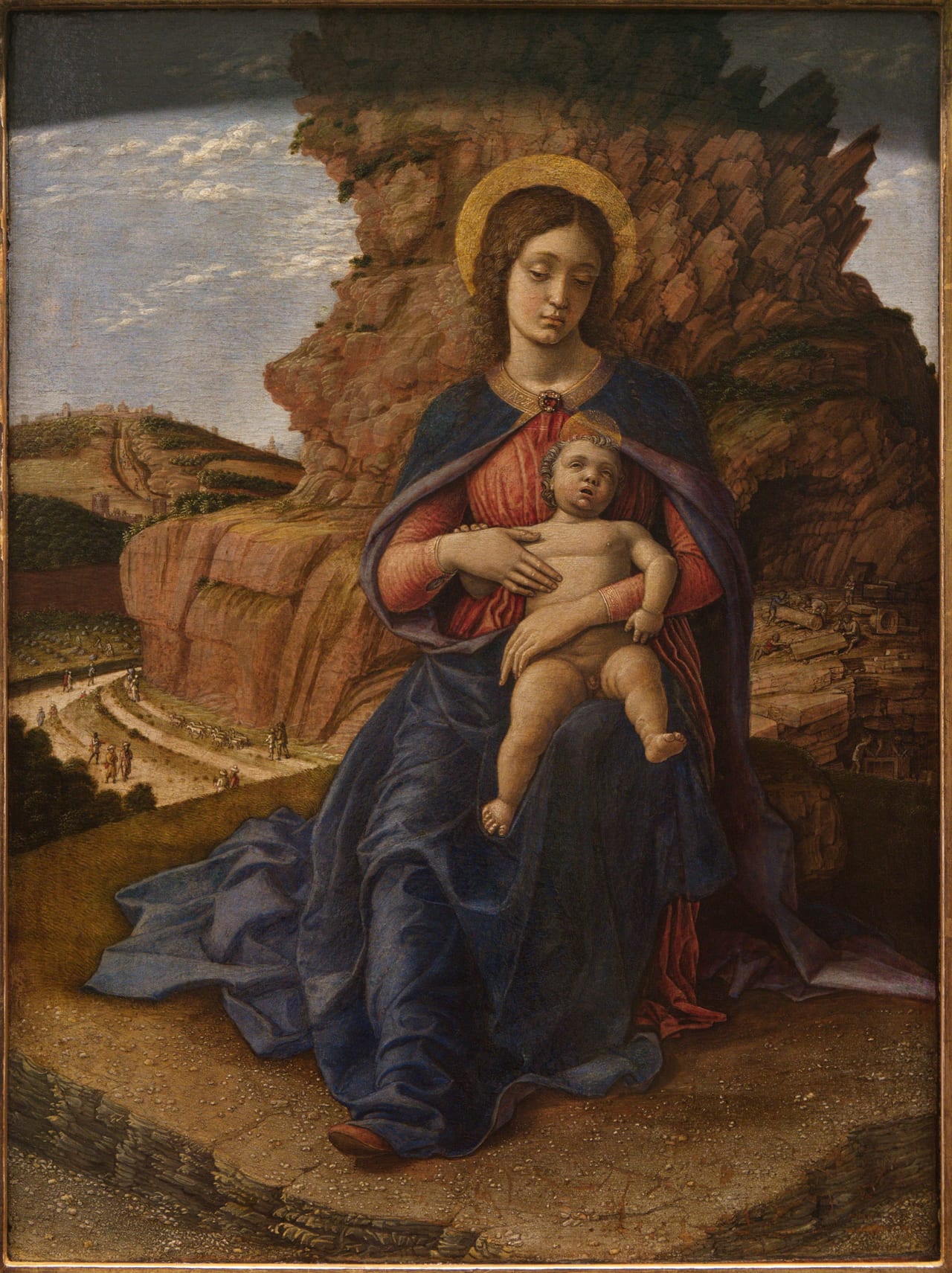
Madonna of the Caves
Andrea Mantegna · 1489
Uffizi Gallery
The Madonna of the Caves (Italian, Madonna delle Cave) is a tempera on panel painting measuring 32 cm 29.6 cm. It was painted in 1488 to 1490 by the Italian painter Andrea Mantegna and is now in the Uffizi Gallery in Florence. It is named after a stone quarry in the right-hand background, where workers are carving out a capital, a slab, part of a column shaft and a sarcophagus, perhaps alluding to Christ future flagellation and burial.
Madonna della Vittoria
Andrea Mantegna · 1495
Louvre
The Madonna della Vittoria is a painting by the Italian Renaissance painter Andrea Mantegna; the painting was executed in 1496. On 6 July 1495 the French army of Charles VIII of France, retreating from Italy after the French Invasion of 1494 to 1498, fought the Italic League at the Battle of Fornovo. The League, commanded by Francesco II Gonzaga, Marquess of Mantua, was made up of numerous nation-states determined to prevent French dominance in Italy, and included the Holy Roman Empire, Spain, Venice, Milan, and the Papal States controlled by Pope Alexander VI.
The Agony in the Garden
Andrea Mantegna · 1450
National Gallery
The Agony in the Garden is a painting of 1455 to 1456 by the Italian artist Andrea Mantegna in the National Gallery, London. The painting shows Christ (at the centre) praying before a group of cherubs (at upper left) who are holding instruments of the Passion. Judas, the disciple who betrayed Christ, leads a group of soldiers (centre right) from Jerusalem to arrest him.
San Zeno Altarpiece
Andrea Mantegna · 1457
The San Zeno Altarpiece is a polyptych altarpiece by the Italian Renaissance painter Andrea Mantegna created around 1456 to 1459. It remains in situ in the Basilica di San Zeno, the main church of the Northern Italian city of Verona. Mantegna's style mixes Greco-Roman classical themes along with Christian subjects in this altarpiece.
Where the work hangs
The museums that hold it, and their visitor guides.
If you like Andrea Mantegna
Artists held by the same museums.
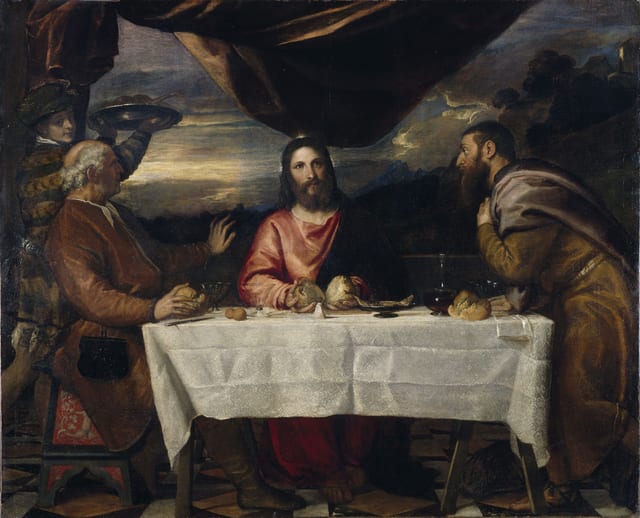
Titian
Italian · 28 in the archive
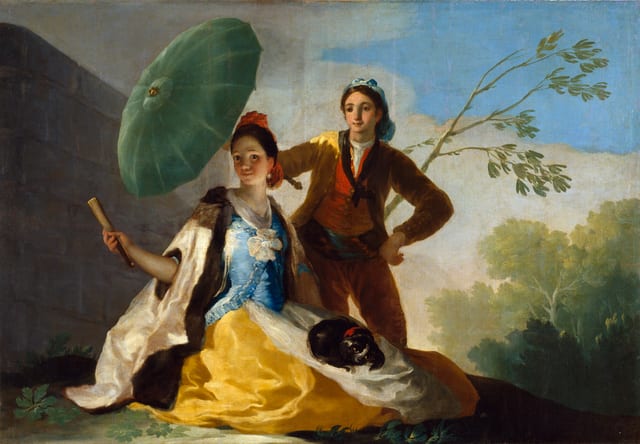
Francisco Goya
Spanish · 24 in the archive
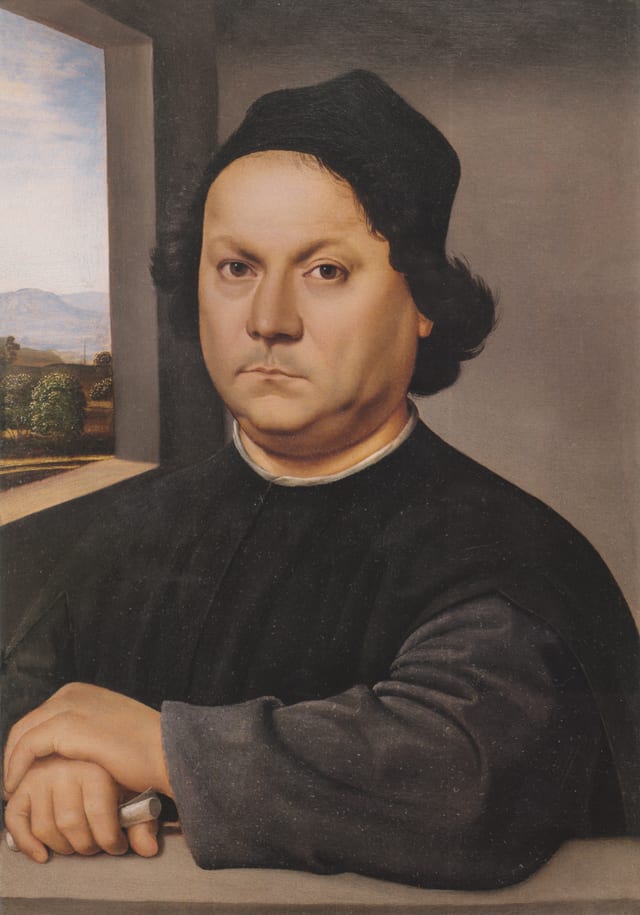
Raphael
Holy Roman Empire · 24 in the archive
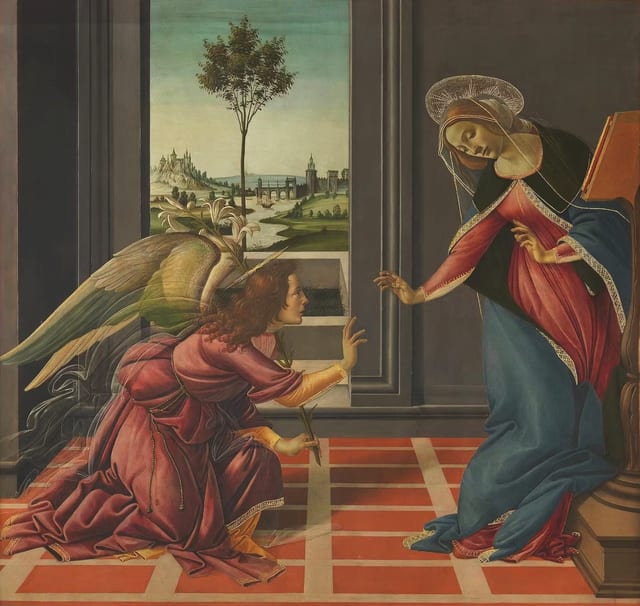
Sandro Botticelli
Italian · 18 in the archive
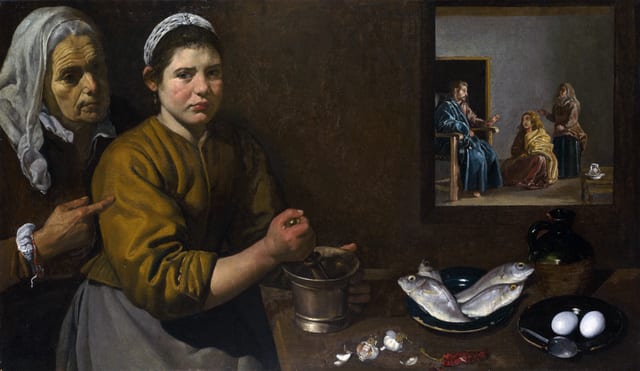
Diego Velázquez
Spain · 17 in the archive
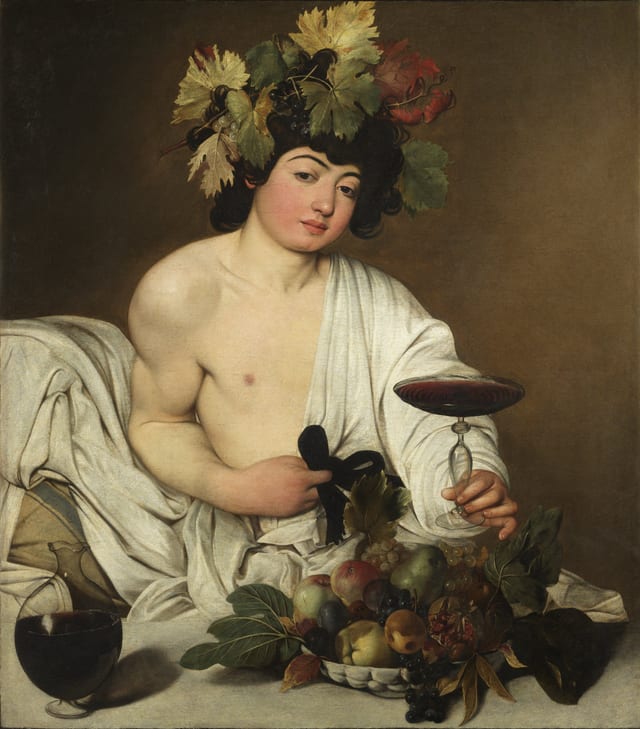
Caravaggio
Italian · 13 in the archive
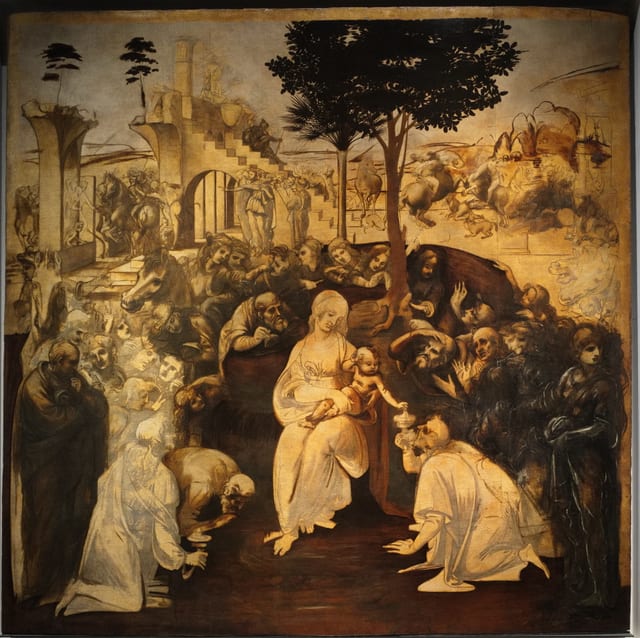
Leonardo da Vinci
Italian · 12 in the archive
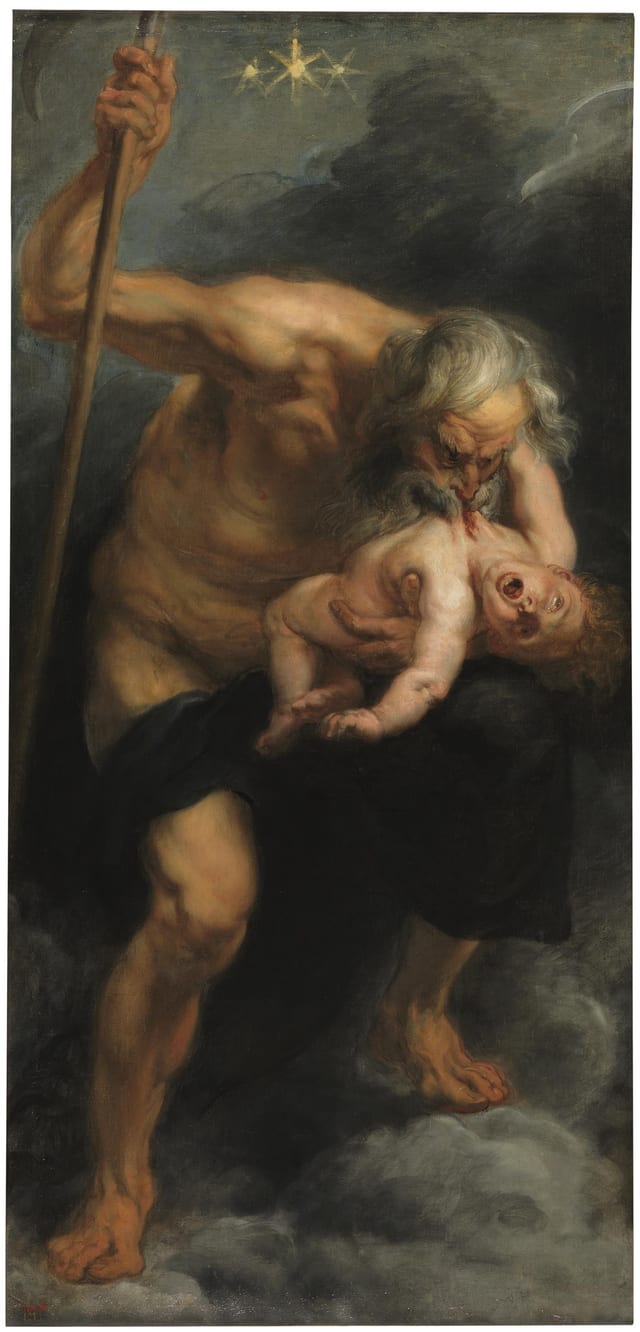
Peter Paul Rubens
Flemish · 11 in the archive
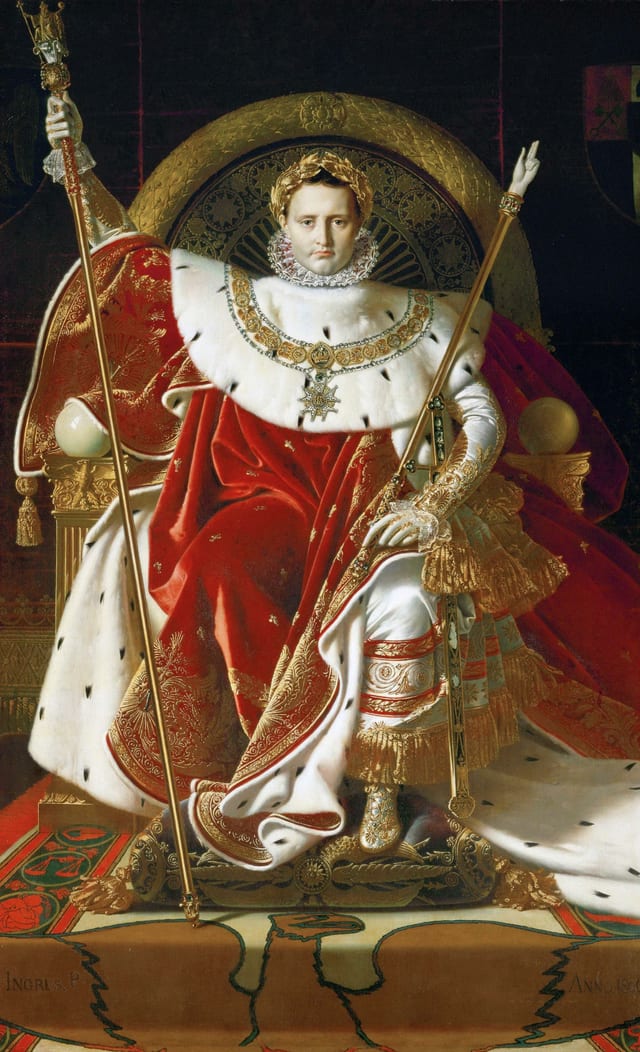
Jean-Auguste-Dominique Ingres
French · 10 in the archive
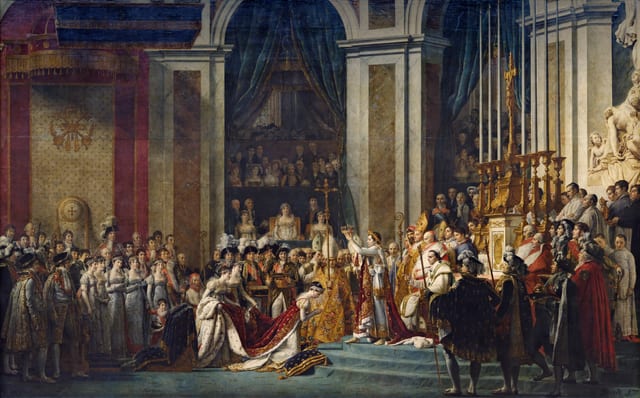
Jacques-Louis David
France · 9 in the archive
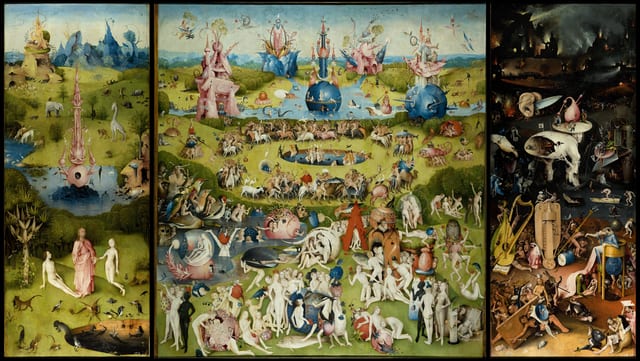
Hieronymus Bosch
Dutch · 8 in the archive
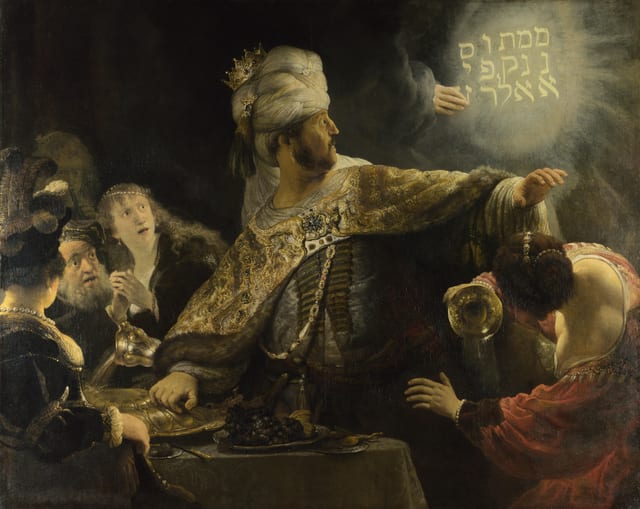
Rembrandt van Rijn
Dutch · 8 in the archive
Invite the masters into your living room.
Andrea Mantegna on your TV, phone, or tablet. Free to start.
View on MomentableIndependent guide by Momentable · biography from Wikipedia · artworks are in the public domain and credited to the museum that holds them